
In the shadow of hospitals and clinics, a silent environmental challenge brews: medical wastewater, a potent cocktail of emerging contaminants (ECs) that conventional treatment systems struggle to fully address. Enter advanced membrane-based (AMB) technologies, a promising frontier in the fight against these persistent pollutants. A recent study published in *Water Research X* (translated from Chinese as *Water Research New Horizons*) sheds light on the principles and perspectives of these cutting-edge technologies, offering a beacon of hope for the energy and environmental sectors.
Dr. Jinyan Mao, lead author of the study and a researcher at the Department of Anesthesiology, Air Force Hospital of Western Theater Command in Chengdu, China, emphasizes the urgency of the issue. “Medical wastewater is a significant reservoir of emerging contaminants, posing serious potential environmental risks,” Mao states. The study underscores the need for high-efficiency removal strategies, with AMB technologies emerging as a viable solution.
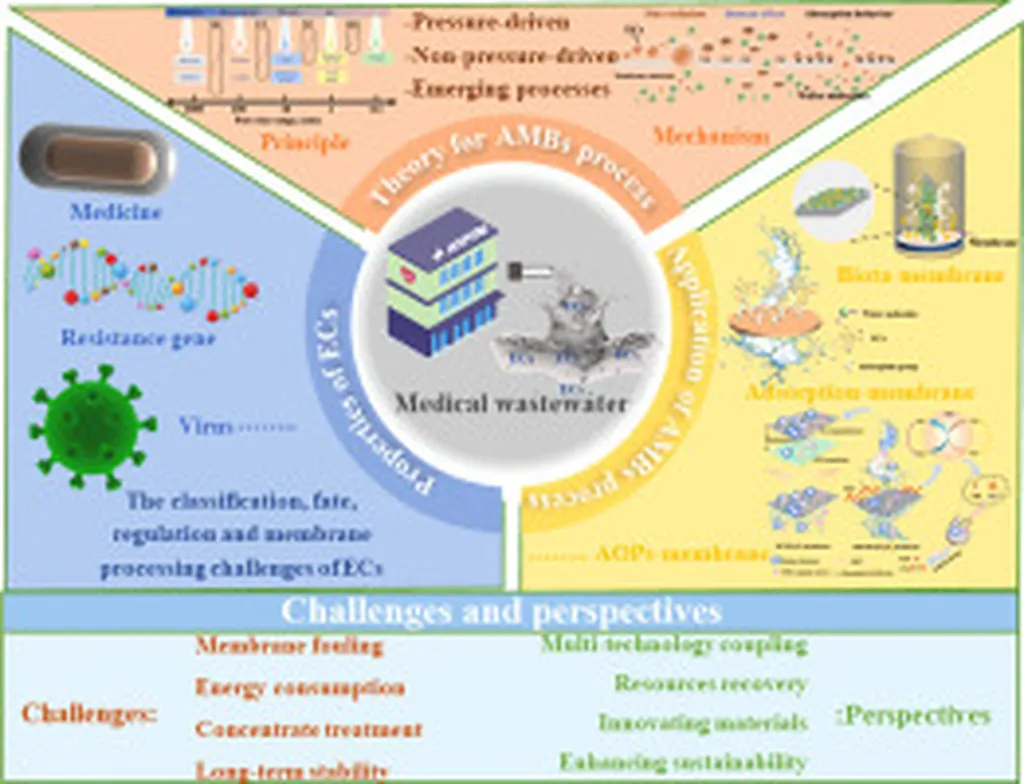
The research delves into the water quality characteristics of medical wastewater and the fate of ECs, focusing on the working principles, removal mechanisms, and application efficacy of various membrane processes. These include pressure-driven, non-pressure-driven, and emerging membrane processes, each with its unique advantages and challenges.
One of the key findings is the potential of AMB technologies to address critical issues such as membrane fouling, energy consumption, and the treatment of concentrated effluents. “The development of in-situ self-cleaning functional membranes and the optimization of membrane integration systems are anticipated to effectively address these challenges,” Mao explains. This innovation could significantly reduce operational costs and energy consumption, making the technology more attractive for commercial applications.
The study also highlights the importance of coupling energy-saving membrane technologies and the potential for resource recovery from concentrated effluents. These advancements could pave the way for more sustainable and economically viable treatment solutions, benefiting the energy sector by reducing the environmental footprint and operational expenses.
Looking ahead, the research suggests that the future of AMB technologies lies in their ability to adapt and integrate with other treatment processes. “The recommendation of resource recovery from concentrated effluents is a game-changer,” Mao notes. This approach not only mitigates environmental risks but also opens new avenues for resource utilization, potentially creating a circular economy within the medical wastewater treatment sector.
As the world grapples with the growing threat of emerging contaminants, the insights provided by this study offer a glimmer of hope. The energy sector, in particular, stands to gain from the advancements in AMB technologies, which promise to deliver more efficient, cost-effective, and sustainable solutions. With continued research and innovation, these technologies could revolutionize the way we treat medical wastewater, ensuring a cleaner, safer environment for future generations.
In the words of Dr. Jinyan Mao, “This comprehensive review aims to provide valuable insights and references for the efficient treatment of ECs wastewater.” As we stand on the brink of a new era in wastewater treatment, the potential for AMB technologies to shape the future is both exciting and profound.