
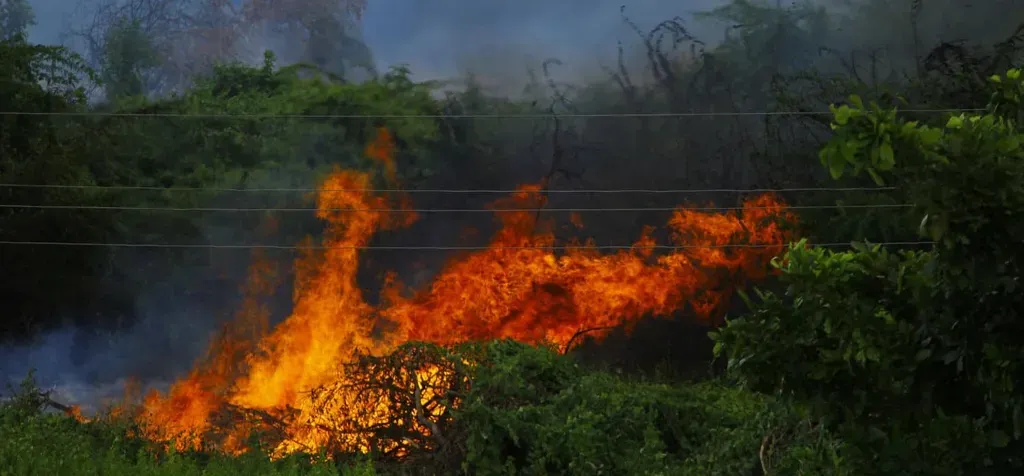
In the heart of Brazil’s vast and vital forests, a technological revolution is underway, one that promises to reshape how we combat forest fires and assess their environmental impacts. At the forefront of this innovation is Carlos Henke Oliveira, a researcher from the Department of Ecology at the University of Brasília (ECL/UnB), who is leading a project that combines cutting-edge embedded systems with environmental science.
The PROMETEU project, as it’s known, is developing three distinct families of embedded systems: SAPHIRA 3, PROMETEU, and OBÁ. Each of these systems is designed to collect and analyze data in real-time, providing critical insights into the behavior of forest fires and the effectiveness of firefighting efforts.
The SAPHIRA 3 family, for instance, is already making waves. Mounted on AT-802F aircraft used by the Fire Department of the Federal District, these systems collect atmospheric data such as carbon monoxide levels and particulate matter, as well as terrestrial data like iconography and flame temperature analysis. “The data collected presents the atmospheric conditions above the forest fire, as well as the conditions that collaborate and compromise the effectiveness of aerial firefighting,” Oliveira explains.
But the SAPHIRA 3 family isn’t just about data collection. It’s also about decision-making. With its real-time and post-processing capabilities, the system can be programmed to capture photographs or other data based on specific conditions, such as a standard value for carbon monoxide or flame detection.
However, the SAPHIRA 3 family isn’t without its challenges. Its high energy consumption requires a heavy energy cell or a permanent power supply, limiting its autonomy when used by ground crews. This is where the OBÁ family comes in. With less processing capacity but the ability to map labor conditions and chemical scars, the OBÁ family is designed to complement the SAPHIRA 3 family, providing a more comprehensive picture of the environmental impacts of forest fires and firefighting efforts.
The PROMETEU family, on the other hand, is all about versatility. With smaller dimensions and weight, these systems can be coupled with drones, monitoring or controlling cameras and devices for thermal infrared (IR) and near-infrared (NIR) spectral bands. This allows for a more detailed analysis of terrestrial thermal patterns and vegetation, providing valuable insights for future firefighting efforts.
The implications of this research for the energy sector are significant. By providing a more detailed and comprehensive understanding of forest fires and their environmental impacts, these embedded systems can help energy companies better manage their operations, reduce their environmental footprint, and improve their overall sustainability.
As Oliveira puts it, “This research is not just about fighting fires. It’s about understanding them, about using technology to gain insights that can help us protect our forests and our planet.”
Published in the Brazilian Journal of Biodiversity (Biodiversidade Brasileira), this research is a testament to the power of innovation and the potential of technology to drive positive change. As we look to the future, it’s clear that embedded systems will play a crucial role in our efforts to combat forest fires and protect our environment. And with researchers like Carlos Henke Oliveira leading the way, the future looks bright indeed.