
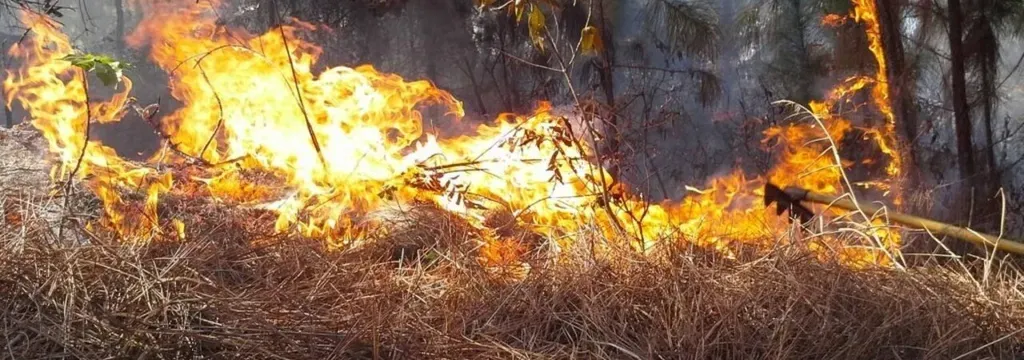
In the heart of Venezuela, a critical shift in fire management strategies is underway, with significant implications for the country’s energy sector and beyond. The Bolivarian Republic of Venezuela’s National Park System (NPS), which encompasses 43 National Parks, 37 Natural Monuments, and 65 Recreation Parks, covers a staggering 23% of the national territory. This vast network is not just a haven for biodiversity but also the guardian of 80% of the water basins that supply the population, including the Caroní river basin, which generates 70% of the country’s electricity. With climate change intensifying droughts and extending fire seasons, the vulnerability of these ecosystems has become a pressing concern.
Miguel Alejandro Matany Luque, of the Cuerpo de Bomberos Forestales at the Instituto Nacional de Parques (INPARQUES), has been at the forefront of this challenge. In a recent study published in the journal *Biodiversidade Brasileira* (translated to English as *Brazilian Biodiversity*), Matany Luque and his colleagues highlight the need for a comprehensive fire management policy that goes beyond traditional suppression and combat models.
“Climate change scenarios mean an increase in temperatures, a worsening of drought, higher severity of vegetation fires, and extended fire seasons,” Matany Luque explains. “This has posed new challenges, forcing us to rethink our strategies and develop more effective fire management approaches nationwide.”
The solution lies in Integrated Fire Management (IFM), an initiative that has been gaining traction since 2014. IFM involves the inclusion of community members, their local traditional knowledge of fire management, and scientific findings to reduce the annually burnt area, especially in locations with fire-sensitive vegetation. This collaborative approach has already shown promising results, with a significant reduction in fire incidents in key areas.
One of the most ambitious aspects of this new strategy is the human talent reinforcement plan. Since April 2009, the National Experimental University of Security has been offering “Special Training Plans” to form a new troop of 10,000 firefighters nationwide, all trained under the principles of IFM. This not only strengthens the country’s firefighting capabilities but also ensures that the new strategies are implemented effectively.
The commercial impacts for the energy sector are profound. The Caroní river basin, which is crucial for Venezuela’s electricity generation, is particularly vulnerable to fires. Effective fire management can prevent disruptions in water supply, ensuring the continuous operation of hydroelectric power plants. This, in turn, can stabilize the energy sector, which is vital for the country’s economic stability.
Moreover, the new fire management strategies include the development of multimodal warning systems, fire monitoring by remote sensors, early detection and first response to forest fires, inter-agency coordination of a shared logistic support network, and the establishment of a permanent evaluation and adjustment mechanism. These measures are designed to be inclusive, with leading and equitable participation of researchers, local communities, and officials under the principles of intercultural collaboration, joint effort, and mutual respect.
As Matany Luque puts it, “This is not just about fighting fires; it’s about building a resilient and sustainable future for our ecosystems and our communities.”
The research published in *Biodiversidade Brasileira* sheds light on the importance of integrated and inclusive approaches to fire management. It serves as a model for other countries facing similar challenges, emphasizing the need for collaboration between scientists, local communities, and government agencies. The findings also highlight the critical role of effective fire management in ensuring the stability of the energy sector, which is essential for economic growth and development.
In the face of climate change, the need for innovative and inclusive fire management strategies has never been more urgent. The work of Matany Luque and his colleagues offers a beacon of hope, demonstrating that with the right strategies and collaboration, it is possible to protect our ecosystems and ensure a sustainable future for all.