
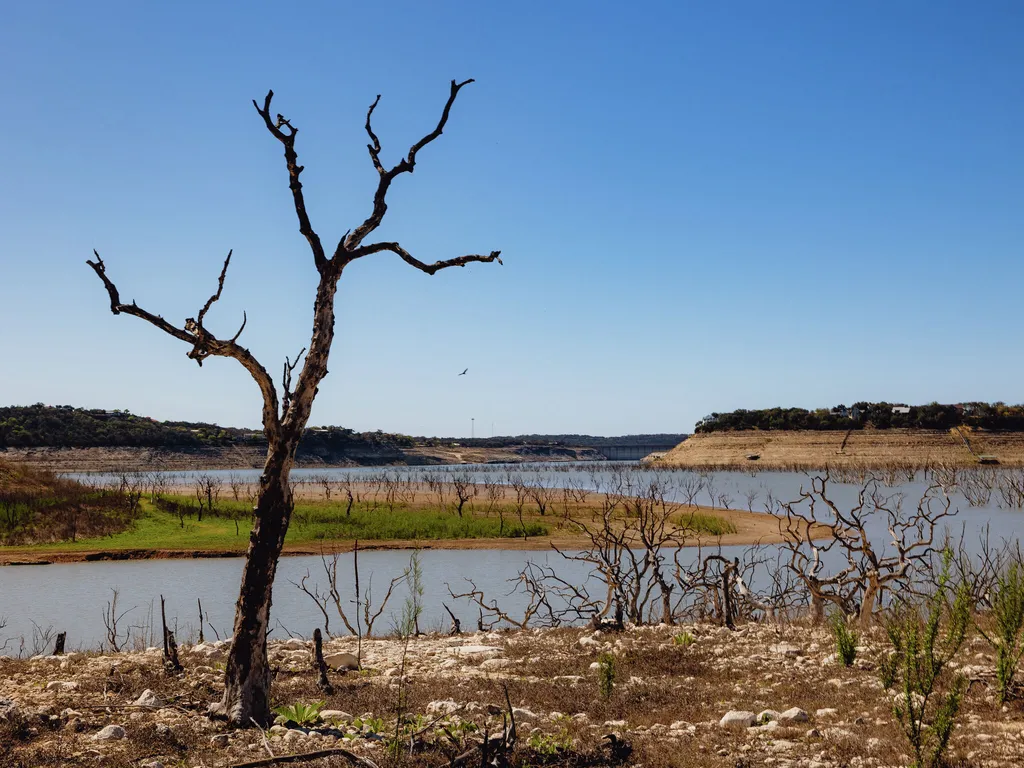
In the heart of Texas, a team of researchers led by Amitesh Sabut from the Zachry Department of Civil and Environmental Engineering at Texas A&M University has embarked on a monumental journey, synthesizing a century of drought research to illuminate the path forward. Their work, published in the journal *Water Resources Research* (translated from English as “Research on Water Resources”), offers a comprehensive look at the scientific developments, methodological innovations, and emerging frontiers in drought research from 1900 to 2023.
Droughts are not just natural phenomena; they are complex, multifaceted challenges that ripple through water resources, agriculture, energy, and ecosystems, exposing deep-seated socio-economic vulnerabilities. Sabut and his team have meticulously analyzed over 152,000 peer-reviewed publications to map the evolving landscape of drought research. Their findings reveal a shift from reactive approaches to proactive, resilience-oriented management, a change that could significantly impact the energy sector.
“Understanding drought processes is crucial for the energy sector,” Sabut explains. “Droughts can lead to reduced water availability for cooling in thermal power plants, lower hydropower generation, and increased wildfire risks, all of which can disrupt energy supply and drive up costs.” The research highlights the importance of predictive modeling, machine learning, and deep learning in enhancing our ability to forecast droughts and mitigate their impacts.
One of the most significant advancements in drought research has been the integration of satellite remote sensing, hydrological modeling, and global climate modeling. These technologies have expanded the scope and precision of drought studies, enabling researchers to better understand the climatic drivers and societal impacts of droughts. Moreover, the study underscores the growing attention to emerging societal challenges such as environmental degradation, public health risks, social inequities, and resource conflicts.
Looking ahead, Sabut emphasizes the need for stakeholder-informed indicators, improved flash drought detection, and a deeper understanding of cascading processes. “We need to integrate human-driven factors into our models and enhance the interpretability of AI models,” he notes. “Next-generation satellite monitoring and comprehensive risk management for drought-related compound hazards are also critical.”
The research consolidates a century of progress and presents a forward-looking framework aimed at strengthening resilience and guiding actionable drought risk governance. For the energy sector, this means a shift towards more sustainable and resilient practices, better preparedness, and reduced vulnerability to drought impacts.
As we stand on the precipice of a new era in drought research, Sabut’s work serves as a beacon, guiding us towards a future where we can better anticipate, prepare for, and mitigate the impacts of droughts. The journey is far from over, but with each step, we move closer to a more resilient and sustainable world.