
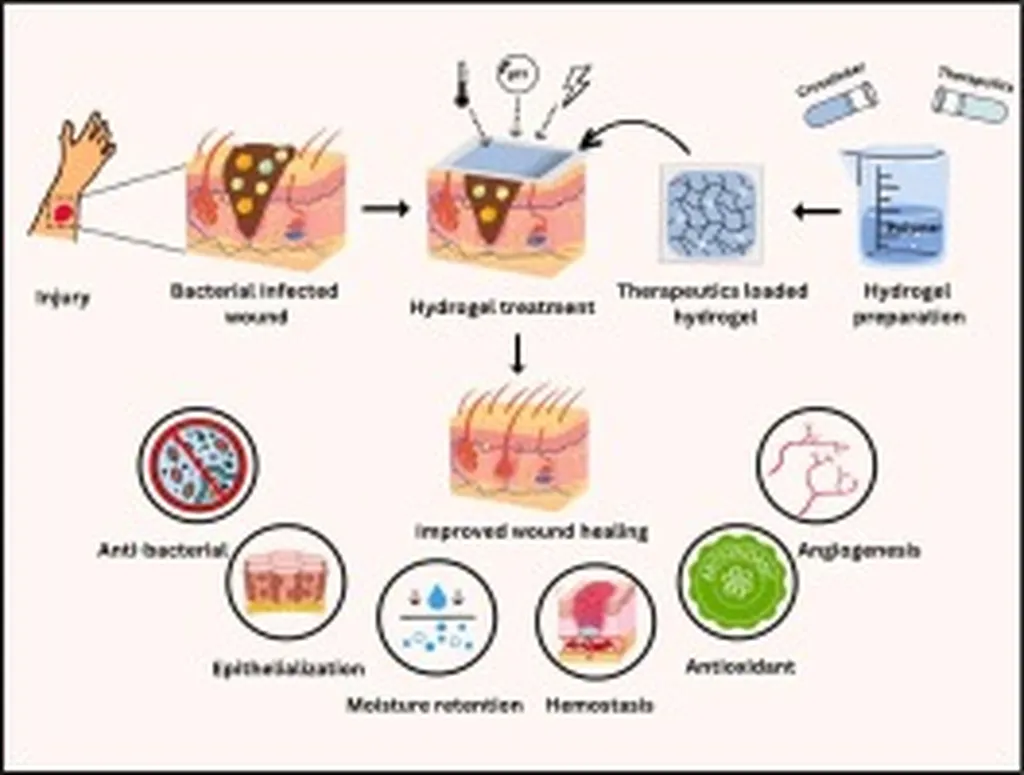
In the ever-evolving landscape of biomedical research, a groundbreaking study led by Rukhsana Yasmin from the Department of Chemistry at the University of Gujrat is making waves. Published in the *Journal of Materials Science: Materials in Medicine*—translated to *Journal of Materials Science: Medical Materials*—this research delves into the transformative potential of dextran-based stimuli-responsive hydrogels for advanced wound care. These innovative materials are poised to redefine the future of wound healing and drug delivery, offering a beacon of hope for patients with chronic and diabetic wounds.
The skin, our body’s largest organ, is a marvel of natural engineering, capable of self-repair under normal circumstances. However, severe or chronic injuries often overwhelm this innate ability, necessitating external intervention. Enter dextran-based hydrogels: a class of biomaterials that are garnering significant attention due to their biocompatibility, biodegradability, and non-toxicity. These hydrogels boast high water retention, tunable mechanical strength, and responsiveness to external stimuli, making them ideal candidates for advanced medical applications.
Yasmin’s research provides a comprehensive overview of these stimuli-responsive hydrogels, with a particular focus on dextran-based systems. “Dextran hydrogels exhibit exceptional properties that make them uniquely suited for wound healing and drug delivery,” Yasmin explains. “Their ability to respond to various stimuli allows for precise control over drug release and tissue regeneration, addressing some of the most pressing challenges in modern medicine.”
The study highlights the limitations of traditional wound care methods, especially for chronic and diabetic wounds, which often resist conventional treatments. By leveraging the unique properties of dextran-based hydrogels, researchers are developing smart wound dressings that can dynamically respond to changes in the wound environment. This responsiveness enables targeted drug delivery, enhancing antimicrobial activity and promoting tissue regeneration.
One of the most compelling aspects of this research is its potential commercial impact. The energy sector, often overlooked in biomedical advancements, stands to benefit from these innovations. As the demand for sustainable and efficient healthcare solutions grows, the development of smart biomaterials like dextran-based hydrogels could drive significant advancements in energy-efficient medical technologies. “The integration of these materials into wound care products could lead to more efficient and cost-effective treatments, ultimately reducing the burden on healthcare systems,” Yasmin notes.
Looking ahead, the study identifies current challenges and future directions for the clinical application of dextran-based hydrogels. While the potential is immense, translating these innovations into widespread clinical use will require overcoming technical and regulatory hurdles. However, the promise of these materials is undeniable, and their impact on the biomedical field is poised to be profound.
As we stand on the cusp of a new era in wound care and drug delivery, Yasmin’s research serves as a testament to the power of innovation. By harnessing the unique properties of dextran-based hydrogels, we are not only advancing medical science but also paving the way for a more sustainable and efficient future. The journey towards smarter, more responsive wound care has begun, and the possibilities are as boundless as they are exciting.