
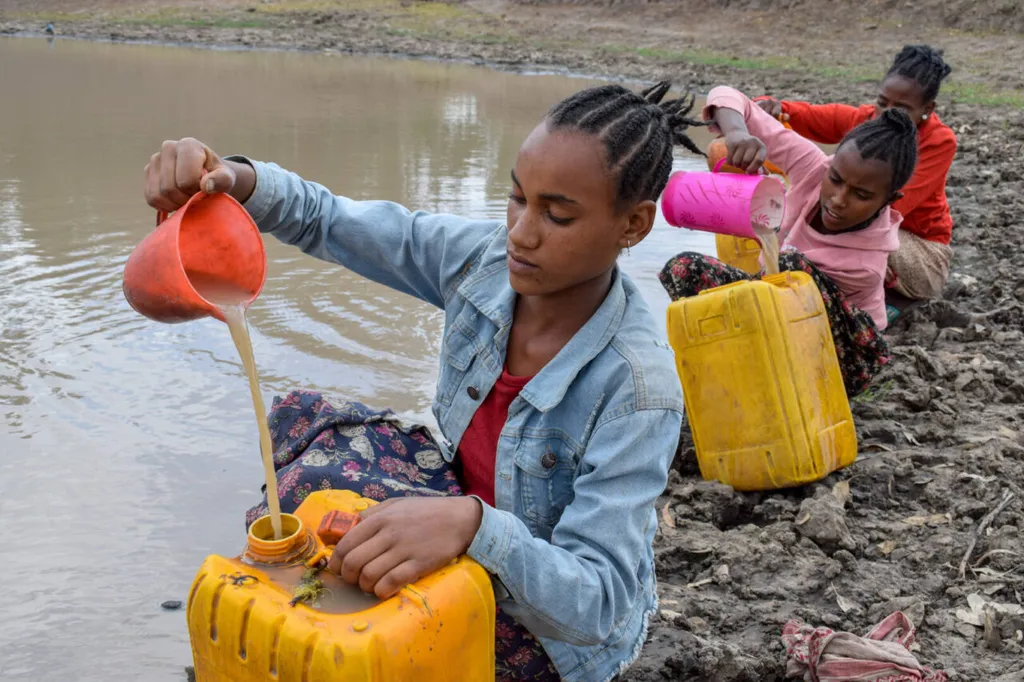
In the heart of Ethiopia’s Upper Wabi Shebelle river basin, the Lelliso River flows, its waters a vital resource for the communities and industries that depend on it. Yet, as with many water bodies worldwide, its quality is under threat, and understanding the extent and sources of this pollution is crucial for both public health and economic sectors, including energy. A recent study published in the journal ‘Applied Water Science’ (translated from German as ‘Angewandte Wasserwissenschaft’) has shed light on the spatio-temporal water quality variability and pollution sources of the Lelliso River, offering insights that could shape future water management strategies.
Led by Lalisa Gebisa from the Department of Water Resource & Irrigation Engineering at Madda Walabu University, the study employed a comprehensive approach to evaluate the river’s water quality. Using tools like the Weighted Arithmetic Water Quality Index (WAWQI) and Water Pollution Index (WPI), the team assessed the river’s suitability for drinking and irrigation. The findings were stark: the Lelliso River was found to be unsuitable for drinking in both the rainy and dry seasons, with WAWQI values ranging from 223.8 to 424.4 and 79.6 to 197, respectively.
“These results are a clear indication of the severe pollution levels in the Lelliso River,” said Gebisa. “The high WQI values point to significant contamination, making the water unsafe for human consumption.”
For irrigation, the story was more nuanced. While the US Salinity Laboratory (USSL) diagram confirmed the river’s suitability for irrigation, the Wilcox diagram placed all samples in the S3 category, indicating unsuitability. This discrepancy highlights the complex nature of water quality assessments and the need for a multi-faceted approach.
The study also delved into the sources of pollution, using Principal Component Analysis (PCA) and Hierarchical Cluster Analysis (HCA). The findings pointed to soil erosion, rock weathering, solid waste disposal, and urban and agricultural runoff as the primary culprits. These sources not only impact water quality but also have significant implications for the energy sector. For instance, agricultural runoff can lead to eutrophication, which can affect hydroelectric power generation by clogging intake screens and reducing the efficiency of turbines.
Moreover, the health risk assessment revealed that ingestion was the predominant exposure channel, especially among children, with the highest hazard index (HI) surpassing the acceptable limit. This finding underscores the urgent need for intervention to protect vulnerable populations and ensure the sustainable use of water resources.
The research by Gebisa and his team is a wake-up call for policymakers, industries, and communities to take action to protect and restore the Lelliso River. As Gebisa noted, “Our findings highlight the need for integrated water management strategies that address pollution at its source and ensure the sustainable use of water resources.”
The study’s insights could shape future developments in water management, particularly in the context of the energy sector. By understanding the sources and impacts of water pollution, industries can develop more sustainable practices and contribute to the protection of vital water resources. The research also underscores the importance of ongoing monitoring and assessment to inform decision-making and ensure the long-term health of our water bodies.
As the world grapples with the challenges of climate change and increasing water demand, studies like this one are more important than ever. They provide a roadmap for action, guiding us towards a future where water resources are managed sustainably and equitably for the benefit of all.