
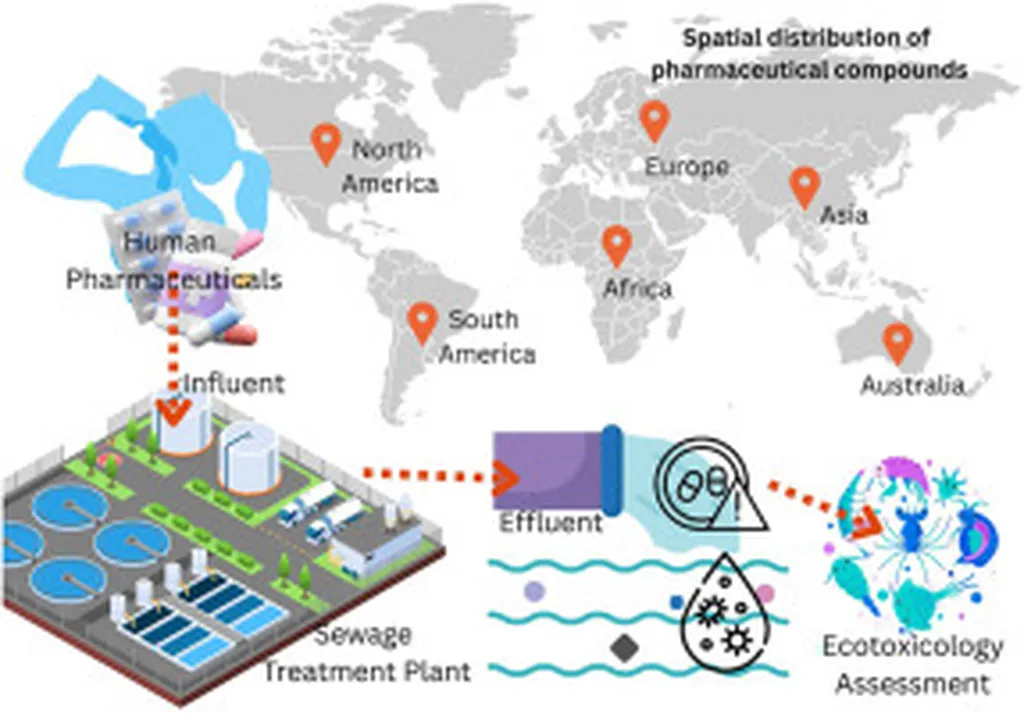
In the arid landscapes of the Middle East, where water scarcity is a pressing concern, the reuse of treated wastewater for irrigation and groundwater recharge is becoming increasingly common. However, this practice raises important questions about the potential environmental and health impacts of pharmaceutical contaminants present in reclaimed water. A recent study published in the journal ‘Applied Water Science’ (translated from Arabic as ‘العلوم المائية التطبيقية’) sheds light on this issue, offering valuable insights into the behavior of pharmaceutical compounds in soil and their potential to contaminate groundwater.
Led by Obaid A. Alharbi from the Water Management & Treatment Institute at King Abdulaziz City for Science and Technology (KACST), the research team investigated the leaching behavior of eleven pharmaceutical compounds in four different soil types. Using the OECD 312 protocol, they analyzed 80 samples, including leachate and soil samples, to understand how these compounds move through soil layers.
The findings revealed that most of the studied pharmaceuticals exhibited limited mobility, with strong sorption to soil particles and notable accumulation in the top 5 centimeters of the soil profile. “This indicates a negligible risk of potential pollution of groundwater from wastewater discharge or reuse,” Alharbi explained. However, two compounds, caffeine and cephalexin, showed higher mobility, penetrating up to 30 centimeters into the soil column and detected in the leachate at low concentrations.
The commercial implications of this research are significant, particularly for the energy sector, which often relies on groundwater for cooling and other processes. Understanding the potential for groundwater contamination is crucial for ensuring the sustainability and reliability of water resources. “Our findings suggest that while most pharmaceuticals pose a low risk of leaching, caffeine and cephalexin may require more careful management to prevent potential groundwater contamination,” Alharbi noted.
This study highlights the importance of tailored approaches to water management in arid regions. As the demand for water continues to grow, the reuse of treated wastewater will likely increase. Therefore, ongoing research and monitoring are essential to ensure that this practice is carried out safely and sustainably.
The research team’s work not only advances our understanding of pharmaceutical leaching behavior but also underscores the need for proactive measures to protect groundwater resources. As the energy sector and other industries continue to rely on these resources, the insights gained from this study will be invaluable in shaping future water management strategies.
In the quest for sustainable water management, this research serves as a reminder that every drop counts. By understanding the behavior of contaminants in our environment, we can make informed decisions that protect our water resources and ensure their availability for future generations.