
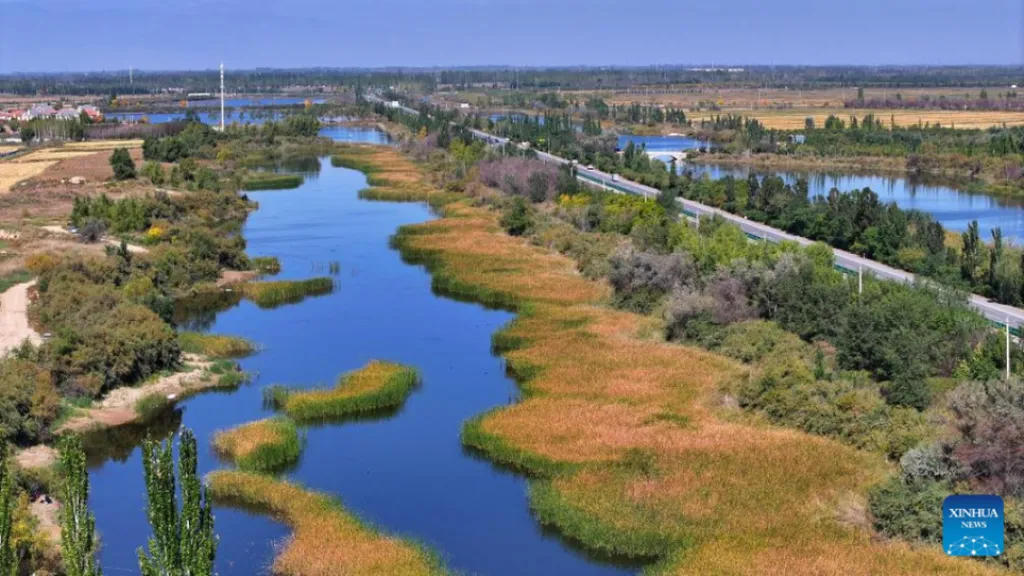
In the heart of China’s Yellow River Basin, a silent transformation is underway, one that could hold significant implications for the energy sector and regional sustainable development. A recent study led by Menghao Yang from the College of Surveying and Geo-Informatics at North China University of Water Resources and Electric Power has shed light on the intricate dance between ecosystem service supply and demand in the Shaanxi section of the Yellow River Basin (SYRB), following large-scale vegetation restoration efforts.
The research, published in the journal ‘Frontiers in Forests and Global Change’ (translated as ‘Forest and Global Change Frontiers’), employed specialized models to assess the supply and demand of three critical ecosystem services: water yield, soil conservation, and carbon fixation. The findings reveal a complex picture of progress and persistent challenges.
“Our study shows that while there have been improvements, the water yield in the SYRB is still generally in a deficit state,” Yang explained. This means that the demand for water resources continues to outstrip supply, particularly in the northern part of the SYRB and the Guanzhong Plain. This has significant implications for the energy sector, which relies heavily on water for cooling and other processes.
However, the story is not all doom and gloom. The research found that soil conservation has seen a fundamental reversal from a “general deficit” to an “overall surplus.” This is a positive sign for the region’s ecological health and could have long-term benefits for energy infrastructure, reducing the risk of soil erosion and related damages.
The supply-demand relationship for carbon fixation, however, paints a more concerning picture. The study found that this relationship has deteriorated in the vast majority of counties, with insufficient supply primarily located in the northern part of the SYRB and the Guanzhong Plain. This could have implications for carbon-intensive industries and their efforts to manage emissions.
The research also identified key factors influencing these ecosystem service supply-demand relationships. For water yield, economic density, vegetation coverage, and population density were found to be crucial. For soil conservation, precipitation, slope, and population density were the main controlling factors. Meanwhile, economic density, forest and grassland percentage, and population density were key for carbon fixation.
This study provides a theoretical basis for the comprehensive management of regional ecosystems, which could in turn support the energy sector’s transition towards more sustainable practices. As Yang noted, “Understanding these dynamics is crucial for controlling the design of regional ecological protection policies and sustainable management.”
The findings could shape future developments in the field, guiding policymakers and industry leaders in their efforts to balance ecological health with economic growth. By understanding the underlying drivers of ecosystem service supply and demand, stakeholders can make more informed decisions, ultimately fostering a more sustainable future for the Yellow River Basin and beyond.