
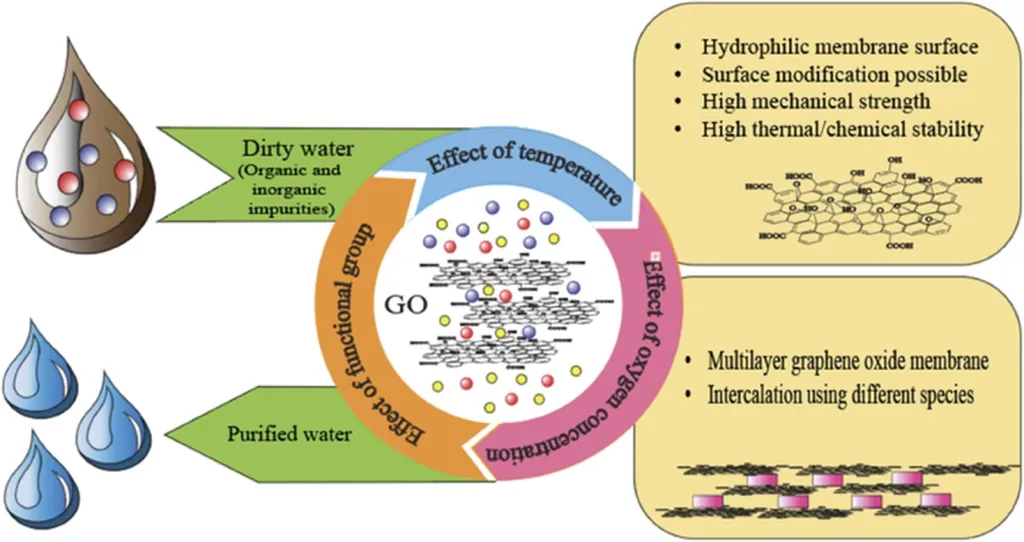
In the quest for cleaner water, scientists have long turned to a promising duo: graphene oxide and titanium dioxide. These materials, when combined, create a hybrid nanomaterial that could revolutionize water treatment by simultaneously adsorbing and breaking down pollutants. However, despite years of research, the full potential of these graphene oxide–titanium dioxide (GO–TiO2) hybrids has remained elusive. Now, a critical review published in *Materials & Design* (translated from Spanish as *Materials & Design*) is shedding light on the fundamental principles that could unlock the next generation of photocatalysts, with significant implications for the energy and water treatment sectors.
At the heart of this research is Francisco J. Cano, a scientist at the Laboratorio de Fisicoquímica y Reactividad de Superficies (LaFReS) at the Universidad Nacional Autónoma de México. Cano and his team have deconstructed the multifaceted performance of GO–TiO2 hybrids, proposing a rational design framework that could transform how these materials are engineered. “The key lies in understanding the interplay between the oxidation degree of graphene oxide, the electronic structure of the individual components, and their compositional ratio,” Cano explains. “These descriptors are not strictly interdependent, but together, they exert a decisive influence on the efficiency and characteristics of the final hybrid material.”
The review highlights persistent mechanistic ambiguities in the field, including conflicting reports on bandgap modulation—a critical factor in determining the photocatalytic activity of these materials. By reframing the role of adsorption from a passive prelude to an active modulator of interfacial kinetics, Cano advocates for advanced surface engineering strategies. “We need to actively tune the affinity and selectivity of these materials to enhance their performance,” he says. “This foundational understanding is essential for advancing the field towards more complex and efficient ternary and quaternary architectures.”
The implications of this research extend beyond the laboratory. In the energy sector, photocatalysts play a crucial role in processes such as water splitting for hydrogen production and the degradation of organic pollutants. By establishing a fundamental design workflow grounded in interfacial descriptors, this research paves the way for rationally designed, multi-component photocatalysts. These advancements could lead to more sustainable and efficient water treatment technologies, reducing the energy footprint of water remediation processes and opening new avenues for commercial applications.
As the field moves forward, the resolution of these foundational inconsistencies in the binary model will be crucial. “The successful advancement of the field hinges on our ability to address these ambiguities and develop a more comprehensive understanding of the structure–property–performance relationships in these materials,” Cano notes. By doing so, researchers can pave the way for the next generation of sustainable water treatment technologies, ultimately benefiting both the environment and the energy sector.
This critical review not only highlights the current state of GO–TiO2 research but also sets the stage for future developments. As scientists continue to refine their understanding of these materials, the potential for commercial applications in water treatment and energy production grows ever more promising. The journey towards cleaner water and more sustainable energy solutions is complex, but with the insights provided by Cano and his team, the path forward is becoming increasingly clear.