
In an era where climate change and aging infrastructure are putting immense pressure on freshwater supplies, a novel desalination concept is emerging that could redefine water security and energy efficiency. Independent researcher Kamal Babu Gokanakonda has proposed the Solar-Powered Graphene Desalination Unit (SPGDU), a decentralized, solar-powered desalination system that integrates cutting-edge materials and renewable energy to address the challenges of conventional desalination methods.
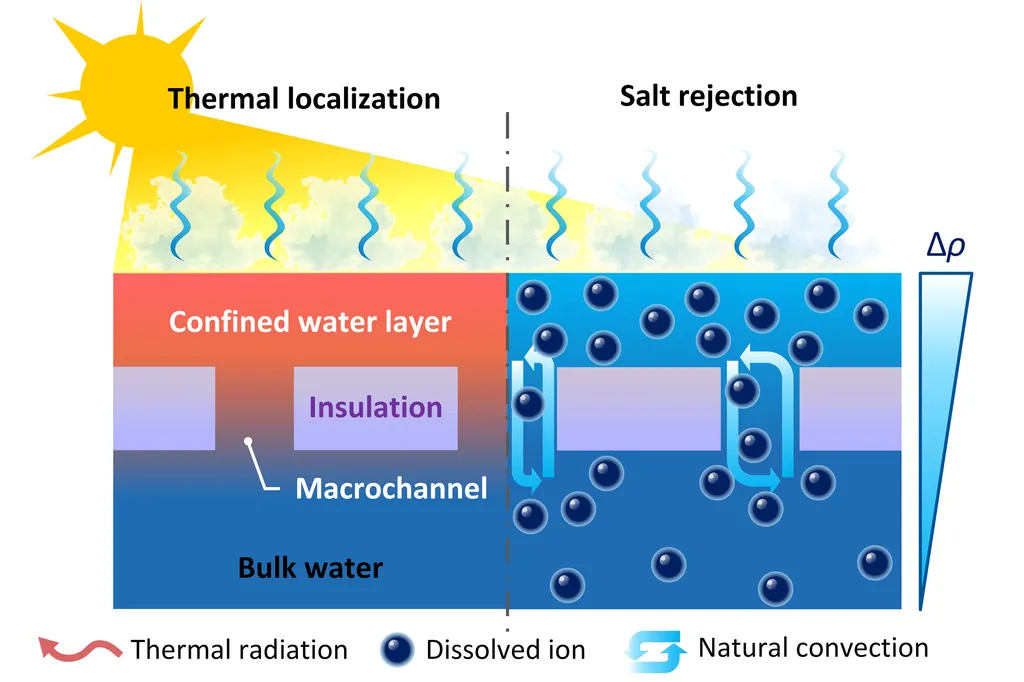
The SPGDU is a multi-stage process that begins with solar-photothermal preheating and evaporation, which is engineered to manage salt accumulation effectively. This is followed by a nanoporous graphene-oxide membrane stage that selectively transports and pretreats water. The final stage involves direct-drive photovoltaic electrodialysis (PV-ED), operated with a flow-commanded current controller to minimize or eliminate the need for batteries. This innovative design aims to produce resilient, community-scale freshwater from both brackish and seawater, with each modular unit targeting a production capacity of 2–5 cubic meters per day.
Gokanakonda, who is based in Ames, Iowa, emphasizes the potential of this technology to transform water security. “The SPGDU is not just about desalinating water; it’s about creating a sustainable, decentralized system that can adapt to the needs of communities while reducing energy consumption and infrastructure strain,” he explains. The system’s design incorporates basic sensor monitoring and cyber-resilience considerations, ensuring that it can operate efficiently and securely in various environments.
One of the most compelling aspects of the SPGDU is its potential impact on the energy sector. Traditional desalination plants are energy-intensive, often relying on fossil fuels to power the process. In contrast, the SPGDU leverages solar energy, making it a more sustainable and cost-effective solution. “By integrating solar power and advanced materials like graphene oxide, we can significantly reduce the energy footprint of desalination,” Gokanakonda notes. “This not only benefits the environment but also opens up new opportunities for commercial applications in regions where freshwater is scarce but solar resources are abundant.”
The research, published in the journal ‘Desalination and Water Treatment’ (translated to English as ‘Desalination and Water Purification’), outlines a quantitative scaling envelope for salt crystallization avoidance and/or harvesting, providing a framework for future prototyping, validation, and techno-economic assessment. The SPGDU’s modular design and adaptability make it a versatile solution for various water-security applications, from remote communities to industrial settings.
As the world grapples with the challenges of climate change and water scarcity, innovations like the SPGDU offer a glimpse into a future where technology and sustainability converge to address critical needs. By harnessing the power of solar energy and advanced materials, the SPGDU could pave the way for more resilient and energy-efficient desalination systems, ultimately contributing to global water security and energy sustainability.