
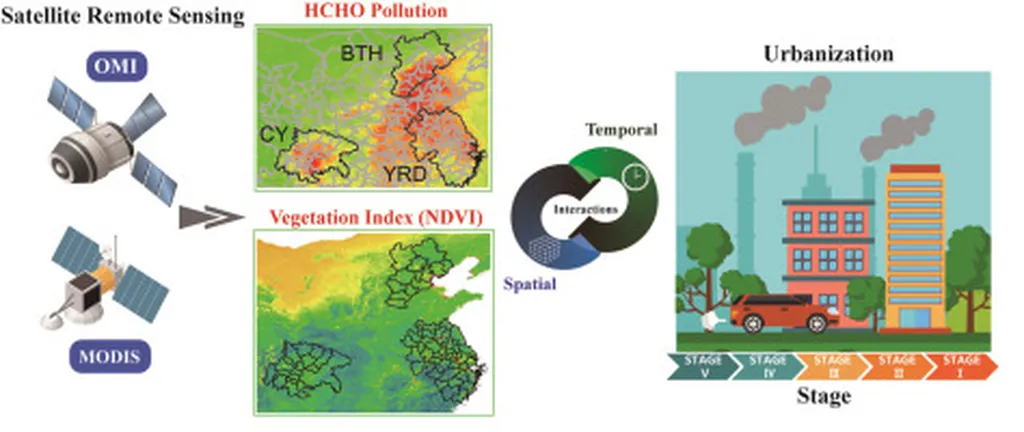
In the heart of our cities, a silent transformation is underway, one that is reshaping the very fabric of the Earth’s surface. This phenomenon, known as urbanization, is not just about the expansion of concrete jungles; it’s a complex interplay of ecological, social, and economic changes that are significantly impacting what scientists call the Urban Critical Zone (UCZ). A recent study published in the journal *Earth Critical Zone* (translated as “Earth Critical Zone”) sheds light on these changes, offering a comprehensive review of the ecological, social, and economic effects of urbanization on the UCZ.
Led by Peiheng Yu, a researcher from the Department of Building and Real Estate at The Hong Kong Polytechnic University, the study underscores the profound pressure urbanization exerts on the UCZ. “Urbanization affects the interfaces of the UCZ, leading to profound changes in ecosystem structure, processes, and functions,” Yu explains. These changes include land use changes, biodiversity loss, urban heat island effects, and pollution of air, water, and soil.
For the energy sector, these findings are particularly relevant. The alterations in regional and global carbon and nitrogen cycles, for instance, can have significant commercial impacts. As cities grow, so does their energy demand, leading to increased emissions and a heightened need for sustainable energy solutions. The study highlights the need for an integrated approach through sustainable urban planning and investment in green infrastructure to ensure the health and resilience of both natural environments and human societies.
Moreover, urbanization results in inequitable resource distribution, social stratification and inequality, and poses public health challenges. However, it’s not all doom and gloom. Urbanization also offers opportunities for environmental management advancements, increased public awareness of ecological protection, and the development of green infrastructure.
The study’s findings are a call to action for policymakers, urban planners, and energy sector stakeholders. As Yu puts it, “Our analysis highlights the need for an integrated approach through sustainable urban planning and investment in green infrastructure to ensure the health and resilience of both natural environments and human societies for the healthy UCZ.”
In the face of rapid urbanization, understanding and mitigating its impacts on the UCZ is crucial for a future safe and habitable planet. This research not only shapes future developments in the field but also underscores the urgent need for sustainable urban development goals. As we continue to expand our cities, let’s ensure we do so in a way that respects and preserves the delicate balance of the Earth’s critical zone.