
In the face of escalating climate-driven water scarcity, a groundbreaking study led by Jesús Morón-López from the Nanosystems Engineering Research Center for Nanotechnology-Enabled Water Treatment at Arizona State University has unveiled a promising innovation in irrigation technology that could revolutionize the way we grow high-value leafy crops. Published in the journal *Agricultural Water Management* (translated as *Management of Agricultural Water*), the research explores the use of nanobubbles (NBs) to enhance irrigation efficiency and water productivity, offering a glimmer of hope for sustainable agriculture in water-stressed regions.
Nanobubbles, gas-filled cavities smaller than 500 nanometers in diameter, have emerged as a potential game-changer in the agricultural sector. Morón-López and his team set out to systematically evaluate the influence of different gas types—oxygen (O2), carbon dioxide (CO2), nitrogen (N2), and air—delivered as nanobubbles at various dilution levels on the early-stage growth and water productivity of lettuce plants.
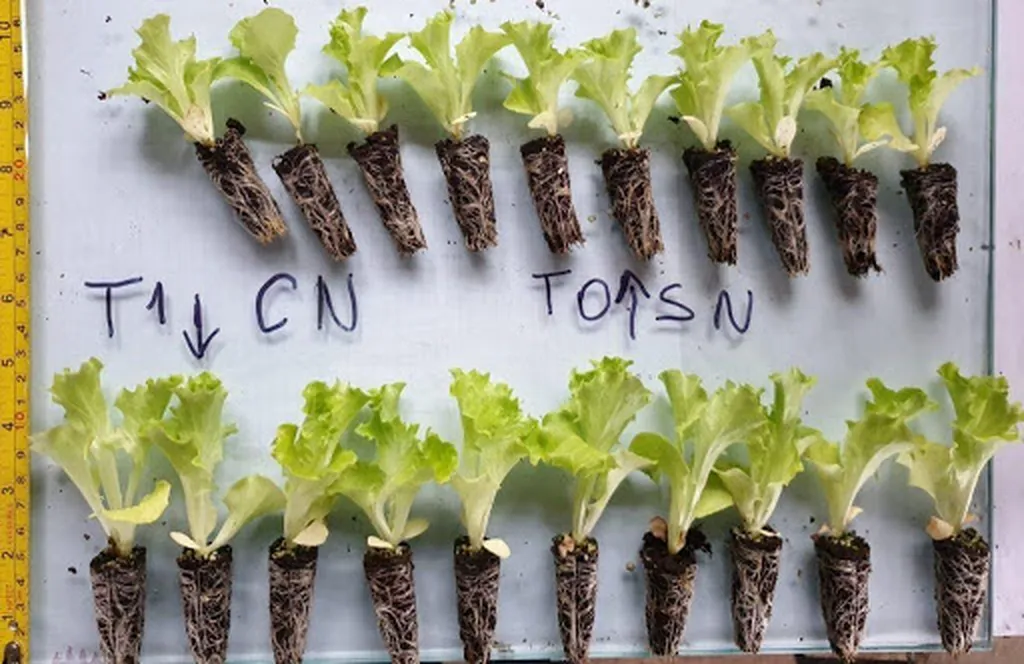
The results were striking. Moderately diluted oxygen nanobubbles (10%–50%) accelerated germination, boosted biomass accumulation, and improved water savings by up to 23%. “We found that these nanobubbles can be strategically tuned to regulate distinct physiological pathways during early plant development,” Morón-López explained. “This opens up new possibilities for water-efficient, climate-resilient leafy crop production.”
In contrast, high concentrations (100%) of oxygen nanobubbles reduced overall performance and induced elongated but narrow leaf morphology, consistent with stress-related growth allocation. CO2 nanobubbles, particularly at higher concentrations, stimulated root expansion and leaf area development, while moderate N2 nanobubble concentration enhanced ammonium uptake and root elongation. Air nanobubbles produced modest and variable effects, serving as a baseline but never outperforming pure gas nanobubbles.
The implications of this research are far-reaching. As water scarcity becomes an increasingly pressing issue, the ability to enhance irrigation efficiency and water productivity is crucial for global food security. The use of nanobubble technology offers a sustainable solution that can be tailored to the specific needs of different crops and growing conditions.
“This research demonstrates the potential of nanobubble-based irrigation as a tool for water-efficient, climate-resilient leafy crop production,” Morón-López said. “It’s a significant step forward in our quest for sustainable agriculture.”
The study’s findings could shape future developments in the field, paving the way for more efficient and sustainable irrigation practices. As the agricultural sector continues to grapple with the challenges posed by climate change, innovations like nanobubble technology offer a beacon of hope for a more resilient and water-efficient future.