
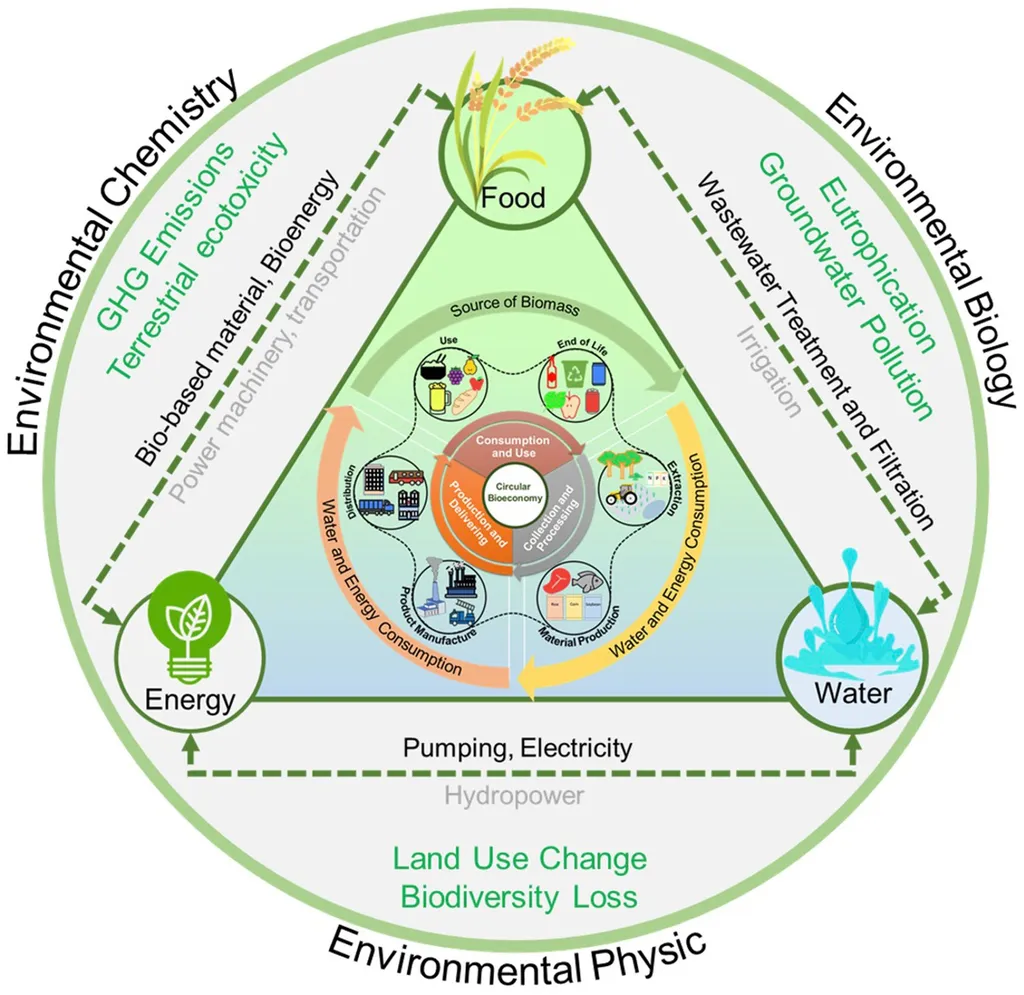
In the face of global climate governance and the urgent push towards low-carbon energy transitions, a pressing challenge has emerged: the strain on regional water resources caused by traditional energy development. A recent study, led by Xing Yuhan from the China Institute of Water Resources and Hydropower Research, sheds light on this critical issue and offers a pathway to optimize water resources allocation in the energy sector.
The research, published in the E3S Web of Conferences (which translates to Environmental Sciences and Sustainable Development Web of Conferences), reveals that water resources have become a significant constraint on energy development. “The energy transition is driving structural changes, enhancing water use efficiency while also introducing new, high-quality water demands,” Xing explains. This dual pressure on supply and demand is steering water resources allocation towards a more optimized and precise approach.
On the supply side, traditional energy sources face three rigid constraints: the disruption of surface water network connectivity, reduction policies for over-exploitation of groundwater, and the efficient utilization of unconventional water sources. On the demand side, industrial restructuring and emerging energy industries are changing the water demand landscape.
To address these challenges, Xing and his team constructed a synergistic optimization function targeting “maximized economic benefits, optimized water efficiency, and enhanced system equilibrium.” This approach involves model quantification, comprehensive evaluation, and policy generation. The case study results are promising, demonstrating a 15%-20% improvement in water use efficiency and over a 10% enhancement in the spatial equilibrium of water resources allocation.
The implications for the energy sector are substantial. By aligning energy transition with water resource availability, companies can enhance their sustainability credentials, reduce operational risks, and potentially lower costs associated with water usage. Moreover, the proposed water resources collaborative governance mechanism, involving cross-departmental coordinated decision-making, market-based regulation, and monitoring and evaluation, could foster a more integrated and efficient approach to water management.
As the energy sector continues to evolve, this research provides a valuable tool for stakeholders to navigate the complex interplay between energy development and water resources. It offers a roadmap for a greener, safer, and more sustainable future, where the energy transition is not just about shifting to low-carbon sources but also about optimizing the use of our most precious resource: water.
In the words of Xing, “This study offers theoretical support and decision-making references for advancing the energy system towards a greener, safer, and more sustainable future.” With such insights, the energy sector can better prepare for the challenges and opportunities that lie ahead, ensuring a more resilient and efficient future for all.