
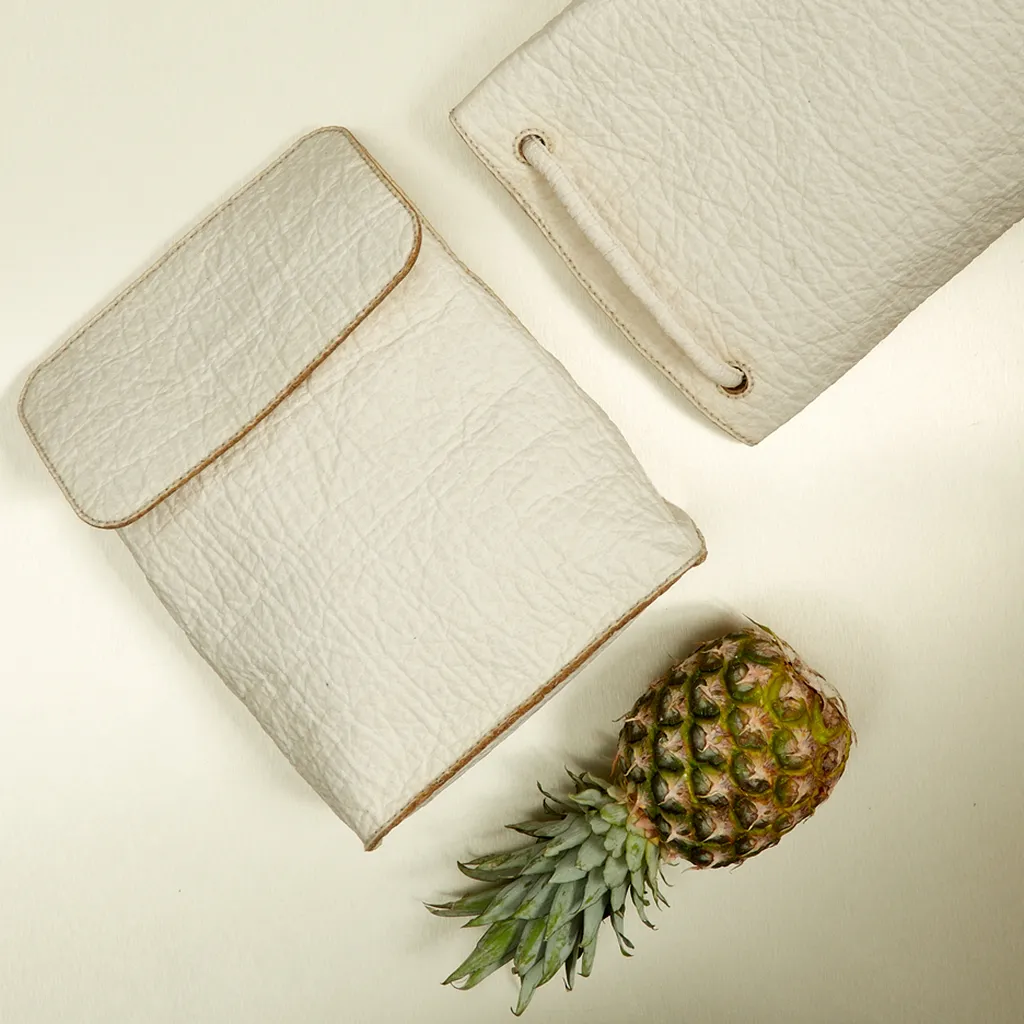
In a world increasingly conscious of environmental sustainability, researchers are turning to innovative solutions to replace traditional materials with eco-friendly alternatives. A recent study published in the *E3S Web of Conferences* (translated to *Environmental, Energy, and Sustainable Science Web of Conferences*) explores the potential of pineapple leaf fibers (PALF) as a sustainable base for vegan leather, offering a promising alternative to petroleum-based synthetic leathers.
The research, led by Srisang Siriwan from the Department of Engineering at King Mongkut’s Institute of Technology Ladkrabang, Prince of Chumphon Campus, focuses on developing a biodegradable vegan leather using natural rubber and pineapple leaf fibers. The study employs Response Surface Methodology (RSM) to analyze the effects of fiber content, compression time, and compression temperature on biodegradation, water absorption, and tensile strength.
The findings reveal that all three factors significantly influence biodegradation, with the predictive model demonstrating high reliability. “The optimum condition for achieving maximum biodegradation was found to be 3.0 grams of fiber content, 70.0 minutes of compression time, and 110.0°C compression temperature, yielding a maximum predicted biodegradation of about 21%,” Siriwan explains. This breakthrough highlights the potential of PALF as a sustainable material, aligning with circular economy principles and supporting the United Nations Sustainable Development Goals (SDGs).
However, the models for water absorption and tensile strength were statistically unreliable, indicating a need for further refinement. “Future experiments should narrow the factor ranges and include additional control variables to improve the predictability of these properties,” Siriwan suggests. Despite these limitations, the study underscores the potential of PALF-based vegan leather as a sustainable alternative to conventional synthetic leather.
The commercial implications for the energy sector are significant. As industries strive to reduce their carbon footprint and adopt more sustainable practices, the development of eco-friendly materials like PALF-based vegan leather can play a crucial role. This innovation could revolutionize sectors such as fashion, packaging, and eco-friendly product design, offering a viable solution to the environmental impact of synthetic leather production.
The study’s resource-efficient process is particularly noteworthy. From just 1 kg of pineapple leaves, only 20 grams of fibers are obtained, and a mere 75 grams of PALF were used in the 15 experimental runs. This minimal material requirement underscores the potential of the approach for sustainable production, making it an attractive option for industries looking to adopt greener practices.
As the world continues to grapple with the challenges of environmental sustainability, research like this offers a glimmer of hope. By turning to renewable resources and innovative technologies, we can pave the way for a more sustainable future. The study published in the *E3S Web of Conferences* serves as a testament to the power of scientific innovation in driving positive change, inspiring further exploration and development in the field of sustainable materials.