
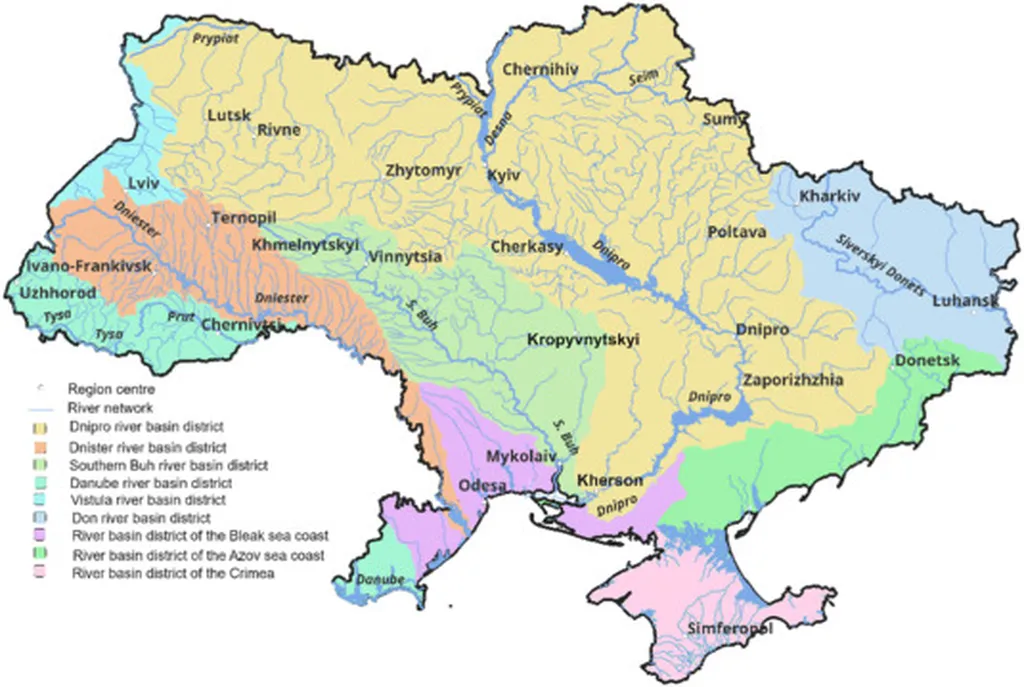
In the verdant landscapes of Ukraine’s Volyn Region, a delicate balance is being struck between water use and sustainability, according to a recent study published in the journal *Людина і довкілля: Проблеми неоекології*, which translates to *Man and the Environment: Problems of Neoecology*. The research, led by V. O. Fesyuk of Lesya Ukrainka Volyn National University, offers a comprehensive look at the region’s water dynamics, revealing both challenges and opportunities that could resonate deeply with the energy sector and beyond.
Volyn Region’s water balance is currently non-deficit, with ample resources to meet regional demands. In 2024, total water withdrawal reached 45.71 million cubic meters, with groundwater accounting for 36.3 million cubic meters. “Only about 4% of their estimated reserves are currently used,” Fesyuk notes, highlighting the untapped potential of the region’s water resources. The municipal sector leads water consumption, followed by agriculture and industry, each playing a pivotal role in the region’s economic landscape.
However, the study also uncovers critical issues that could impact commercial operations, particularly in the energy sector. Water losses during transportation are notably high, nearly 17%, which not only represents a significant waste of resources but also a potential inefficiency that could escalate costs. “The volume of discharged wastewater amounted to 29.08 million cubic meters, most of which was treated,” Fesyuk explains. Yet, wastewater treatment facilities are operating close to capacity, posing risks of declining water quality in the Pripyat and Western Bug rivers. This could lead to stricter regulatory measures and increased operational costs for industries reliant on these water bodies.
The energy sector, in particular, faces a dual challenge. On one hand, it must ensure a steady water supply for cooling and other processes, while on the other, it must navigate the complexities of wastewater management. The study’s findings suggest that the region’s water management system, though stable, is in dire need of modernization. Upgrading treatment facilities, reducing water losses, and implementing more efficient technologies are not just environmental imperatives but also strategic business decisions that could enhance operational resilience and sustainability.
Moreover, the research underscores the importance of integrated water management and digital monitoring. These advancements could provide the energy sector with real-time data and predictive insights, enabling more informed decision-making and proactive risk management. “Priorities include reducing water losses, upgrading treatment systems, expanding closed water-use cycles in industry, promoting water-saving practices in agriculture, implementing digital monitoring, integrated water management, and strengthening public involvement in addressing water-use challenges,” Fesyuk emphasizes.
The study’s findings are a clarion call for action, not just for policymakers but also for businesses, particularly in the energy sector. By addressing the identified challenges, companies can mitigate risks, enhance efficiency, and contribute to sustainable development. The research published in *Man and the Environment: Problems of Neoecology* serves as a roadmap, guiding stakeholders towards a future where water use is not just sustainable but also strategically aligned with commercial interests.
As Volyn Region grapples with these hydroecological problems, the solutions it adopts could very well set a precedent for other regions facing similar challenges. The energy sector, in particular, has a unique opportunity to lead by example, demonstrating how commercial interests and environmental sustainability can go hand in hand. In doing so, it can pave the way for a future where water is not just a resource but a strategic asset, driving growth and innovation in an increasingly water-scarce world.