
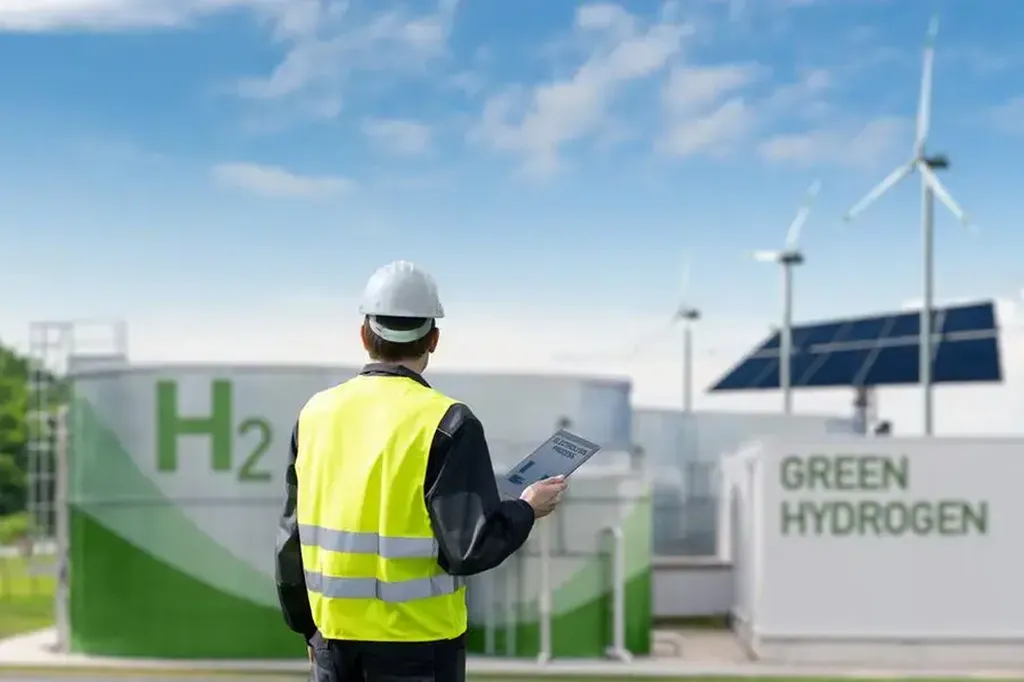
In the arid landscapes of Jordan, a quiet revolution is brewing, one that could reshape the country’s energy sector and bolster its position as a regional leader in sustainable innovation. At the heart of this transformation is green hydrogen, a clean energy carrier that promises to decarbonize industries and open new avenues for economic growth. A recent study published in ‘Discover Sustainability’ (translated from Arabic as ‘Exploring Sustainability’) sheds light on Jordan’s ambitious journey towards harnessing this promising resource.
Led by Hani Muhsen from the Department of Mechatronics Engineering at the Green Energy and Hydrogen Hub of the German Jordanian University, the research provides a comprehensive overview of Jordan’s green hydrogen initiatives, their current status, and future potential. The study estimates that Jordan’s levelized cost of hydrogen (LCOH) ranges between $6.5 and $7.6 per kilogram, with desalinated water costs amounting to $0.9 per cubic meter. These figures are crucial for understanding the commercial viability of green hydrogen production in the region.
Jordan’s strategic location and abundant renewable resources, particularly solar and wind, make it an ideal hub for green hydrogen production. The country’s national strategy aims to export 0.5 million tons of green hydrogen by 2035, primarily for ammonia production, and achieve a cost of $2–3 per kilogram by 2050. “This is not just about energy transition; it’s about economic diversification and creating new industries,” Muhsen explains. “Green hydrogen can be a game-changer for Jordan, opening up export opportunities and attracting significant investments.”
The study also highlights the importance of a national certification scheme, aligned with EU carbon intensity standards, to ensure the quality and competitiveness of Jordan’s green hydrogen. This certification scheme is currently under preparation and will play a pivotal role in integrating Jordan into the global green hydrogen market.
The research underscores the significance of recent memoranda of understanding signed by the Ministry of Energy and Mineral Resources, which identify suitable locations for green hydrogen projects based on renewable resources and land constraints. These initiatives are expected to drive significant investments and create new job opportunities, further bolstering Jordan’s economy.
As the world shifts towards sustainable energy solutions, Jordan’s progress in green hydrogen production could serve as a model for other countries with similar renewable resource profiles. The study’s findings not only provide a roadmap for Jordan’s energy transition but also offer valuable insights for the global energy sector. “The potential is immense,” Muhsen notes. “With the right policies and investments, green hydrogen can become a cornerstone of Jordan’s energy future and a beacon of sustainable development in the region.”
In the coming years, as Jordan advances its green hydrogen initiatives, the world will be watching closely. The success of these projects could pave the way for a cleaner, more sustainable energy landscape, not just in Jordan but across the globe. The research published in ‘Discover Sustainability’ serves as a timely reminder of the transformative power of innovation and the critical role it plays in shaping our energy future.