
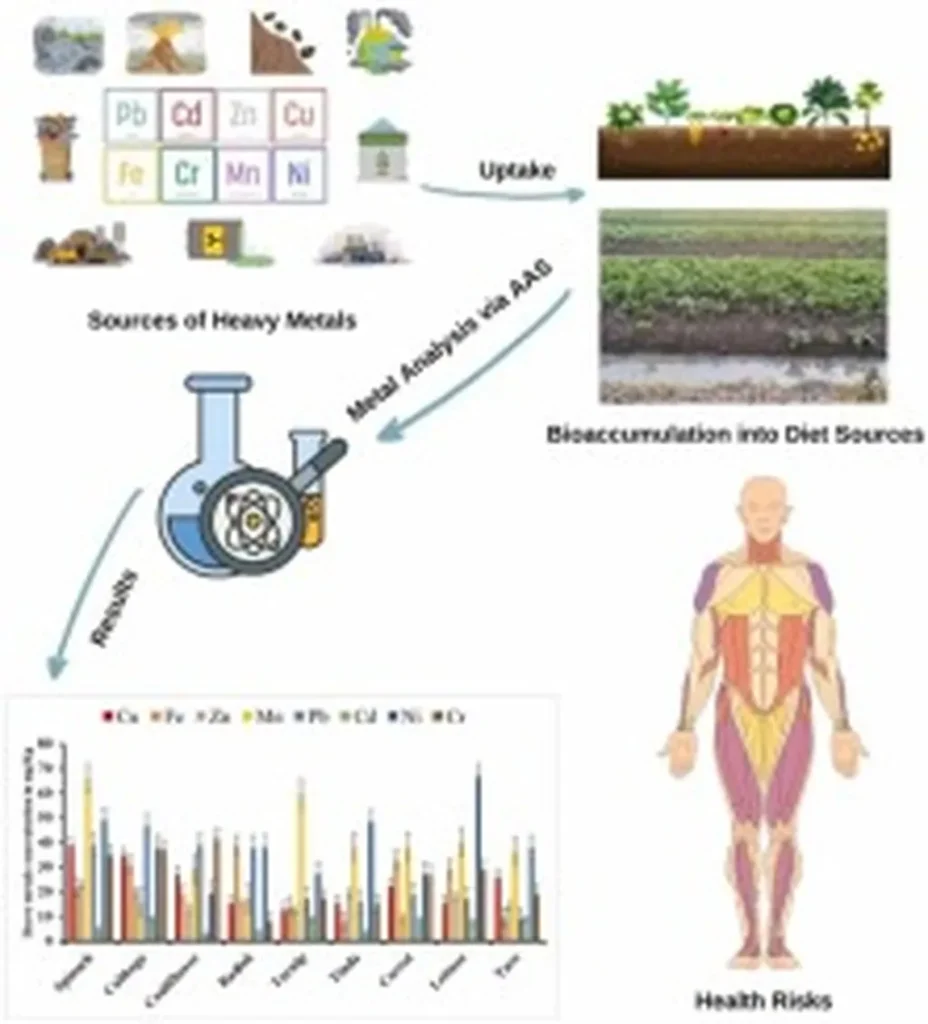
In the heart of Pakistan’s Punjab province, a pressing issue is brewing that could have far-reaching implications for public health, agriculture, and even the energy sector. A recent study published in *Discover Applied Sciences* (translated as *Anwar al-‘Ulum al-Mutaḥaddithah*), led by Nida Mehboob from the Department of Biological Sciences at the University of Sialkot, has shed light on the alarming levels of heavy metals in vegetables irrigated with wastewater in Gujranwala. The research, which focused on Spinacia oleracea (spinach) and Coriandrum sativum (coriander), has raised serious concerns about the safety of using untreated wastewater for irrigation.
The study found that both spinach and coriander accumulated heavy metals such as cobalt (Co), chromium (Cr), and lead (Pb) at levels exceeding the World Health Organization (WHO) allowable limits. “The concentrations of these metals in the vegetables were significantly higher than the safe limits,” Mehboob explained. “This poses a substantial risk to public health, as these vegetables are integral to the local diet.”
The research also analyzed the soil and wastewater used for irrigation. While soil levels of most metals were within WHO limits, wastewater samples showed elevated concentrations of Co, cadmium (Cd), Cr, and Pb, surpassing WHO thresholds for irrigation water. This discrepancy highlights the urgent need for effective wastewater treatment before it is used for irrigation.
The implications of this study extend beyond public health. The energy sector, particularly in regions where wastewater is repurposed for irrigation, could face increased scrutiny and regulatory pressure. As the demand for sustainable practices grows, industries may need to invest in advanced wastewater treatment technologies to mitigate the risk of heavy metal contamination. “This research underscores the importance of implementing sustainable irrigation practices and land management strategies,” Mehboob noted. “It’s not just about food safety; it’s about ensuring the long-term viability of our agricultural practices and the industries that support them.”
The findings also align with the United Nations Sustainable Development Goals (SDGs), particularly SDG 2 (Zero Hunger), SDG 3 (Good Health and Well-being), and SDG 6 (Clean Water and Sanitation). By addressing the issue of heavy metal contamination in wastewater and vegetables, the study contributes to the broader effort to achieve these global objectives.
As the world grapples with the challenges of climate change and resource scarcity, the need for innovative solutions in water management and agriculture becomes ever more critical. This research serves as a wake-up call, highlighting the potential dangers of untreated wastewater irrigation and the urgent need for action. “We hope that our findings will prompt policymakers, farmers, and industry leaders to take steps towards safer and more sustainable practices,” Mehboob concluded.
In the coming years, this research could shape the development of new wastewater treatment technologies and policies aimed at reducing heavy metal contamination. It may also spur further studies into the bioaccumulation of heavy metals in other crops and the long-term effects on human health. As the world moves towards a more sustainable future, the insights gained from this study will be invaluable in guiding the way forward.