
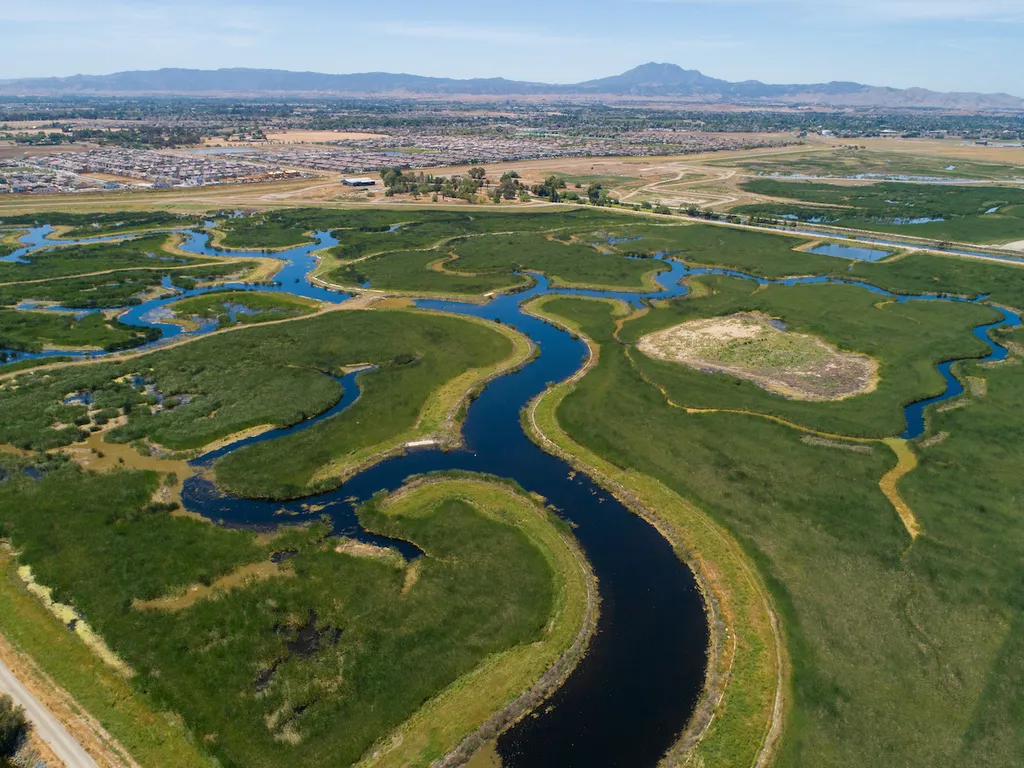
In the heart of the Dutch Southwest Delta, a tale of restoration and resilience unfolds, one that offers crucial insights for the energy sector and coastal management worldwide. A recent study, led by Niels A G M van Helmond from Radboud University and Utrecht University, published in the journal ‘Environmental Research Letters’ (translated as ‘Letters on Environmental Research’), sheds light on the complexities of restoring coastal ecosystems and the lingering impacts of eutrophication.
The study focuses on Lake Veere, a marine lake that was reconnected to the tidal Eastern Scheldt two decades ago in an effort to improve water quality. Initial improvements were seen, but recent years have witnessed a decline, sparking the need for a deeper understanding of the processes at play.
Van Helmond and his team delved into existing monitoring data, examining oxygen levels, temperature, salinity, and benthic macroinvertebrates. They also quantified the oxygen demand of the sediment at selected sites through field measurements. Their findings reveal a stark reality: while the restored tidal influence led to improved oxygen saturation in the bottom waters, these improvements were limited to the eastern part of the lake, near the inflow of marine water.
The study highlights a critical challenge in coastal restoration: the legacy effects of eutrophication. “Our results illustrate the challenge of restoring a coastal ecosystem by increasing lateral oxygen supply without addressing the legacy effects of eutrophication in the sediments,” van Helmond explains. The high oxygen demand of the sediment, driven by elevated concentrations of ammonium and hydrogen sulphide, poses a significant obstacle. These solutes, toxic and formed by the anaerobic remineralization of organic matter, underscore the persistent impact of past nutrient pollution.
For the energy sector, these findings are particularly relevant. Coastal deoxygenation can affect marine life and ecosystems that support fisheries and aquaculture, industries vital to coastal economies. Moreover, understanding and mitigating these processes can inform the siting and operation of coastal infrastructure, including renewable energy projects.
The study also reveals the detrimental effect of deoxygenation on benthic faunal communities. Modelled bottom water oxygen concentrations and observed benthic macroinvertebrate densities are closely related, with reduced densities under low-oxygen conditions, especially for less mobile infauna. This underscores the broader ecological implications of coastal deoxygenation and the need for comprehensive restoration strategies.
Looking ahead, this research underscores the importance of addressing legacy effects in restoration efforts. “Nutrient reductions must be a cornerstone of any restoration strategy,” van Helmond asserts. This means not only improving water exchange and oxygen supply but also tackling the root causes of eutrophication and its lingering impacts on sediments.
As coastal ecosystems worldwide face increasing pressures from climate change and human activities, the lessons from Lake Veere offer valuable insights. The study published in ‘Letters on Environmental Research’ serves as a reminder that restoration is a complex, multifaceted process requiring a deep understanding of both immediate and long-term impacts. For the energy sector and coastal managers, it highlights the need for integrated approaches that consider the full spectrum of ecological processes and their implications for human activities.