
In the face of a global water crisis, researchers are turning to innovative technologies to tackle emerging contaminants in wastewater. A recent study published in the journal *Applied Sciences* (translated from Spanish as *Applied Sciences*) sheds light on a promising approach using metal-organic frameworks (MOFs) to enhance the effectiveness of peracetic acid (PAA) in advanced oxidation processes (AOPs). This research, led by Bakhta Bouzayani from the Department of Chemical Engineering at the University of Vigo in Spain, offers a glimpse into the future of sustainable water treatment.
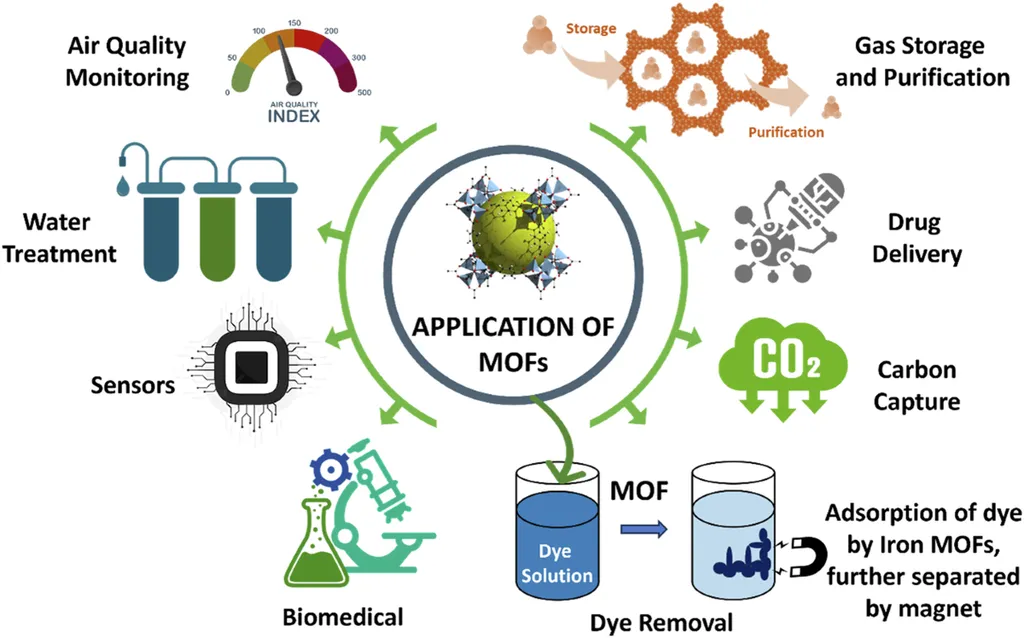
The study highlights the growing interest in PAA as an oxidant due to its high redox potential, chemical stability, and strong disinfection capabilities. However, the lack of efficient catalysts has been a significant hurdle in achieving optimal degradation of contaminants. Bouzayani and her team explore the potential of MOFs, which boast large surface areas, tunable porosity, and structural diversity, making them ideal platforms for catalyst design.
“MOFs provide a versatile foundation for developing catalysts that can activate PAA more effectively,” explains Bouzayani. “Their unique properties allow us to engineer materials with superior activity, stability, and recyclability, which are crucial for sustainable wastewater remediation.”
The research delves into the mechanisms of PAA activation, discussing strategies for creating MOF-based composites with synergistic catalytic properties. By transforming MOFs into robust derivatives, the team aims to improve stability and reactivity, ultimately enhancing the efficiency of PAA-based AOPs.
One of the key aspects of the study is the identification and quantification of reactive species generated in PAA systems. Understanding these reaction pathways is critical for optimizing catalytic performance and ensuring the effective degradation of contaminants. The team’s findings provide valuable insights into the design of highly efficient, recyclable, and environmentally compatible MOF-based catalysts.
The implications of this research extend beyond the laboratory, offering potential commercial impacts for the energy sector. As industries strive to meet stringent environmental regulations, the development of cost-effective and sustainable water treatment technologies becomes increasingly important. MOF-derived catalysts could play a pivotal role in advancing PAA-based AOPs, providing a scalable solution for wastewater remediation.
“Our goal is to push the boundaries of what’s possible in water treatment,” says Bouzayani. “By leveraging the unique properties of MOFs, we can develop catalysts that not only enhance the efficiency of PAA-based processes but also contribute to a more sustainable future.”
As the global water crisis continues to escalate, innovative solutions like those explored in this study are crucial. The research not only highlights the potential of MOF-derived catalysts but also underscores the importance of continued investment in advanced oxidation technologies. With further development, these catalysts could revolutionize the way we approach wastewater treatment, ensuring cleaner water and a healthier environment for future generations.
The study, titled “Metal–Organic Framework-Derived Catalysts for the Remediation of Emerging Contaminants via Peracetic Acid-Based Oxidation,” was published in *Applied Sciences* and represents a significant step forward in the field of sustainable water treatment.