
In the heart of China’s Jiangsu province, Suzhou is undergoing a rapid urban transformation, a process that has sparked a wave of sustainability challenges. A recent study published in *Frontiers in Environmental Science* (which translates to *Frontiers in Environmental Science*) offers a novel approach to understanding and managing these dynamics, with implications that could resonate far beyond Suzhou’s borders.
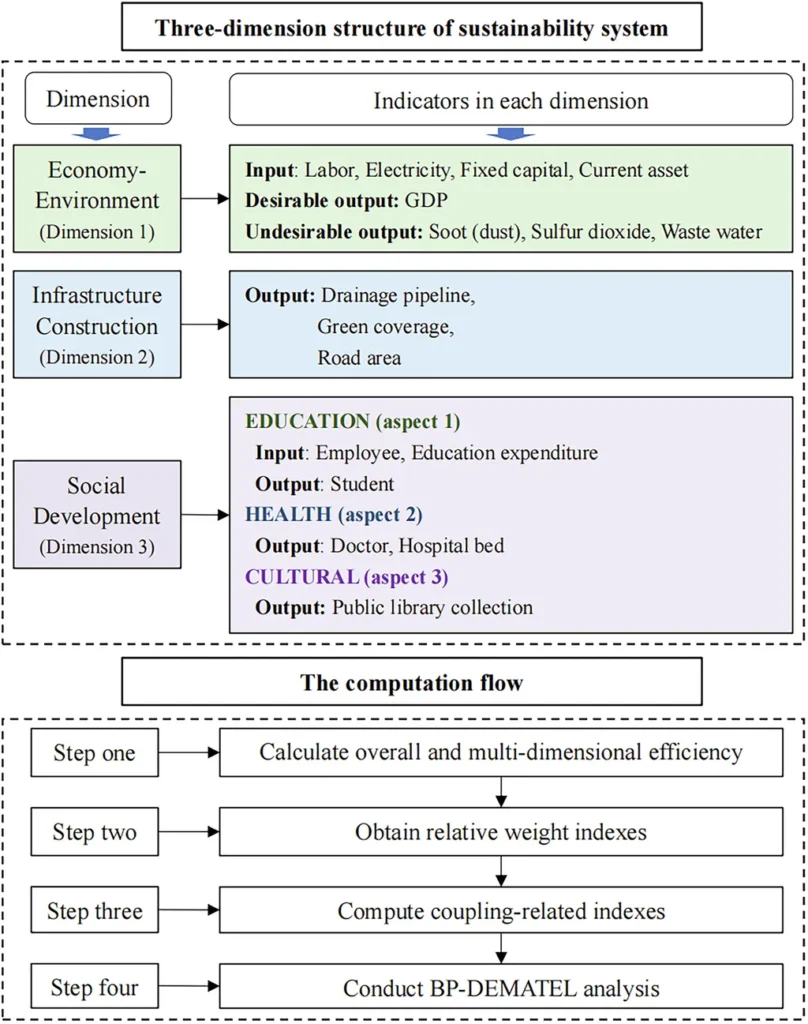
The research, led by Wenquan Gan from the Department of Environmental Design at Zhejiang Sci-Tech University, introduces an innovative framework to quantify the complex interplay between economic vitality, ecological integrity, and social wellbeing during urban-rural transitions. The study’s standout feature is its Urban-Rural Sustainability Index (URSI), which captures the multidimensional coupling of these factors.
The study reveals that as urban expansion proceeds, sustainability conflicts evolve from a monocentric hotspot into a polycentric, multi-nodal pattern. “This spatial clustering of conflicts is a crucial insight,” Gan explains. “It highlights the need for spatially differentiated land-use management strategies.”
The research employs a sophisticated methodological framework that combines a Random Effects Model (REM), an Extreme Gradient Boosting (XGBoost) model, and Shapley Additive Explanations (SHAP). This combination allows the team to identify both linear and non-linear relationships, interaction effects, and threshold conditions, all while ensuring predictive accuracy and interpretability.
One of the study’s key findings is the heterogeneous effects across land use types. Built-up areas are positively associated with sustainability conflicts, while farmland, water, and forest are negatively associated, indicating a buffering role of ecological and agricultural stocks. “This is where the XGBoost-SHAP analysis really shines,” Gan notes. “It helps us identify segmented effects and indicative operating ranges, such as an inflection point around a built-up area of about 60%.”
The study’s findings have significant implications for urban planning and management. For instance, the research suggests prioritizing blue-green infrastructure in urban planning and balancing sustainability pressures within urban areas. These insights could be particularly valuable for the energy sector, where understanding land-use changes and their impacts on sustainability can inform decisions about renewable energy projects, infrastructure development, and more.
The study’s innovative approach and its potential to inform practical urban-rural sustainability planning make it a significant contribution to the field. As Gan puts it, “Our framework and analytical methodology provide a transferable foundation for future research and practical urban-rural sustainability planning across diverse geographical contexts.”
In an era of rapid urbanization, this research offers a timely and valuable tool for managing the complex sustainability challenges that come with urban-rural transitions. By providing a quantitative framework that captures the multidimensional coupling of economic, ecological, and social factors, it paves the way for more informed and effective urban planning and management strategies.