
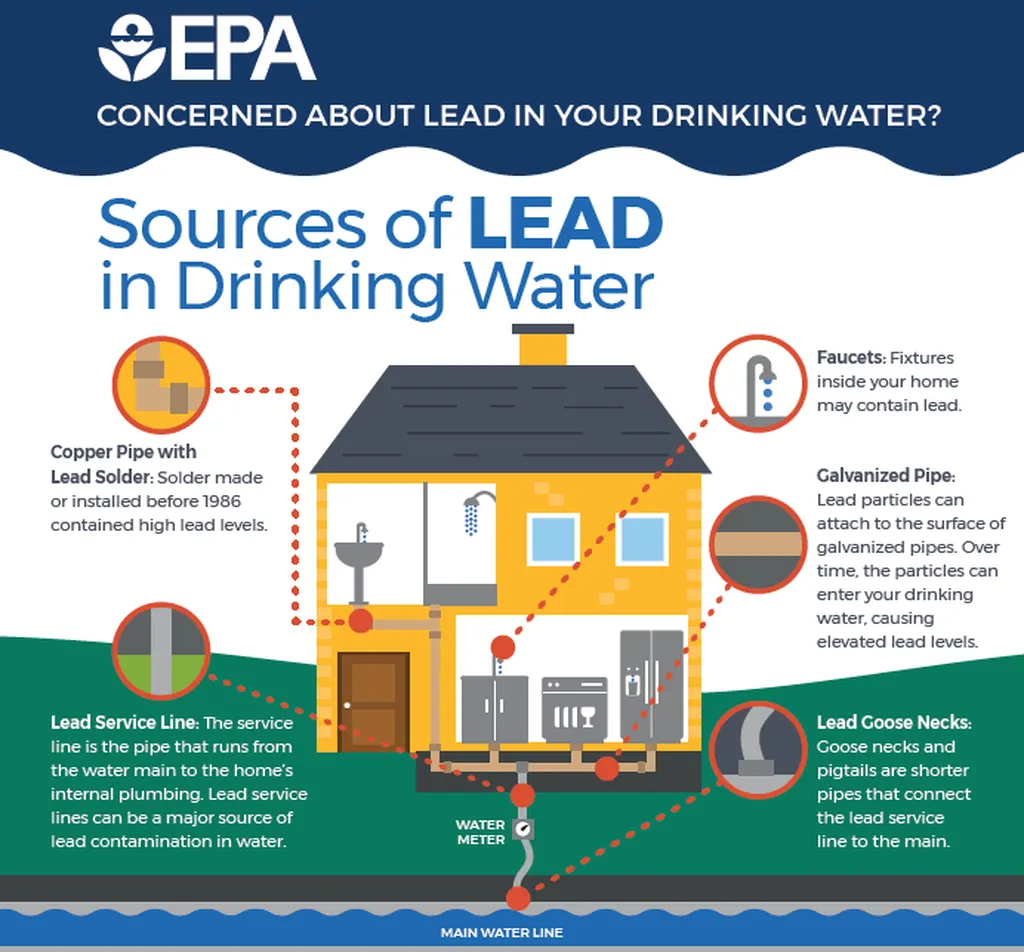
In a groundbreaking study published in the journal *GeoHealth* (translated to Earth Health), researchers have uncovered a significant link between groundwater chemistry and childhood lead exposure in the United States. The study, led by Emily V. Pickering from the Division of Epidemiology, Biostatistics and Environmental Health at the University of Memphis, sheds light on how the chemical composition of groundwater can influence lead leaching from water supply pipes, posing risks to vulnerable populations.
The research team analyzed data from 1,104 U.S. counties served by public water utilities using groundwater. They found that higher concentrations of arsenic, copper, dissolved oxygen, and selenium in groundwater were associated with increased percentages of children with blood lead levels exceeding 5 micrograms per deciliter (µg/dL). “A one mg/L increase in arsenic, for instance, was linked to a 0.0512% increase in the percentage of children with elevated blood lead levels,” explained Pickering. “This might seem small, but when scaled up across entire counties, the impact can be substantial.”
The study employed advanced statistical methods, including Bayesian Kernel Machine Regression (BKMR), to assess the joint effects of various groundwater chemicals. While some chemicals like alkalinity, pH, calcium, bicarbonate, and dissolved solids did not show significant associations, others emerged as critical factors. “Calcium, lithium, and alkalinity were identified as important, although their effects were minimal,” noted Pickering. “This suggests that a multifaceted approach is needed to address lead exposure risks.”
The findings have significant implications for the water and sanitation industry, particularly in low-income and minority communities where lead exposure disproportionately affects children. “Our results highlight the importance of monitoring groundwater quality and implementing targeted interventions to reduce childhood lead exposure,” said Pickering. “This is not just a public health issue; it’s also an economic one, as lead exposure can have long-term impacts on health and productivity.”
The study also underscores the need for robust data collection and analysis. Sensitivity analyses revealed variability in results depending on assumptions about missing data, emphasizing the importance of comprehensive and accurate data in shaping policy and intervention strategies.
As the energy sector increasingly relies on groundwater for various applications, understanding the chemical interactions that influence lead leaching becomes crucial. The research suggests that proactive measures, such as regular water quality testing and the implementation of corrosion control measures, could mitigate risks and protect public health.
In conclusion, this study serves as a wake-up call for policymakers, industry leaders, and public health officials to prioritize groundwater quality and take decisive action to safeguard vulnerable populations from lead exposure. As Pickering aptly put it, “The time to act is now. The health of our children depends on it.”