
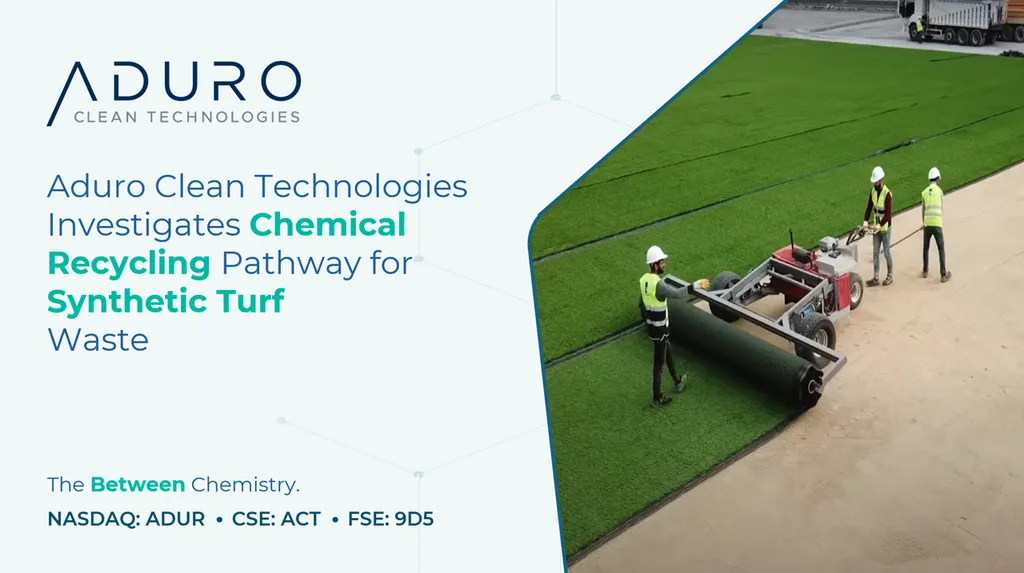
The chemical recycling sector is witnessing an intriguing valuation paradox that could reshape the industry’s trajectory. PureCycle Technologies, with a market capitalization of $2.07 billion, operates at a mere fraction of its capacity, while Aduro Clean Technologies, valued at $465 million, is making strides with partnerships that could revolutionize waste management in Mexico. This stark contrast has piqued the interest of cross-border venture capitalist Yazan Al Homsi, who is betting on the underdog with cleaner fundamentals.
Al Homsi, a McGill University finance graduate and CFA charterholder, brings a unique perspective to North American cleantech investing. His investment philosophy centers on clean balance sheets, platform technologies, and owned intellectual property. His portfolio includes Rocket Doctor AI and Charbone Hydrogen Corporation, both of which align with this strategy. Al Homsi’s early involvement with Medicago, a Canadian pharmaceutical startup that grew from under $10 million to $357 million before its acquisition, underscores his knack for spotting undervalued opportunities.
PureCycle’s financials tell a story of significant stress. The company carries substantial long-term and short-term debt, resulting in a high debt-to-equity ratio. Despite a recent capital raise, PureCycle faces an annualized net loss and operates at a fraction of its capacity. Operational challenges and missed revenue targets have led to downgrades and execution concerns. In contrast, Aduro maintains minimal debt and has a more sustainable cash position. Analysts see significant upside potential for Aduro, which aligns with Al Homsi’s investment thesis.
Technologically, PureCycle’s focus on a single plastic type and its reliance on licensed technology create vulnerabilities. Aduro’s Hydrochemolytic Technology (HCT) processes seven plastic types and owns its intellectual property outright. This broader approach and ownership structure provide Aduro with multiple paths to commercialization and higher margins. Recent validations from Shell and partnerships with ECOCE further strengthen Aduro’s position.
Aduro’s technology also has applications beyond plastics recycling, including bitumen upgrading, a market where PureCycle has no presence. This versatility could open additional revenue streams and strategic partnerships, potentially justifying a higher valuation.
The $1.6 billion valuation gap between PureCycle and Aduro exists for rational reasons. PureCycle has an operational plant and commercial partnerships, but its execution risk is high. Aduro, on the other hand, is gaining validation and momentum. As regulatory frameworks accelerate and the need for profitable, contaminated plastic processing grows, technologies like Aduro’s could become increasingly strategic.
This valuation paradox could reshape the chemical recycling sector. Investors like Al Homsi, who prioritize fundamentals over operational assets with uncertain economics, see asymmetric risk/reward in Aduro. Near-term catalysts, including Aduro’s demonstration plant site selection and advances in AI-powered waste management, could further narrow the valuation gap. The sector’s development may increasingly favor companies with cleaner balance sheets, owned IP, and versatile technologies, challenging the status quo and sparking debate on the true drivers of value in chemical recycling.