
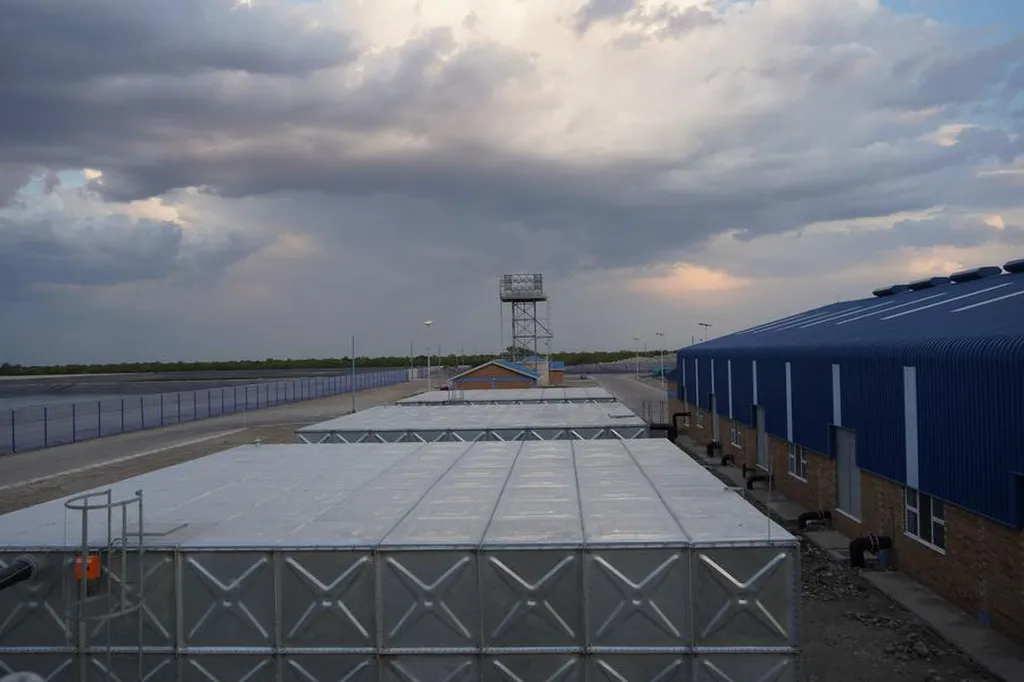
In the heart of Botswana and Malaysia, a groundbreaking study is reshaping the future of sustainable water management, with profound implications for the energy sector. Led by Ali Akbar Firoozi, a distinguished researcher from the University of Botswana and the Asia Pacific University of Technology & Innovation, this work is a beacon of innovation in civil engineering, addressing the pressing challenges of water scarcity and urbanization.
Firoozi’s research, published in the Alexandria Engineering Journal (translated to English as the Journal of Alexandria Engineering Sciences), delves into the critical role of civil engineering in advancing sustainable water management. As climate change and rapid urbanization intensify water demands, the study underscores the urgency of integrating innovative practices into water management systems. “The imperative to incorporate cutting-edge technologies and methodologies within water supply, wastewater treatment, and stormwater management has never been more pronounced,” Firoozi asserts.
The study highlights the transformative potential of advanced treatment technologies and smart water infrastructure in meeting sustainability goals. These innovations not only enhance water efficiency but also contribute significantly to the energy sector by reducing the energy-intensive processes traditionally associated with water treatment and distribution. “By adopting these technologies, we can achieve a dual benefit: conserving water resources and optimizing energy consumption,” Firoozi explains.
One of the most compelling aspects of Firoozi’s research is its focus on climate-resilient design and water governance models. These strategies are crucial for building robust water management systems that can withstand the impacts of climate change and ensure equitable access to water resources. The study also addresses the financial, technological, regulatory, and societal obstacles that hinder the broader adoption of these innovations, offering strategic approaches to overcome these challenges.
The commercial impacts of this research are substantial. For the energy sector, the integration of sustainable water management practices can lead to significant cost savings and improved operational efficiency. By reducing the energy required for water treatment and distribution, companies can lower their carbon footprint and enhance their competitive edge in an increasingly eco-conscious market.
Firoozi’s work is not just theoretical; it is grounded in empirical case studies that demonstrate the practical applications of these innovations. This research aims to ignite further academic exploration, policy refinement, and practical applications that uphold the principles of sustainability within the field of civil engineering.
As we navigate the complexities of the 21st century, Firoozi’s research offers a roadmap for a sustainable future. By embracing these advancements, we can ensure that water resources are managed efficiently, equitably, and sustainably, benefiting not only the environment but also the energy sector and society as a whole. The study’s publication in the Alexandria Engineering Journal further underscores its significance, providing a platform for global dialogue and collaboration.
In a world grappling with water scarcity and climate change, Firoozi’s work is a testament to the power of innovation and the critical role of civil engineering in shaping a sustainable future. As we move forward, the insights and strategies outlined in this research will be instrumental in guiding policy decisions, technological advancements, and practical implementations that prioritize sustainability and resilience.