
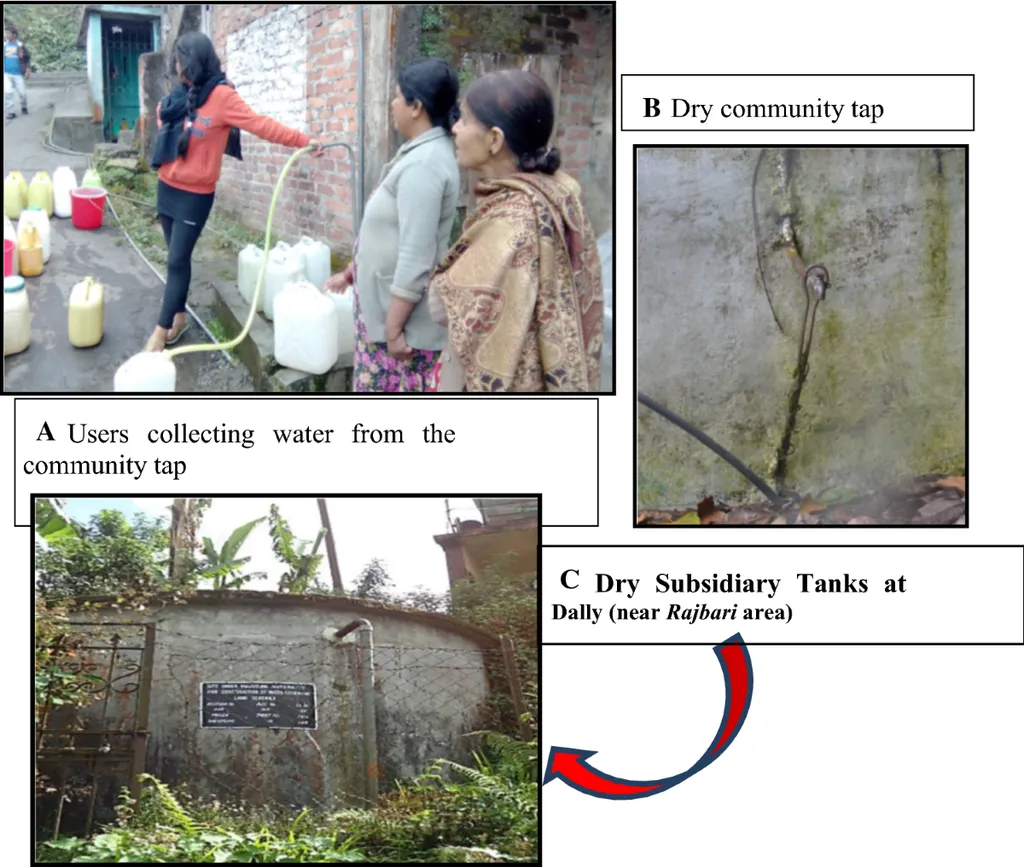
In the lush, misty hills of Darjeeling, a growing water crisis is brewing, one that threatens not just the local population but also the region’s economic stability and energy sector. Despite receiving an annual rainfall of 2812 mm, Darjeeling Municipality is grappling with water scarcity, particularly during the lean season. A recent study published in the Journal CleanWAS (translated to English as “Journal of Clean Water and Sanitation”) sheds light on this pressing issue, offering insights that could reshape water management strategies in the region and beyond.
Arpan Lama, a researcher from the Department of Geography and Applied Geography at the University of North Bengal, has been delving into the heart of Darjeeling’s water woes. His study, which combines field surveys, interviews, and municipal data, paints a stark picture of the challenges ahead. “The steep terrain, ageing infrastructure, and growing population are all contributing to the crisis,” Lama explains. “But the real issue is the seasonal variation in water availability, which is exacerbated by our current infrastructure’s limitations.”
The study highlights several critical issues, including inadequate water storage, significant leakage, and an over-reliance on ecologically sensitive zones. These problems are not just environmental concerns; they have tangible commercial impacts. The energy sector, for instance, relies heavily on consistent water supplies for cooling and other processes. Water scarcity can lead to operational disruptions, increased costs, and even potential shutdowns, all of which can have ripple effects throughout the regional economy.
To tackle these challenges, Darjeeling has implemented several backup initiatives, such as the Sindhap Lake, Rambi Catchment, Balasun River Project, and the AMRUT scheme. These projects provide crucial support, but they are not without their own set of problems. Operational, structural, and administrative challenges often limit their full potential. “While these initiatives are a step in the right direction, they are not enough to ensure long-term water security,” Lama notes. “We need a more integrated approach to water resource management.”
The study’s findings underscore the urgent need for improved governance, adaptive infrastructure, and a comprehensive water management strategy. This could involve investing in more robust storage solutions, upgrading ageing infrastructure, and exploring alternative water sources. It could also mean implementing more effective policies and regulations to protect ecologically sensitive zones and promote sustainable water use.
The implications of this research extend far beyond Darjeeling. As climate change continues to alter weather patterns and exacerbate water scarcity issues, other regions may find themselves facing similar challenges. The lessons learned in Darjeeling could provide valuable insights for communities around the world, helping them to develop more resilient and sustainable water management strategies.
In the end, the study serves as a stark reminder of the complex interplay between environmental, economic, and social factors. It highlights the need for a holistic approach to water management, one that considers not just the immediate challenges but also the long-term impacts on the environment and the economy. As Lama puts it, “Water security is not just about having enough water; it’s about having the right systems in place to manage that water effectively and sustainably.” With the findings from this study, Darjeeling and other regions can take a significant step towards achieving that goal.