
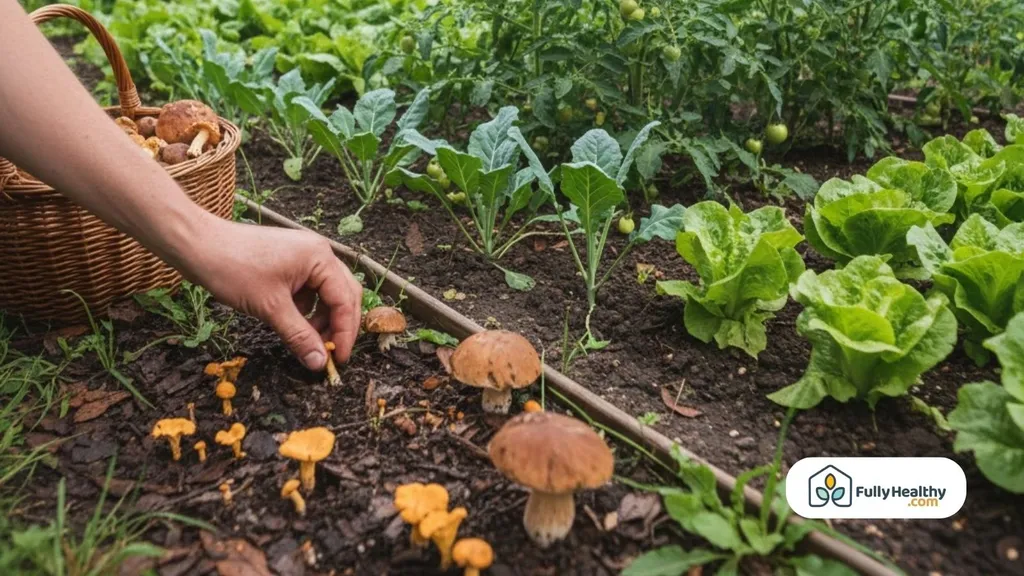
In the quest for sustainable food systems, a groundbreaking study published in *Next Sustainability* (which translates to *Next Sustainability*) offers a promising alternative to traditional photosynthesis-dependent agriculture. Led by Ivan Ermanoski from Arizona State University’s LightWorks® and School of Sustainability, the research explores the potential of cultivating edible fungi on industrially produced hydrocarbons, bypassing the need for photosynthesis entirely.
The study demonstrates that edible fungi mycelium can be grown using food-safe hydrocarbons and urea as the sole nitrogen source. This method could significantly reduce land and water usage compared to conventional agriculture. “Our findings suggest that solar-to-food efficiencies could be one to two orders of magnitude higher than photosynthetic crops while using about 99% less land and water,” Ermanoski explained. This innovative approach not only addresses the pressing need for sustainable food production but also opens up new avenues for the energy sector to contribute to global food security.
The implications for the energy sector are substantial. By leveraging renewable energy to produce the necessary substrates for fungal growth, this method creates a direct link between energy production and food systems. “All substrates—fixed nitrogen and fixed carbon—can be produced abiotically from multiple primary resources, including renewable energy,” Ermanoski noted. This integration could lead to more efficient and sustainable food production processes, reducing the environmental impact of agriculture.
The research highlights the potential for hydrocarbon-grown mycelium to become a resource-efficient and climate-resilient pillar of global food systems. As the world grapples with the challenges of climate change and resource depletion, this study offers a glimpse into a future where food production is decoupled from biosphere constraints. “If scalable, this method could complement photosynthesis and help decouple human nutrition from biosphere constraints,” Ermanoski added.
The study’s findings were published in *Next Sustainability*, a journal dedicated to exploring innovative solutions for sustainable development. As the world continues to seek sustainable alternatives to traditional agriculture, this research provides a compelling case for the integration of renewable energy and non-photosynthetic food production. The energy sector, in particular, stands to benefit from this interdisciplinary approach, paving the way for a more sustainable and resilient future.