
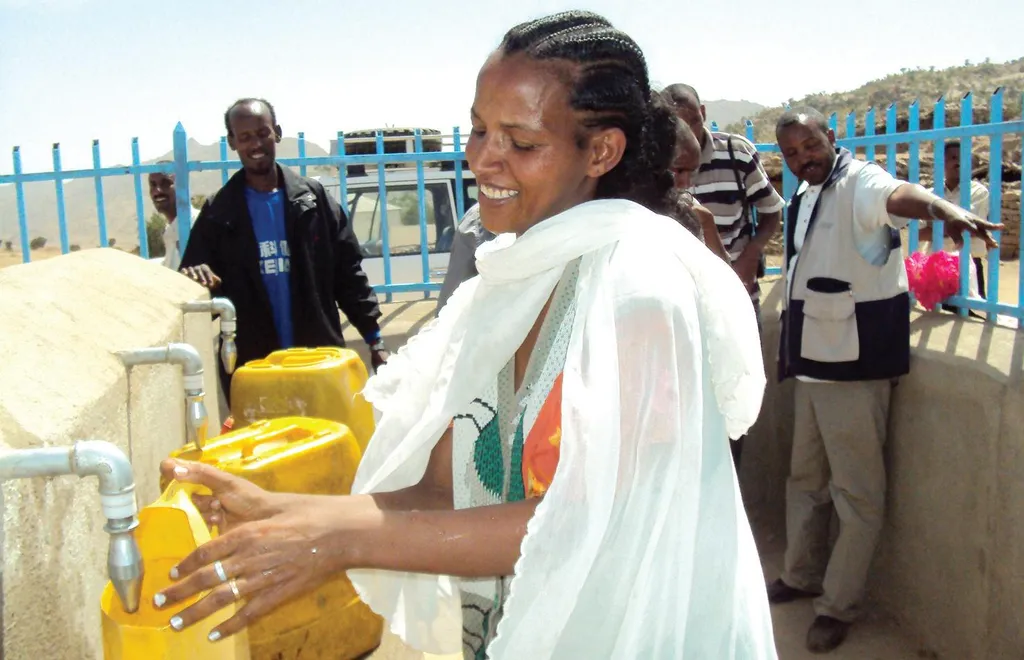
In the heart of Eritrea’s semi-arid Upper Mereb Catchment, a critical lifeline flows beneath the surface, sustaining communities and agriculture alike. Groundwater, the region’s primary water source, is under the microscope in a recent study led by Kabral Mogos Asghede from the Faculty of Earth and Environmental Sciences and Engineering at the University of Miskolc. Published in the journal *Discover Applied Sciences* (translated from Hungarian as “Applied Sciences Discovery”), this research offers a nuanced look at groundwater quality, blending hydrochemistry, statistics, and practical indices to paint a vivid picture of the region’s water resources.
The study employs a multifaceted approach, combining graphical analysis, multivariate statistics, and indices like the Groundwater Quality Index (GWQI) and irrigation indices to assess groundwater suitability for drinking and agriculture. “We wanted to go beyond simple chemical analysis,” Asghede explains. “By integrating these different methods, we can provide a more comprehensive understanding of the groundwater quality and its implications for both communities and industries.”
The hydrochemical analysis revealed that calcium-magnesium-bicarbonate (Ca-Mg-HCO₃) is the dominant groundwater type, primarily influenced by natural water-rock interactions. This finding underscores the importance of geogenic processes in shaping the region’s water quality. However, the story doesn’t end with nature. Multivariate statistical techniques, including Hierarchical Cluster Analysis (HCA) and Principal Component Analysis (PCA), pointed to localized contamination stemming from both natural processes and human activities, particularly agriculture.
The results of the GWQI assessment were largely positive, with 77.8% of samples falling within the “good” category for drinking purposes. However, 16.3% were classified as “poor,” highlighting areas where water quality is compromised. “While the overall quality is favorable, these findings emphasize the need for ongoing monitoring and management,” Asghede notes.
For the agricultural sector, the news is even more promising. The study found that the groundwater is largely suitable for irrigation, with sodium adsorption ratio and sodium percent indices placing it within the “excellent” to “permissible” classes. This is a significant boon for the region’s farming communities, ensuring that their water resources can support crop growth without adverse effects.
The commercial implications for the energy sector are also noteworthy. As water is a critical resource for many energy production processes, understanding its quality and availability is crucial for sustainable operations. The insights gained from this study can help energy companies operating in the region make informed decisions about water usage and management, ensuring both environmental sustainability and economic viability.
Looking ahead, this research sets a precedent for future studies in similar regions. By demonstrating the value of an integrated approach to groundwater quality assessment, Asghede and his team have paved the way for more comprehensive and nuanced understandings of water resources in arid and semi-arid environments. “Our hope is that this study will serve as a model for other researchers and practitioners,” Asghede says. “By combining different analytical methods, we can gain a more holistic view of groundwater quality and its implications for both communities and industries.”
As the world grapples with the challenges of water scarcity and quality, studies like this one offer a beacon of hope. By shining a light on the intricate interplay of natural processes and human activities, they guide us toward more sustainable and resilient water management practices. In the Upper Mereb Catchment and beyond, the future of water is looking a little brighter.