
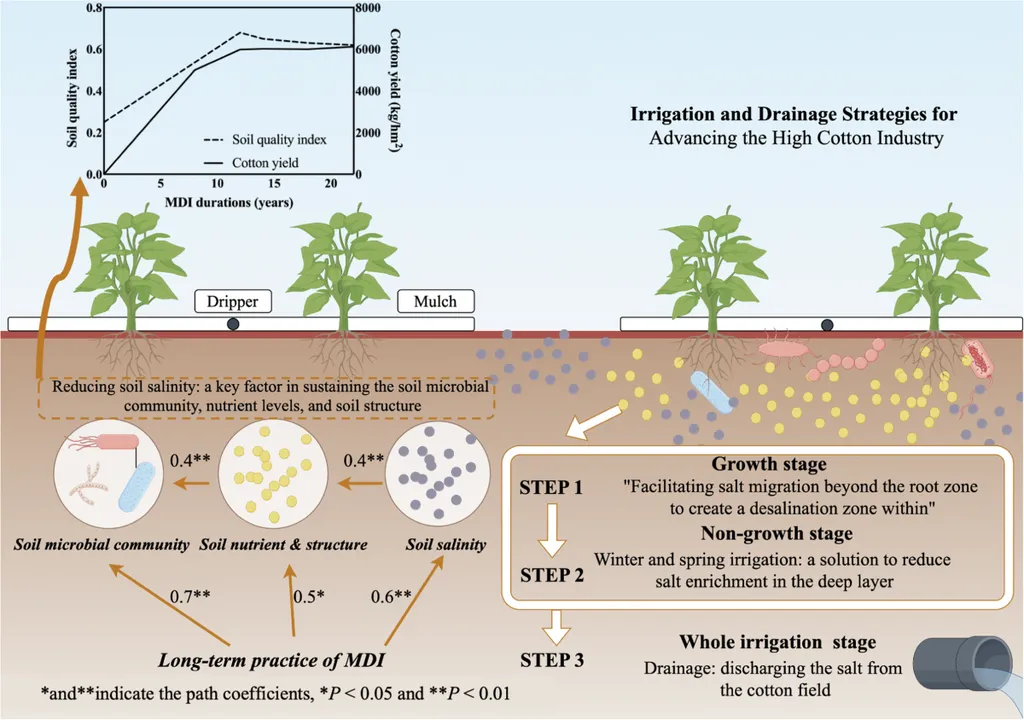
In the arid landscapes where water is scarce and soil salinity is a constant challenge, farmers and researchers are continually seeking innovative strategies to sustain agriculture. A recent study published in the journal *Applied Water Science* (translated from Persian as “Water Science Applications”) offers promising insights into managing soil salinity and improving crop performance using advanced irrigation techniques. The research, led by Leila Mirzaei-Alamouti from the Department of Water Sciences and Engineering at Imam Khomeini International University, explores the effects of different irrigation methods on soil salt dynamics and maize yield, providing valuable lessons for sustainable agriculture in saline environments.
The study evaluated five irrigation treatments, including surface and subsurface tape irrigation systems, with and without mulch. The findings revealed significant salt accumulation within the upper 0–20 cm soil layer, particularly within 15–20 cm of the emitter. This accumulation was consistent across all treatments, highlighting the critical need for effective leaching and irrigation management practices.
One of the most notable outcomes was the superior performance of the surface drip tape combined with mulch. This treatment not only yielded the highest maize production but also demonstrated the best water use efficiency (WUE). “The results underscore the beneficial role of mulching in alleviating salinity stress,” Mirzaei-Alamouti explained. “Mulching helps retain soil moisture and reduces evaporation, creating a more favorable environment for crop growth.”
The implications of this research extend beyond the agricultural sector, offering valuable insights for the energy sector as well. Efficient water use and sustainable agricultural practices are crucial for reducing the environmental footprint of energy production, particularly in regions where water resources are limited. By optimizing irrigation strategies, farmers can enhance crop productivity while conserving water, ultimately contributing to a more resilient and sustainable energy future.
As the global population grows and climate change intensifies, the demand for innovative solutions to water scarcity and soil salinity will only increase. This study provides a foundation for future research and practical applications, emphasizing the importance of integrating advanced irrigation techniques with sustainable practices. “Our findings highlight the need for proper leaching and irrigation management to sustain crop productivity in saline environments,” Mirzaei-Alamouti noted. “This research offers valuable insights for optimizing water use efficiency and promoting sustainable agriculture in regions affected by salinity.”
In the quest for sustainable agriculture, the study by Mirzaei-Alamouti and her team represents a significant step forward. By understanding the dynamics of soil salinity and the impact of different irrigation methods, farmers and researchers can develop more effective strategies to mitigate the challenges posed by arid environments. As the world continues to grapple with water scarcity and climate change, the insights gained from this research will be invaluable in shaping the future of agriculture and energy production.