
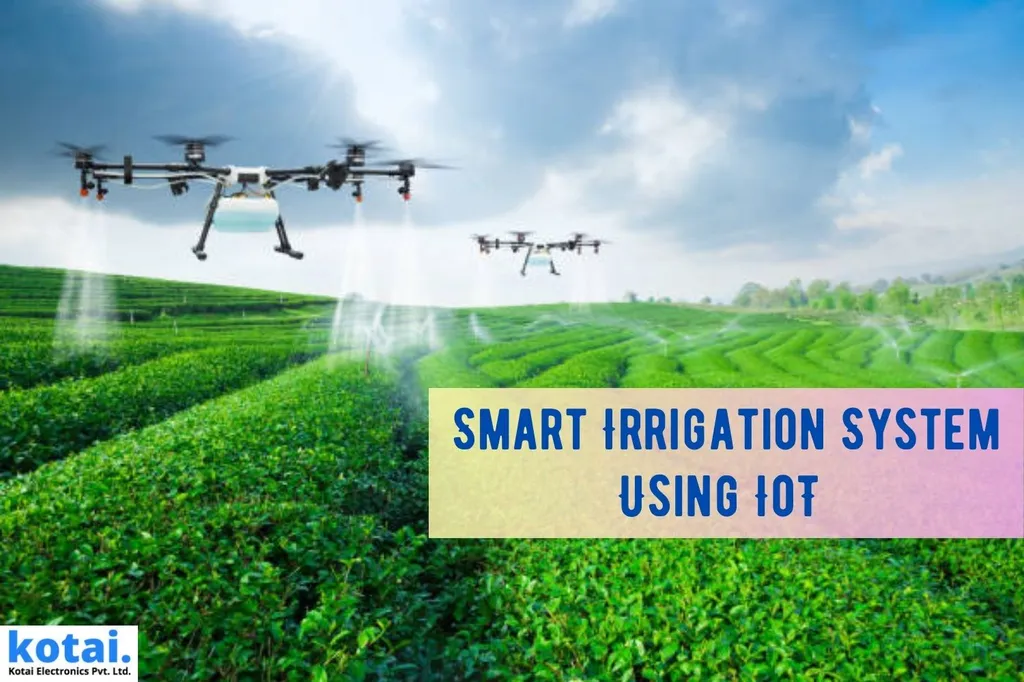
In the rugged landscapes of hilly and mountainous regions, farmers face unique challenges in managing their crops, particularly when it comes to irrigation. Traditional systems often struggle with terrain interference and data security issues, which can lead to inefficiencies and potential data breaches. However, a recent study published in *Discover Applied Sciences* (translated as *Discover Applied Sciences*) offers a promising solution to these problems, with significant implications for the agricultural and energy sectors.
The research, led by Cuilan Yu from the College of Intelligent Engineering at Chongqing College of Mobile Communication, introduces a novel communication security transmission technology designed to enhance the performance of agricultural IoT seeding-irrigation systems in challenging terrains. The study addresses critical issues such as data leakage, tampering, and terrain interference, which have long plagued these systems.
Yu and her team constructed a “three-layer two links” system architecture, which employs low-power elliptic curve cryptography for bidirectional device authentication. This is combined with an improved Shang Mi 4 (SM4) block cipher dynamic white-box library to encrypt data at the perception layer. “The integration of these technologies ensures that the data transmitted within the system remains secure and intact, even in the face of complex terrain and potential cyber threats,” Yu explained.
One of the standout features of this research is its use of principal component analysis (PCA) for dimensionality reduction and a support vector machine (SVM) optimized by an improved grey wolf algorithm for traffic detection. This combination significantly improves the system’s ability to detect and mitigate abnormal traffic, enhancing overall communication security.
The study’s experimental results are impressive. The proposed technology demonstrated superior performance in encryption and decryption tests, with average times of 63.5 µs and 33.4 µs, respectively. In terms of data processing efficiency, it achieved a remarkable 129.7 MB per second. Additionally, the system’s abnormal traffic detection success rate was 95.3%, with a maximum time of 23.4 seconds. In comprehensive testing, the technology showed an accuracy of 96.4% in denial of service attack scenarios and an F1 value of 89.4% in detection attack scenarios.
The implications of this research extend beyond the agricultural sector. As the energy sector increasingly relies on IoT and smart grid technologies, ensuring the security and efficiency of data transmission becomes paramount. The technology developed by Yu and her team could be adapted to enhance the security of energy infrastructure in remote and challenging environments, providing a robust solution for data protection and efficient communication.
“This research not only addresses immediate challenges in agricultural IoT systems but also paves the way for future developments in secure communication technologies,” Yu noted. The study’s findings could inspire further innovation in the field, leading to more resilient and efficient systems across various industries.
As the world continues to grapple with the complexities of data security and efficient communication, the work of Cuilan Yu and her team offers a beacon of hope. Their research, published in *Discover Applied Sciences*, underscores the importance of continuous innovation and adaptation in the face of evolving challenges. By providing a secure and efficient solution for agricultural IoT systems, they are setting a new standard for the future of smart agriculture and beyond.