
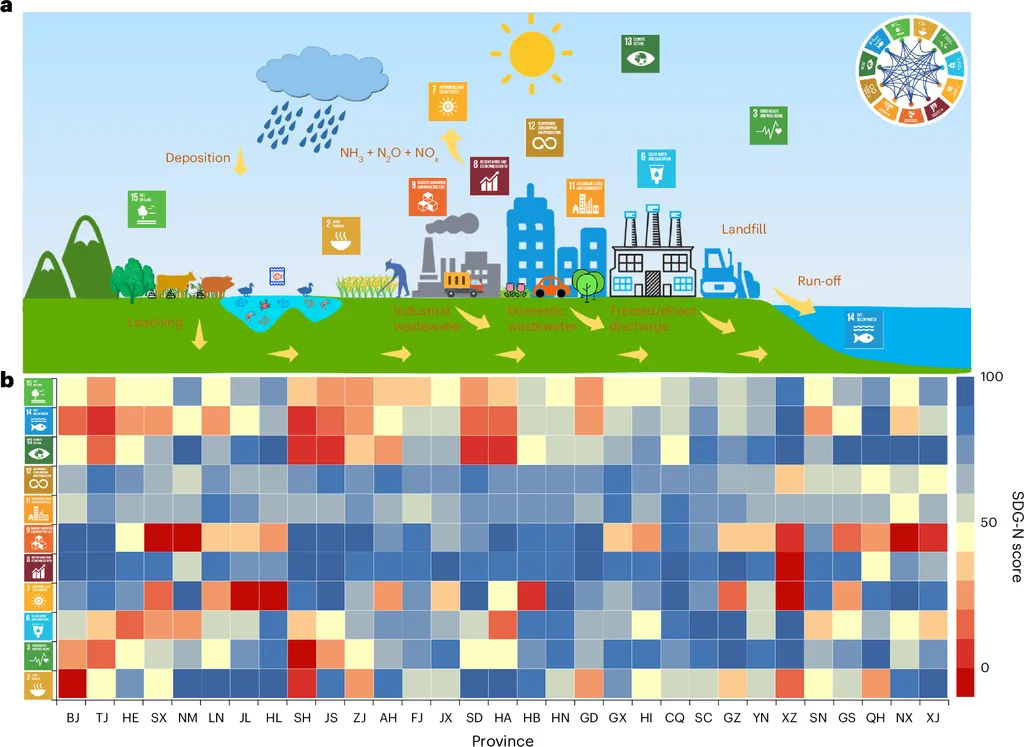
China’s nitrogen management is emerging as a pivotal factor in the country’s pursuit of its Sustainable Development Goals (SDGs), according to a recent study utilizing the Coupled Human and Natural Systems (CHANS) model. The research, focusing on the year 2020, reveals that nitrogen’s dual role as a vital nutrient and a potent pollutant significantly impacts 11 out of the 17 SDGs, with marked regional disparities.
The study highlights a stark contrast in nitrogen-related SDG (SDG-N) scores across different regions. Economically developed areas tend to excel in the economy dimension but lag in the society and environment dimensions. This disparity underscores the need for a more balanced approach to nitrogen management that considers the interconnectedness of economic, social, and environmental factors.
The simulations conducted as part of the study suggest that comprehensive nitrogen management could significantly enhance SDG-N index scores by 8–26%. This improvement could translate into substantial national benefits, including US$162 billion in savings on fertilizer and food imports, increased agricultural yields, improved public health, enhanced ecosystem resilience, and climate mitigation. Notably, these benefits could be achieved with a modest net implementation cost of US$34 billion, making it a cost-effective and sustainable solution for advancing China’s SDG agenda.
The findings challenge the sector to rethink nitrogen management strategies, emphasizing the need for policies that foster synergy among SDGs. This could involve integrating nitrogen management into broader environmental and economic policies, promoting sustainable agricultural practices, and investing in technologies that reduce nitrogen pollution.
The study also sparks debate on the role of regional disparities in SDG achievement. It calls for targeted interventions in less economically developed regions to ensure equitable progress towards the SDGs. Moreover, it highlights the importance of considering the broader implications of nitrogen management on various SDGs, rather than focusing on isolated aspects.
In the water, sanitation, and drainage sector, these insights could drive innovation in wastewater treatment technologies that reduce nitrogen pollution, promote water reuse, and enhance ecosystem resilience. The study’s emphasis on the interconnectedness of SDGs could also encourage collaboration across sectors, fostering a more holistic approach to sustainable development.
As China continues to grapple with the complexities of nitrogen management, this study serves as a timely reminder of the potential benefits of a comprehensive, integrated approach to achieving the SDGs. It calls on policymakers, researchers, and practitioners to work together to harness the power of nitrogen management for sustainable development.