
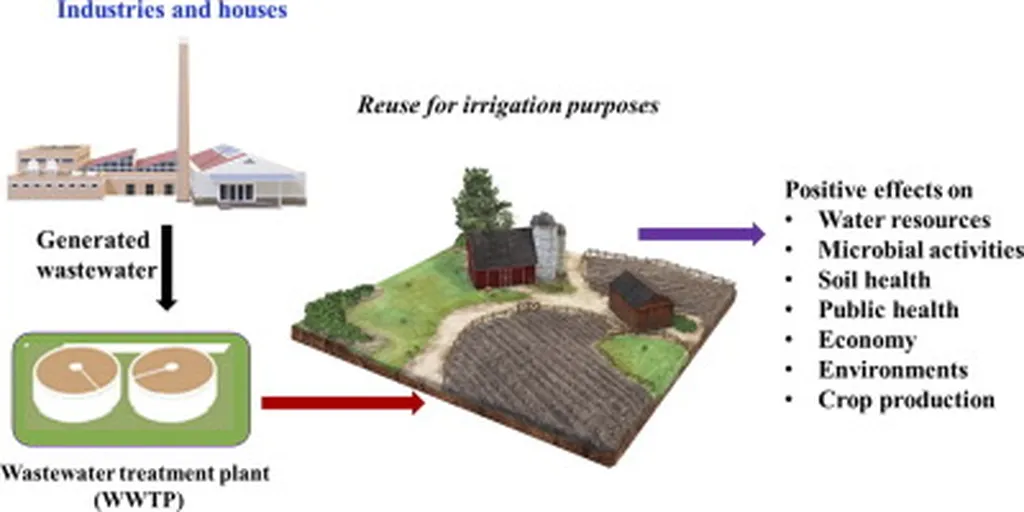
The world’s wastewater, a vast and often overlooked resource, could be harnessed to power agriculture, bolster global sanitation, and even fuel its own treatment. This is the bold claim of a recent review published in *Frontiers in Science*, which argues that emerging microbial technologies could unlock the untapped potential of the 359 billion cubic meters of wastewater produced annually—enough to fill Lake Geneva four times over.
At present, half of global wastewater is discarded, while the rest is treated expensively and inefficiently. The review, led by Prof Uwe Schröder at the University of Greifswald, Germany, highlights that wastewater contains over 800,000 GWh of chemical energy—equivalent to the annual output of 100 nuclear power plants. It is also rich in nutrients like ammonia and phosphate, which, if reclaimed, could supply 11% and 7% of global demand, respectively.
The key to unlocking this potential lies in microbial electrochemical technologies (METs), which use electricity-generating bacteria to treat wastewater more efficiently. While conventional anaerobic digestion converts just 28% of chemical energy into electricity, METs can achieve up to 35% in laboratory settings. These bacteria, known as electrogenic, transfer electrons to their surroundings, creating an electrical current when connected to electrodes in a fuel cell.
The power generated could help run the water sector itself, which currently accounts for around 4% of global energy use. Moreover, these microbes can extract nutrients from wastewater, cleaning it for further use in agriculture, industrial cooling, or even drinking water. This dual benefit of resource recovery and pollution reduction presents a compelling solution to address the UN’s sixth Sustainable Development Goal: ensuring water and sanitation for all.
METs have already shown promise in pilot trials. For instance, a urine-powered MET called Pee Power was successfully trialed at the UK’s Glastonbury Festival in 2015 and has since been deployed in field trials in Uganda, Kenya, and South Africa. The system converts wastewater to electricity, powering lighting around toilets and reducing safety risks in areas without electricity.
However, scaling up these technologies will require a broad coalition of researchers, water providers, and policymakers to overcome significant challenges. These range from regulatory frameworks not suited for circular economies to engineering obstacles in maintaining high performance over continuous operation.
The review argues that integrating METs into existing infrastructure could transform global wastewater management into a self-sustaining engine for resource recovery. This could be particularly beneficial for heavy-loaded types of wastewater or in places where existing treatment is too expensive or doesn’t reach everyone.
As the world grapples with the pressing need to improve sanitation and resource efficiency, the insights from this review could spark a paradigm shift in how we view and manage wastewater. The potential to reclaim lost energy, nutrients, and clean water from wastewater is not just a scientific curiosity—it’s a call to action for a more sustainable future.