
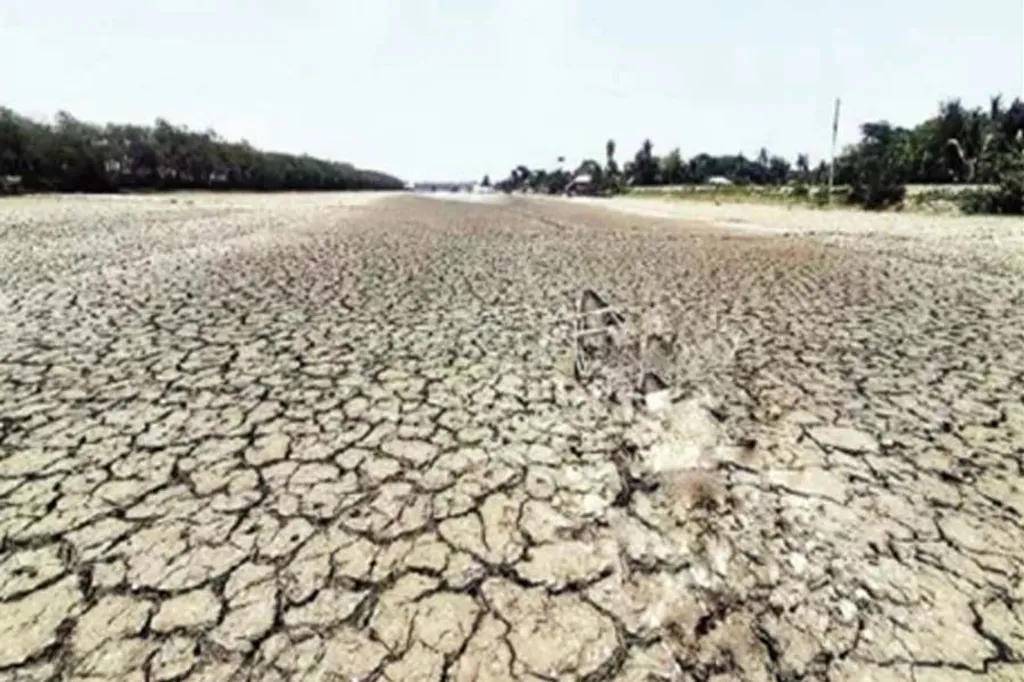
In the heart of South Asia, Bangladesh faces a formidable challenge: drought. Frequent and severe, these dry spells threaten water supplies, agricultural yields, and the energy sector’s stability. A recent study, published in the Vadose Zone Journal (which translates to the journal focusing on the unsaturated soil zone), offers a comprehensive drought characterization of Bangladesh, providing a robust framework for early drought detection and monitoring. This research, led by Md. Ashraful Alam of the Bangladesh Meteorological Department, could significantly impact water resource management and agricultural planning, with ripple effects across the energy sector.
Alam and his team employed an integrated framework to assess drought severity, combining remote sensing observations with land surface model outputs. “We used a multi-criteria decision-making technique called the analytical hierarchy process to develop an integrated drought index (IDI),” Alam explains. This IDI integrates multi-spectral indices, such as vegetation condition, temperature, precipitation, and soil moisture, providing a holistic view of drought conditions.
The study utilized long-term satellite data, including MODIS data for vegetation and temperature, CHIRPS datasets for rainfall, and ERA 5 datasets for soil moisture. The results revealed significant spatial and temporal variability in drought conditions across Bangladesh. The northwestern region, in particular, is vulnerable due to delayed monsoons and inadequate water availability. The southwestern region also experiences severe drought impacts driven by abnormal rainfall patterns.
For the energy sector, these findings are crucial. Droughts can lead to reduced water availability for hydropower generation, increased demand for cooling in thermal power plants, and potential disruptions in fuel supply chains. By providing early drought detection and monitoring, this research can help energy companies anticipate and mitigate these impacts.
Moreover, the study developed an agricultural integrated drought index (AIDI) to assess drought conditions specifically in agricultural areas. This is particularly relevant for the energy sector, as agriculture is a significant consumer of water resources and a key player in the bioenergy market. By understanding drought conditions in agricultural areas, energy companies can better manage water resources and plan for bioenergy production.
The strong correlation between AIDI and the standardized precipitation index (SPI), with a coefficient of determination (R2) of 0.75, underscores the reliability of this integrated framework. As Alam puts it, “This framework provides critical insights for water resource management and agricultural planning in the context of both national challenges and global climate variability.”
This research could shape future developments in the field by promoting the use of integrated frameworks for drought monitoring and management. By combining satellite-based remote sensing observations with land surface model outputs, this approach offers a robust and reliable tool for early drought detection. As climate variability continues to pose challenges, such tools will be invaluable for water resource management, agricultural planning, and the energy sector.
In the face of climate change, understanding and managing droughts is more important than ever. This research by Alam and his team provides a significant step forward, offering a comprehensive drought characterization of Bangladesh and a robust framework for early drought detection and monitoring. The implications for the energy sector are profound, highlighting the need for integrated approaches to water resource management and agricultural planning.