
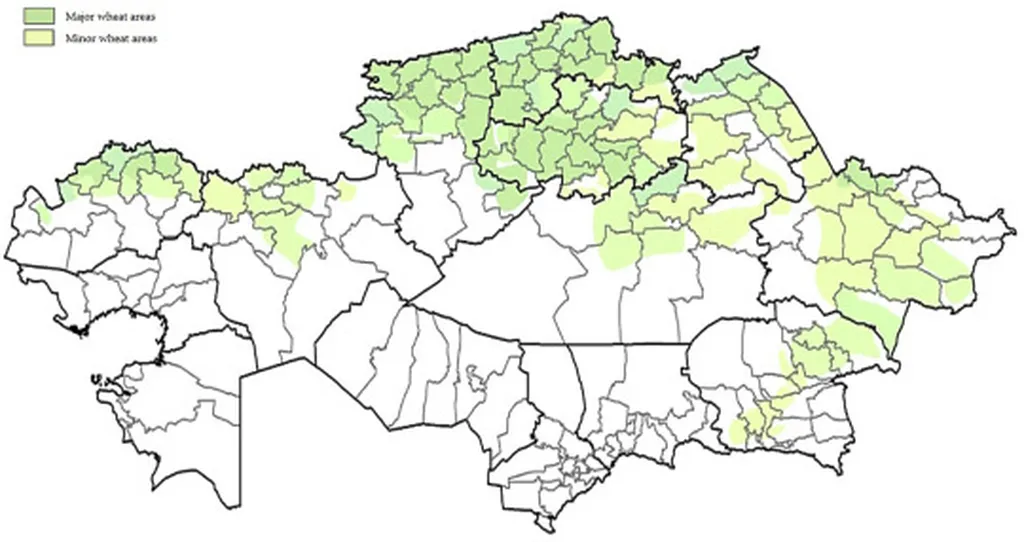
In the heart of Kazakhstan, researchers are tackling a pressing global challenge: how to sustainably produce durum wheat in the face of water scarcity and climate stress. Led by G. Saspugayeva from the Department of Environmental Engineering and Management at L.N. Gumilyov Eurasian National University in Astana, a recent study published in the Global Journal of Environmental Science and Management (known in English as the Global Journal of Environmental Science and Management) offers a roadmap for enhancing the resilience of durum wheat production in semi-arid regions. The findings hold significant implications for the energy sector, particularly in regions where water, energy, and food security are intricately linked.
Durum wheat, a staple crop for food security in many parts of the world, faces substantial threats from rising evapotranspiration, increasing climate variability, and water scarcity. Saspugayeva’s research synthesizes key strategies to bolster the crop’s resilience under these challenging conditions. “The integration of drought-tolerant cultivars, precision irrigation technologies, and soil-water conservation practices is crucial for maintaining productivity while minimizing environmental impacts,” Saspugayeva explains.
One of the study’s standout findings is the potential for precision irrigation to optimize water use, reducing the need for extensive irrigation infrastructure. This is a game-changer for the energy sector, as traditional irrigation methods are often energy-intensive, contributing to greenhouse gas emissions and groundwater depletion. By adopting precision irrigation, farmers can not only conserve water but also reduce energy consumption, leading to a more sustainable and cost-effective approach to agriculture.
The research also highlights the importance of soil-water conservation practices, such as conservation tillage, residue retention, mulching, and crop rotation with legumes. These practices improve soil structure, water infiltration, and moisture retention, ultimately reducing the need for irrigation. “Enhancing soil health is a cornerstone of sustainable agriculture,” Saspugayeva notes. “It’s not just about conserving water; it’s about creating a resilient ecosystem that can withstand climate stresses.”
However, the study also addresses the environmental trade-offs associated with irrigation expansion. Soil salinization, groundwater depletion, and energy-related greenhouse gas emissions are significant concerns that can undermine farm sustainability if not properly managed. To mitigate these issues, the research advocates for integrated governance frameworks that align water, energy, and food priorities. This holistic approach ensures that resource management is equitable and sustainable, benefiting both farmers and the environment.
An illustrative example from continental semi-arid basins demonstrates the potential of supplemental irrigation during critical growth stages, combined with basin-level water planning and rational groundwater use. This approach stabilizes wheat yields without compromising environmental integrity, showcasing the potential for integrating multiple water sources, including surface water, groundwater, and collector-drainage water, with climate-resilient cultivars.
The implications for the energy sector are profound. By adopting sustainable practices, farmers can reduce their energy footprint, leading to lower operational costs and a smaller environmental impact. This shift towards sustainability is not just beneficial for the environment but also for the bottom line, as energy-efficient practices can lead to significant cost savings.
As the world grapples with the challenges of climate change and water scarcity, research like Saspugayeva’s offers a beacon of hope. By integrating drought-tolerant varieties, efficient irrigation, soil-water conservation, and Water-Energy-Food-aligned planning, we can pave the way for resilient, climate-ready production systems. The future of sustainable agriculture lies in these integrated strategies, and the energy sector has a crucial role to play in supporting this transition.
In the words of Saspugayeva, “Advancing semi-arid agriculture will ultimately depend on integrating these strategies into cohesive policies that guide future innovation and policy toward resilient, climate-ready production systems.” This research not only shapes the future of durum wheat production but also sets a precedent for sustainable agriculture practices worldwide, with far-reaching implications for the energy sector and beyond.