
In the relentless pursuit of cleaner water, researchers have turned to an unlikely ally: zeolites, a group of minerals known for their unique porous structures. A recent study published in *Clean Technologies* (translated as “Clean Technologies”) has unveiled a promising alternative to traditional methods for removing persistent pollutants known as PFAS (per- and polyfluoroalkyl substances) from water. The research, led by Bijan Pouryousefi Markhali from the Centre for Advance Manufacturing Technology at Western Sydney University, explores the potential of modified zeolites to outperform conventional granular activated carbon (GAC) in PFAS removal, offering a cost-effective and regenerable solution.
PFAS, often referred to as “forever chemicals,” are notorious for their persistence in the environment and their mobility in water. They pose significant challenges to water treatment facilities, particularly due to the high costs associated with the regeneration and disposal of GAC, the current industry standard for their removal. Markhali’s study investigates surface-modified clinoptilolite zeolites as a viable alternative. “The goal was to enhance the adsorption capabilities of natural clinoptilolite through various modifications, making it a more effective and economical option for PFAS remediation,” Markhali explained.
The researchers employed a range of modification techniques, including acid washing, ion exchange with Fe³⁺ or La³⁺, grafting with aminosilane (APTES) or hydrophobic silane (DTMS), dual APTES + DTMS grafting, and graphene oxide coating. The performance of these modified zeolites was then evaluated against GAC in removing perfluorooctanoic acid (PFOA, C8) and perfluorobutanoic acid (PFBA, C4) from water. The results were striking. While raw zeolite showed limited PFOA removal (4%), the dual-functionalized APTES + DTMS zeolites achieved up to 93% removal, comparable to GAC’s 97% and superior to single-silane or metal-exchanged variants.
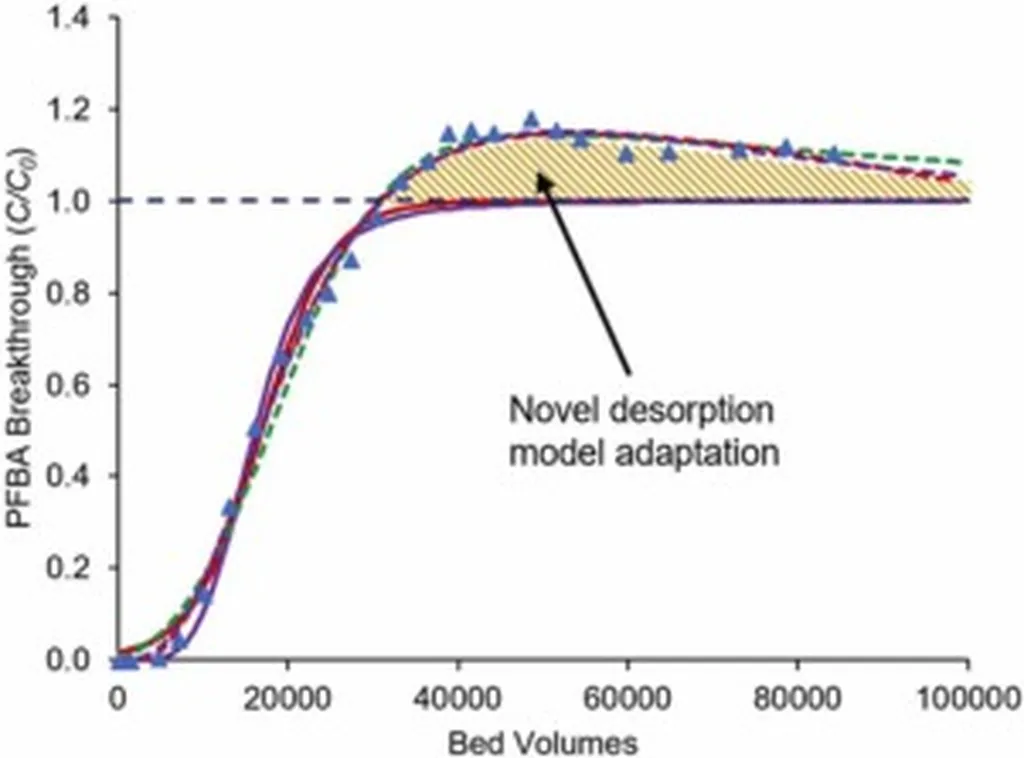
However, the study also highlighted ongoing challenges. At lower concentrations, modified zeolites effectively removed PFOA but showed limited PFBA removal (<25%), indicating a need for further development in strategies to enhance short-chain PFAS binding. "While our findings are promising, especially for mid- to long-chain PFAS compounds, there is still work to be done to improve the removal efficiency for shorter-chain variants," Markhali noted. The implications of this research are significant for the energy sector, particularly in areas where PFAS contamination is a concern. The development of cost-effective and regenerable adsorbents like modified zeolites could revolutionize water treatment processes, making them more sustainable and economically viable. As the world grapples with the challenges posed by PFAS, innovations like these offer a glimmer of hope for cleaner, safer water supplies. Published in *Clean Technologies*, this study not only advances our understanding of PFAS remediation but also paves the way for future developments in water treatment technologies. The journey towards cleaner water is far from over, but with each breakthrough, we edge closer to a future where the "forever chemicals" no longer pose an insurmountable threat.