
In the vast, icy expanse of the Arctic, change is underway, and the ripples are being felt far beyond the frozen north. A recent study published in the journal *Progress in Earth and Planetary Science* (which translates to *Progress in Earth and Planetary Science*), led by Yoshihiro Iijima from the Department of Geography at Tokyo Metropolitan University, sheds light on the interconnected hydroclimatic shifts in Northern Eurasia and their profound implications for the energy sector.
The Arctic is warming at a rate more than twice as fast as the global average, a phenomenon known as Arctic amplification. This rapid transformation is not occurring in isolation; it’s triggering a cascade of changes that extend deep into Northern Eurasia. “The Arctic’s rapid transformation is significantly impacting Northern Eurasia,” Iijima explains. “We’re seeing increased summer precipitation and permafrost thaw in Eastern Siberia, leading to wetter surfaces and higher river runoff.”
This shift in precipitation patterns is crucial for water resources and climate feedback. Summer rainfall and winter snowfall in Eurasia are intricately linked to the Arctic’s climate system. Japanese research institutions have been at the forefront of this research since the 1990s, collaborating with Russian and Mongolian counterparts to integrate field observations, remote sensing, and modeling.
The study highlights the role of decadal atmospheric circulation shifts, potentially amplified by warming, in driving these changes. For instance, the East Siberian wet period of the mid-2000s was influenced by these shifts. “Summer precipitation is influenced by the recirculation of water vapor resulting from repeated cycles of precipitation and evapotranspiration over land areas,” Iijima notes.
In winter, the picture is more complex. Arctic warming is paradoxically linked to both less snow cover and extreme cold snaps with heavy snowfall in Eurasia. This “Warm Arctic, Cold Eurasia” (WACE) pattern is still a topic of debate among scientists, with models suggesting it may be part of a larger atmospheric variability.
These changes have significant implications for the energy sector. Eastern Siberian boreal forests, adapted to permafrost, utilize both rainwater and meltwater within the soil active layer. The wet period of 2004–2010 significantly altered surface water dynamics, initially increasing evapotranspiration but eventually causing waterlogging and shifts in vegetation and permafrost near the surface. These changes directly influence river runoff, with the wet conditions leading to summer flood peaks.
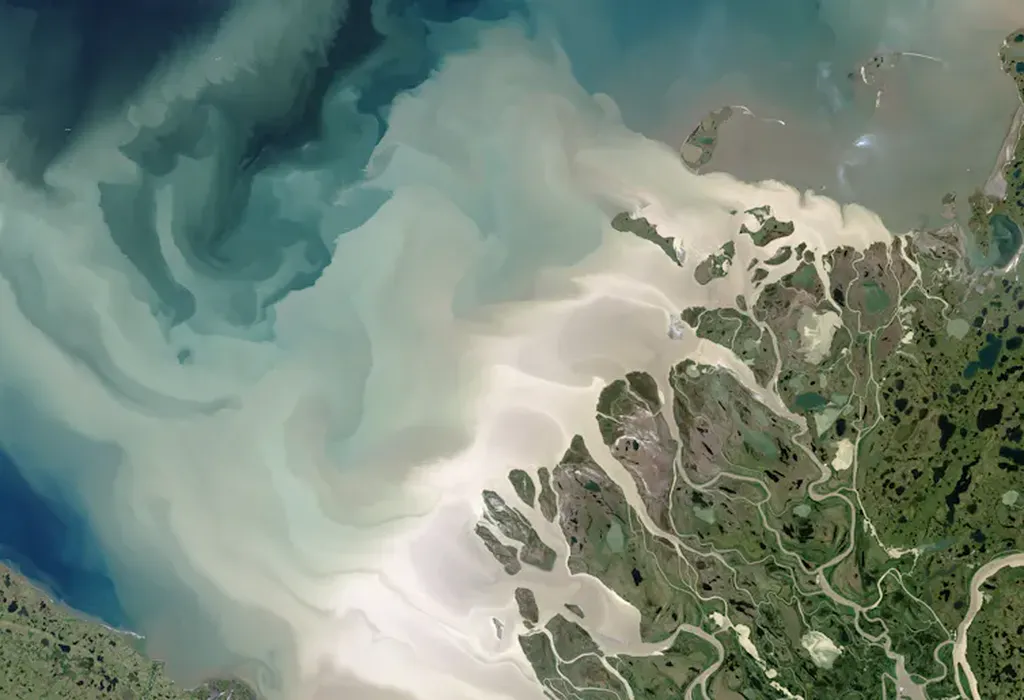
Major Siberian rivers significantly contribute to the Arctic Ocean’s freshwater inflow. Satellite data revealed an increase in terrestrial water storage in the Lena River basin during the wet period. These changes, along with permafrost dynamics, have direct implications for hydropower generation, river navigation, and infrastructure development.
The study underscores the need for future research to consider multi-scale interactions, long-term climate change, and feedback processes. Understanding these complex and interconnected environmental changes is crucial for predicting future trends and mitigating potential impacts.
As the Arctic continues to warm, the energy sector must adapt to these shifting hydroclimatic patterns. The insights from this research could shape future developments in water resource management, infrastructure planning, and climate change mitigation strategies. The study, published in *Progress in Earth and Planetary Science*, serves as a stark reminder of the far-reaching impacts of Arctic change and the urgent need for action.