
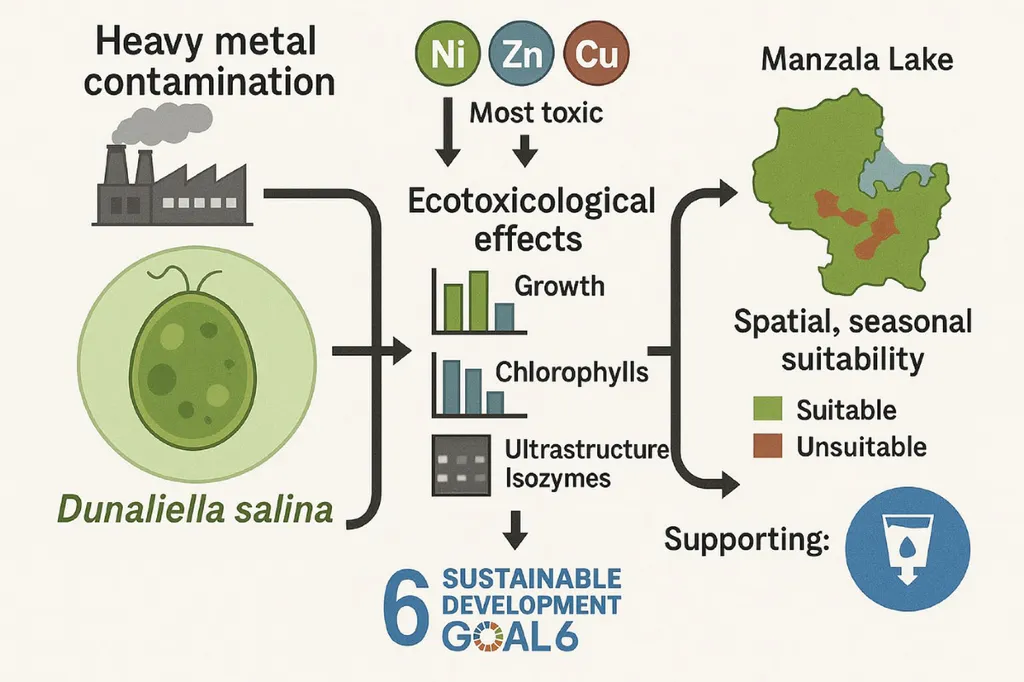
In the heart of Egypt, Manzala Lake faces a silent crisis: heavy metal pollution. A recent study published in *Discover Sustainability* (translated from Arabic as *Exploring Sustainability*) sheds light on the spatial distribution and ecotoxicological effects of nickel, zinc, and copper in the lake, offering valuable insights for the energy sector and environmental management.
Mona Kaamoush, lead author of the study and a researcher at the College of Maritime Transport and Technology, Arab Academy for Science, Technology and Maritime Transport (AAST), explains, “Heavy metal contamination poses significant risks to aquatic ecosystems and human health. Our study aimed to assess the spatial suitability of Manzala Lake for algal growth and evaluate the ecotoxicological effects of these metals on the marine microalga *Dunaliella salina*.”
The research employed a unique integrated approach, combining geospatial analyses with ecotoxicological assessments. Using Landsat imagery, the team mapped the spatial distribution of the heavy metals and evaluated the lake’s suitability for algal growth. “We found that the southern parts of the lake exhibited the highest concentrations of all investigated metals, primarily due to the inflow of wastewater from multiple drainage sources,” Kaamoush notes.
The study revealed that lower concentrations of the metals stimulated algal growth and chlorophyll content, while higher concentrations inhibited these parameters. Among the three metals, copper exhibited the highest toxicity under all tested concentrations, followed by zinc and nickel. Ultrastructural examination of *D. salina* cells confirmed these findings, with distinct morphological alterations observed under metal stress.
The implications of this research extend beyond environmental monitoring. For the energy sector, understanding the spatial distribution of heavy metals and their effects on aquatic life is crucial for sustainable resource management. Algal blooms, for instance, can significantly impact water treatment processes and energy production facilities that rely on water bodies for cooling or other operations.
Moreover, the study’s findings align with Sustainable Development Goal (SDG) 6, which aims to ensure availability and sustainable management of water and sanitation for all. By providing scalable solutions for reducing pollution and protecting aquatic ecosystems, this research contributes to the global effort towards sustainable development.
As we look to the future, the integrated approach employed in this study could shape the way we monitor and manage water resources. By combining geospatial analyses with ecotoxicological assessments, we can gain a more comprehensive understanding of environmental threats and develop targeted strategies for mitigation.
In the words of Kaamoush, “Our study highlights the importance of an integrated approach in environmental monitoring and management. By understanding the spatial distribution of pollutants and their effects on aquatic life, we can make informed decisions that promote sustainability and protect our precious water resources.”
This research not only advances our understanding of heavy metal pollution in Manzala Lake but also sets a precedent for future studies in the field. As the energy sector continues to evolve, the need for sustainable water management practices becomes ever more pressing. This study offers a valuable contribution to that ongoing effort.