
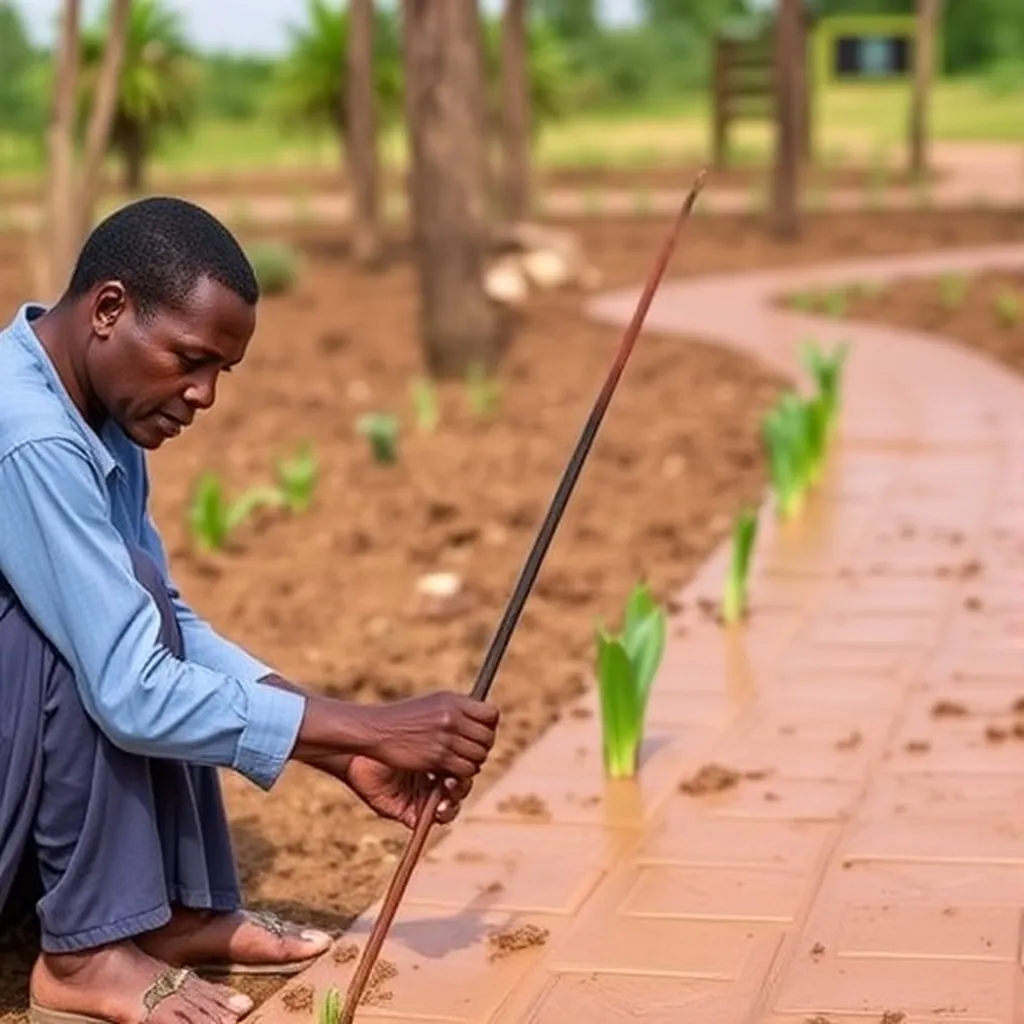
In the lush, climate-vulnerable landscapes of Ethiopia’s Gambella region, a pressing question looms: how can farmers adapt to shifting weather patterns and secure their livelihoods? A recent study published in the journal ‘Discover Sustainability’ (which translates to ‘Nachhaltigkeit entdecken’) offers compelling insights into the adoption of small-scale irrigation technologies, with significant implications for the energy sector and sustainable agriculture.
Chuol Bor Chuol, a researcher from the Department of Rural Development and Agricultural Extension at Gambella University, led the study that delved into the factors influencing farmers’ decisions to adopt irrigation methods. The findings reveal a complex interplay of access to resources, institutional support, and physical barriers.
The study found that nearly half of the farmers (51.7%) were not using any form of irrigation, while the rest employed various methods, including surface irrigation (25.4%), motor pump irrigation (7.5%), manual watering (11.7%), and solar energy irrigation (3.8%). These statistics underscore the untapped potential for irrigation adoption and the role of technology in enhancing agricultural resilience.
Chuol Bor Chuol emphasized the critical role of institutional support and access to finances: “Our analysis showed that access to farm inputs, credit, and training significantly influenced farmers’ adoption of small-scale irrigation. These factors are crucial for fostering resilience to climate variability.”
The study also highlighted the negative impact of distance to markets and water sources on irrigation adoption. This finding suggests that reducing physical barriers could substantially improve farmers’ ability to adapt to changing climatic conditions.
For the energy sector, the low adoption rate of solar energy irrigation presents an opportunity. As Chuol Bor Chuol noted, “Only a small fraction of farmers are currently using solar energy for irrigation. This indicates a significant potential for growth in this area, which could be driven by targeted interventions and policy support.”
The research also sheds light on the broader implications for sustainable agriculture and food security. By identifying the key factors influencing irrigation adoption, the study provides a roadmap for policymakers, development practitioners, and energy providers to design effective interventions. These interventions could include improving access to credit, providing training and extension services, and investing in infrastructure to reduce distances to markets and water sources.
As climate change continues to pose challenges to food systems and livelihoods, the findings of this study offer valuable insights for building resilience in vulnerable regions. By addressing the identified barriers and leveraging the opportunities for solar energy adoption, stakeholders can work together to foster sustainable agriculture and secure the future of farming communities in Gambella and beyond.
The study, published in ‘Discover Sustainability’, not only contributes to the academic discourse on technology adoption and climate resilience but also provides actionable recommendations for policymakers and practitioners. As the world grapples with the impacts of climate change, such research is crucial for shaping effective strategies and interventions to support vulnerable communities.