
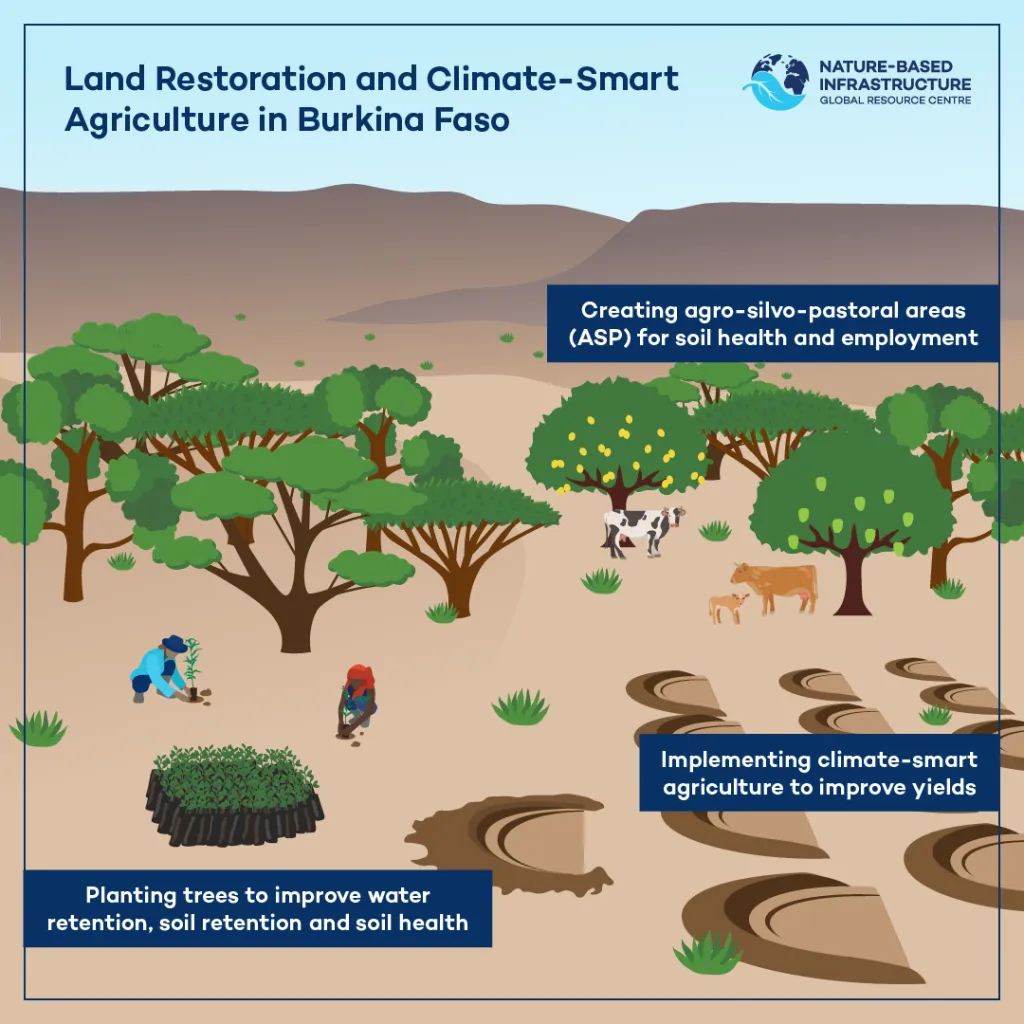
In the sun-scorched landscapes of Burkina Faso, a silent revolution is taking root, quite literally. Researchers have discovered that simple soil and water conservation (SWC) techniques are breathing new life into degraded lands, offering a beacon of hope for biodiversity and potentially reshaping the energy sector’s future.
At the heart of this transformation is Souleymane Ganaba, whose research, published in the journal *VertigO* (which translates to “Whirlwind” in English), has revealed that SWC technologies are not just preserving water and soil but also fostering a remarkable resurgence of vegetation. Ganaba’s work, conducted in six agro-pastoral units across the Sahelian and North Sudanian zones, has shown that these techniques can significantly boost the density and diversity of plant life, a finding that could have profound implications for the energy sector’s reliance on sustainable resources.
The study focused on various SWC methods, including half-moons, stone bunds, filter dikes, and techniques like ‘sous-solage’ and ‘scarifiage’. These methods, often overlooked in favor of more complex solutions, have proven to be highly effective in promoting the growth of woody and herbaceous vegetation. “The half-moons and the stones bounds, the filter dikes and ‘sous-solage’ and ‘scarifiage’ favoured the settlement and development of perennial vegetation,” Ganaba explained, highlighting the success of these simple yet powerful techniques.
One of the most striking findings was the dominance of Cassia obtusifolia in the micro-basins, which, while competing with other plants, indicated a robust resurgence of vegetation. More importantly, the study found that the survival rate of woody plant regeneration was significantly higher in pastoral plots (9.45%) compared to cultivated plots (2.65%). Species like Balanites aegyptiaca, Acacia tortilis, and Acacia senegal, known for their multipurpose uses, showed remarkable resilience, surviving since 1999.
For the energy sector, these findings are a game-changer. As the world increasingly turns to renewable energy sources, the demand for sustainable biomass and other plant-based resources is on the rise. The ability to regenerate degraded lands and boost biodiversity through simple, cost-effective methods like those studied by Ganaba could provide a steady supply of these resources, ensuring energy security and sustainability.
Moreover, the research underscores the importance of good land management practices in restoring sustainable resources. As Ganaba noted, “Good management of managed lands is necessary to restore sustainable resources.” This insight is crucial for the energy sector, which must balance the need for resource extraction with the imperative of environmental conservation.
The implications of this research extend beyond Burkina Faso, offering a blueprint for other arid and semi-arid regions grappling with land degradation and biodiversity loss. By adopting and adapting these SWC techniques, communities and industries alike can contribute to a greener, more sustainable future.
As we stand on the precipice of a climate crisis, Ganaba’s work serves as a reminder that sometimes, the most effective solutions are also the simplest. By harnessing the power of nature and employing innovative yet straightforward techniques, we can reclaim degraded lands, boost biodiversity, and secure a sustainable future for generations to come. The whirlwind of change is here, and it’s taking root in the most unexpected places.