
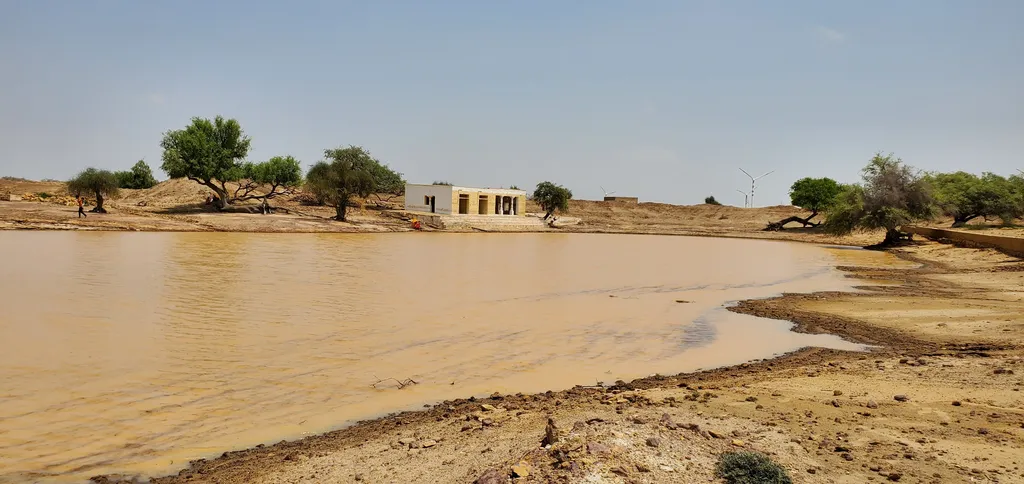
In the arid expanse of the Thar Desert, where water is a precious commodity, an ancient water management system known as khadeen has sustained agriculture and communities for centuries. A recent study published in ‘Blue Papers’ (translated from Italian as ‘Blue Papers’), led by Pierantonio La Vena, sheds light on the historical, hydrogeological, and socioeconomic dimensions of this traditional technology, emphasizing its significance and the contemporary threats it faces.
Khadeen are ingenious structures that capture seasonal runoff, creating temporary lakes that support agriculture in one of the world’s most water-scarce regions. These systems take advantage of unique geohydrologic formations, demonstrating a profound understanding of the local environment. “The khadeen system is a testament to the ingenuity of traditional water management practices,” La Vena notes. “It showcases how communities have adapted to and thrived in harsh conditions through careful observation and innovation.”
The khadeen have been instrumental in supporting agricultural activities since the sixteenth century, offering impressive yields despite the challenging environment. These systems are not just about water conservation; they are about sustaining entire ecosystems and communities. “Khadeen are more than just irrigation systems,” explains La Vena. “They are a lifeline for the people and the environment of the Thar Desert, supporting biodiversity and livelihoods.”
However, the future of khadeen is under threat. Mining encroachment, labor outmigration, and road development are putting pressure on these ancient systems. The delicate balance between preserving traditional knowledge and succumbing to external pressures poses significant challenges. “The threats to khadeen are not just environmental but also cultural and socioeconomic,” La Vena warns. “Losing these systems would mean losing a vital part of the region’s heritage and a sustainable way of life.”
The study highlights the importance of preserving khadeen, not just for their historical significance but also for their potential to inform modern water management practices. In an era where water scarcity is a growing global concern, the lessons from khadeen could be invaluable. “The khadeen system offers a blueprint for sustainable water management,” La Vena suggests. “It shows how traditional knowledge can be integrated with modern technology to create resilient and sustainable solutions.”
The research published in ‘Blue Papers’ underscores the need for a holistic approach to water management that respects and incorporates traditional knowledge. As the world grapples with the impacts of climate change and water scarcity, the khadeen of the Thar Desert serve as a reminder of the wisdom embedded in ancient practices and the importance of preserving them for future generations.
The findings of this study could shape future developments in the field of water management, particularly in arid regions. By understanding and preserving traditional systems like khadeen, we can develop more sustainable and resilient water management practices. This research not only highlights the commercial impacts for the energy sector but also emphasizes the broader socioeconomic and ecological benefits of preserving traditional water management systems. As we look to the future, the lessons from the Thar Desert could be crucial in addressing the global water crisis.