
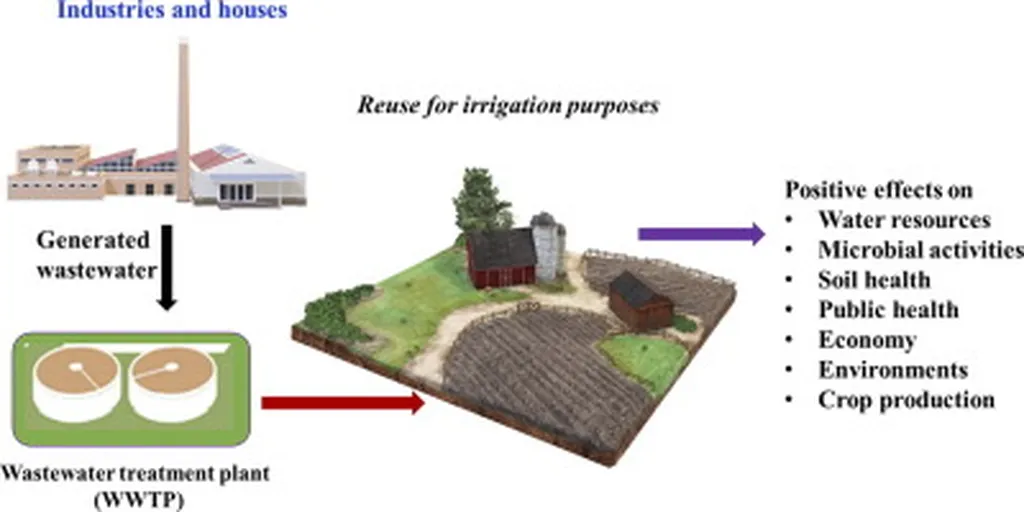
In the heart of China’s agricultural landscape, a pressing question is taking root: how can farmers adapt to water scarcity while maintaining sustainable practices? A recent study published in the journal *Agricultural Water Management* (translated as “Agricultural Water Management”) sheds light on this very issue, offering insights that could reshape the future of crop irrigation and water resource management. Led by Yi-Jia Wang from the Department of Engineering Management at Northeast Agricultural University, the research delves into the often-overlooked factor of farmer behavior, particularly their willingness to adopt treated wastewater for crop irrigation.
The study, which integrates subjective cognition with external influences, reveals a complex interplay of factors that drive or deter farmers’ acceptance of this sustainable practice. “We found that farmers’ perceived usefulness of the method, environmental policies, and subjective norms—essentially, what others in their community think—all positively influence their willingness to adopt treated wastewater for irrigation,” explains Wang. However, production and environmental risks significantly hinder acceptance, with subjective norms emerging as the most crucial factor in shaping farmers’ decisions.
This research is not just about understanding farmer behavior; it’s about leveraging that understanding to drive change. The findings highlight the need for targeted policies and extension services that cater to the diverse needs of farmers. For instance, the study’s multi-group analysis revealed significant variations in willingness based on age, education level, and household agricultural income. This suggests that a one-size-fits-all approach won’t work. Instead, policies must be tailored to address these differences effectively.
So, what does this mean for the future of agriculture and water resource management? For one, it underscores the importance of community engagement and education. Farmers are more likely to adopt new practices if they see the value and if their peers support the change. It also highlights the need for robust risk management strategies to address farmers’ concerns about production and environmental risks.
Moreover, the study’s findings could have significant implications for the energy sector. As water scarcity becomes an increasingly pressing issue, the demand for efficient and sustainable water management practices is set to rise. This, in turn, could open up new opportunities for energy companies to invest in and develop technologies that support these practices.
In the words of Wang, “Our study is a stepping stone towards a more sustainable future for agriculture. It’s about understanding the people behind the practices and tailoring our approaches to meet their needs.” As we grapple with the challenges of water scarcity and climate change, this people-centered approach could be the key to unlocking a more sustainable and resilient future for all.