
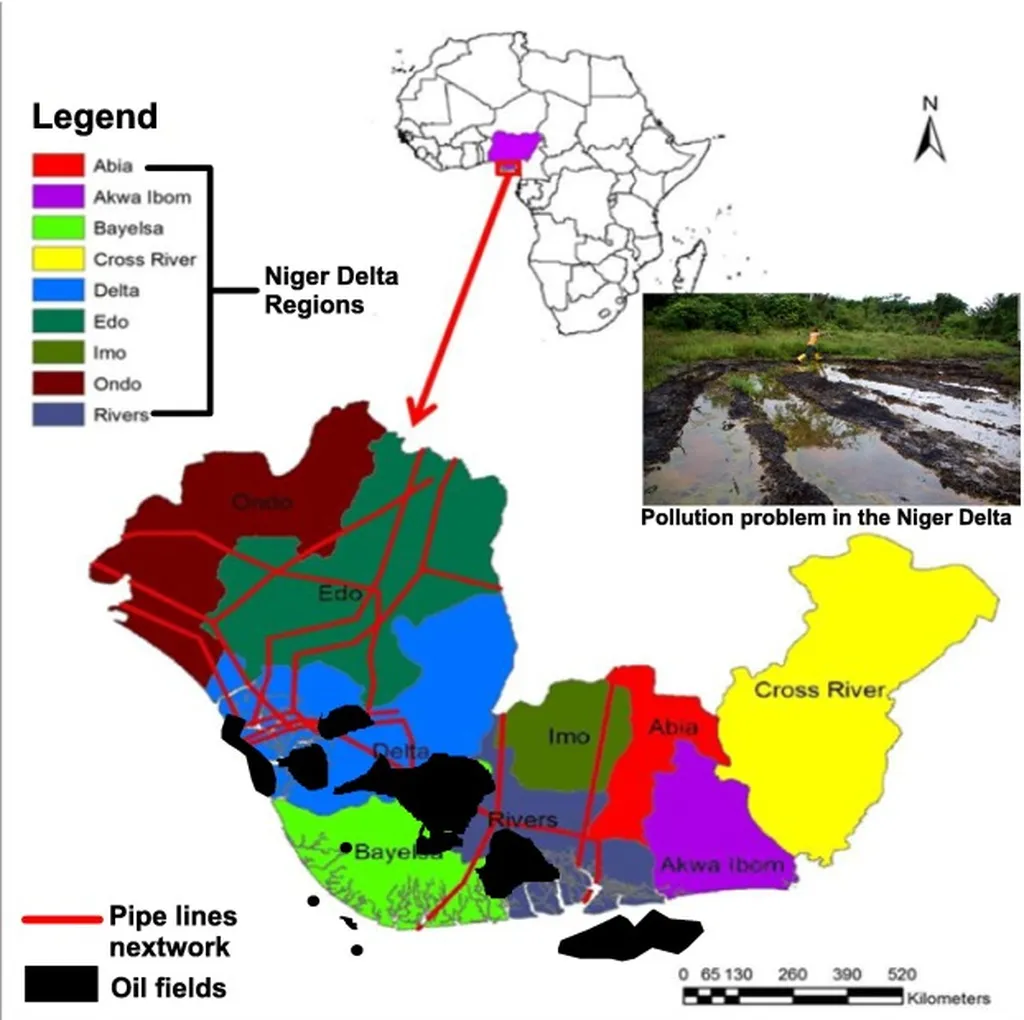
In the heart of Nigeria’s Niger Delta, a silent crisis is unfolding beneath the surface, threatening both the environment and the communities that depend on it. Groundwater, a lifeline for local populations, is increasingly contaminated by hydrocarbon extraction activities, according to a recent study published in the journal ‘Water-Energy Nexus’ (translated as ‘Water-Energy Connection’). The research, led by Joseph Omeiza Alao from the Department of Physics at the Air Force Institute of Technology in Kaduna, Nigeria, sheds light on the severe impacts of hydrocarbon contaminants (HCCs) on groundwater quality and public health.
The Niger Delta, rich in oil and gas reserves, has seen a surge in hydrocarbon extraction activities. However, this economic boon comes at a significant environmental cost. The study reveals alarming levels of Total Petroleum Hydrocarbon (TPH) in groundwater samples, reaching up to 42,200 micrograms per liter—far exceeding international safety limits. “The contamination levels are not just a blip; they are a clarion call for immediate action,” Alao emphasizes.
The consequences of this pollution are far-reaching. Heavy metals such as cadmium, nickel, and lead, along with volatile organic pollutants, have been found in concentrations that surpass regulatory thresholds. This contamination renders local water sources unsafe for consumption and poses severe threats to aquatic ecosystems. “The water is no longer a resource but a risk,” Alao notes, highlighting the dire situation.
The environmental degradation has cascading effects. Agricultural productivity is declining, biodiversity is dwindling, and human health is at risk. Communities face increased incidences of reproductive disorders and cancer, directly linked to the contaminated water supplies. The study underscores that weak enforcement of regulatory frameworks, extensive river networks, and corporate negligence exacerbate the problem.
However, the research is not all doom and gloom. It offers a roadmap for sustainable solutions. Stricter environmental policies, advanced remediation techniques, and community engagement in decision-making processes are critical. Bioremediation, the use of microorganisms to break down environmental pollutants, and the adoption of renewable energy sources can mitigate long-term damage. Improved waste management practices can also play a pivotal role in ecological restoration.
For the energy sector, the implications are significant. The study calls for strengthening compliance mechanisms and ensuring transparency in hydrocarbon operations. “The energy sector must evolve beyond extraction to embrace sustainable practices,” Alao asserts. This shift is not just about environmental stewardship but also about safeguarding the long-term viability of the industry.
The research published in ‘Water-Energy Nexus’ serves as a wake-up call, urging stakeholders to take immediate action. It highlights the pressing need for integrated scientific and policy-driven approaches to safeguard water sources and public health. The study advocates for sustainable environmental management in the Niger Delta, emphasizing that without immediate intervention, the continued degradation of groundwater threatens both ecosystems and human livelihoods.
As the world grapples with the challenges of balancing economic growth with environmental sustainability, this research offers valuable insights. It underscores the importance of enforceable solutions and the need for a collaborative effort between governments, industries, and communities. The future of the Niger Delta—and indeed, the global energy sector—hinges on our ability to act now and act decisively.