
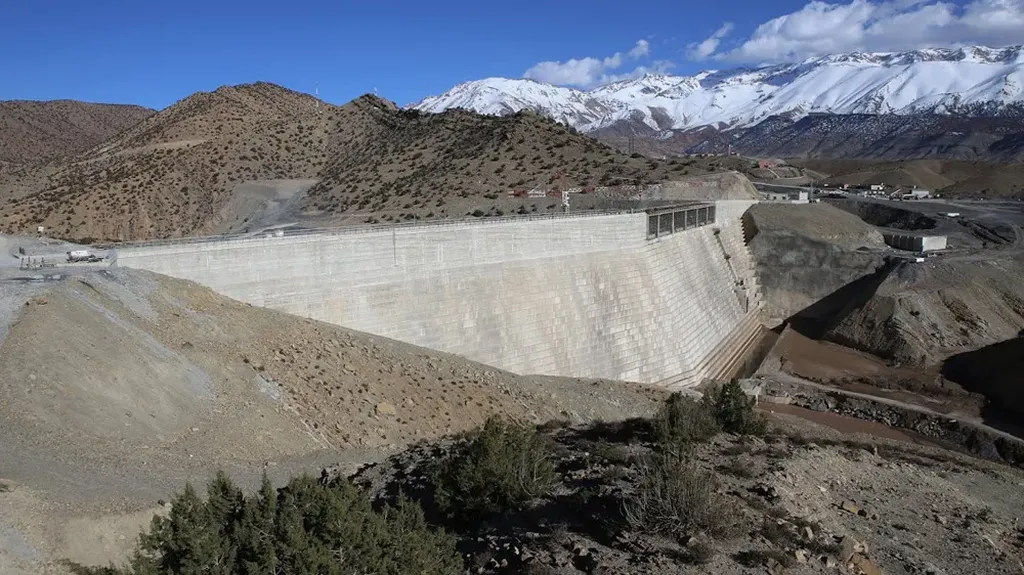
In the heart of Morocco’s semiarid region, the Tamalout Dam stands as a vital lifeline, supplying water to communities and industries alike. Yet, as climate pressures mount and human impacts intensify, understanding the seasonal dynamics of water quality in such reservoirs has become increasingly critical. A recent study published in *Water Science* (translated from French) sheds light on these complexities, offering insights that could shape the future of water management in arid regions and beyond.
Led by Lhoussaine Jait of the Biology Department at Université Moulay Ismail de Meknes, the research provides a detailed assessment of the Tamalout Dam’s water quality over a full year. The study reveals a delicate interplay between geochemical processes and biological activity, driven by seasonal changes and human influences.
The findings highlight two dominant processes: geochemical mineralization, influenced by evaporation and the local lithology, and biological degradation, linked to organic matter inputs. “These processes are not isolated; they interact in complex ways that affect the overall water quality,” explains Jait. Despite seasonal fluctuations, the study found that the water quality remained generally acceptable, with a low risk of eutrophication. However, the research also identified a potential hypoxia risk in deeper layers during warmer periods, a finding that could have significant implications for both water supply and energy production.
For the energy sector, which often relies on consistent water quality for cooling and other processes, these insights are particularly valuable. Understanding the seasonal variability of water quality can help energy companies anticipate and mitigate potential risks, ensuring the reliable operation of power plants and other facilities. “This research provides a scientific basis for practical water quality monitoring and sustainable reservoir management,” says Jait. “It’s a step towards developing climate-adaptive strategies that can benefit both the environment and the economy.”
The study’s use of principal component analysis (PCA) and Spearman’s correlation offers a robust methodological framework that could be applied to other reservoirs in semiarid regions. By identifying the key drivers of water quality variation, this research paves the way for more targeted and effective management strategies.
As climate change continues to exert pressure on water resources, the need for such studies becomes ever more urgent. The Tamalout Dam’s story is just one example of the challenges and opportunities that lie ahead. By embracing a science-based approach to water management, we can ensure that these vital resources remain sustainable and resilient in the face of a changing climate.
In the words of Jait, “This is not just about understanding the past; it’s about shaping the future.” And for the energy sector, that future looks increasingly dependent on our ability to manage water resources wisely.