
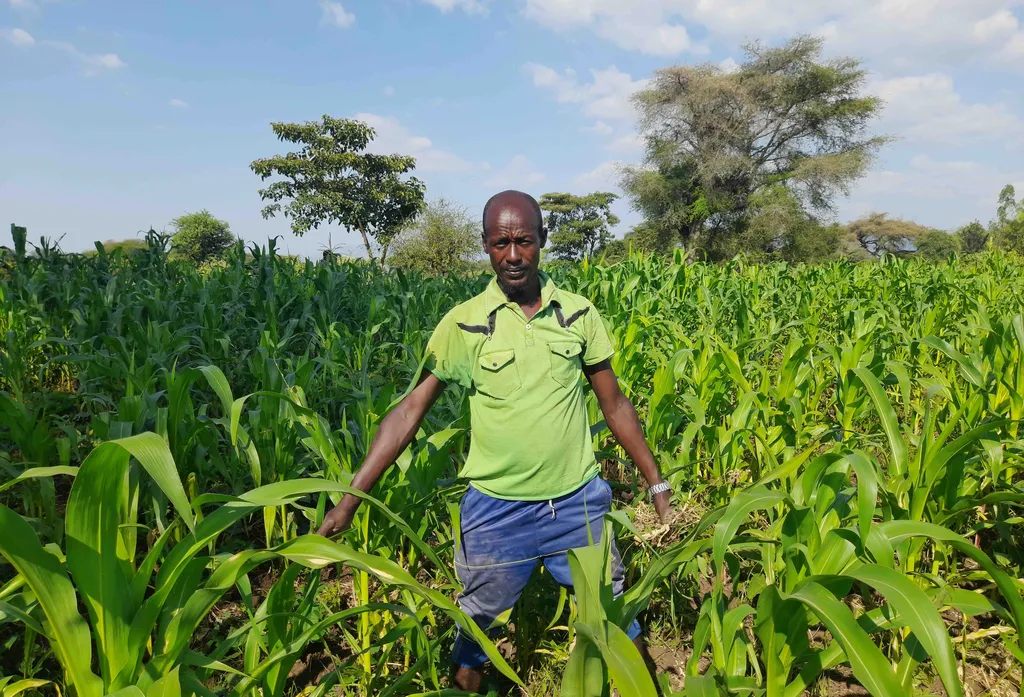
In the heart of southwestern Ethiopia, a pressing challenge unfolds: water scarcity, exacerbated by climate change, is trapping smallholder farmers in a cycle of poverty. A recent study, led by Dessalegn Obsi Gemeda from the Department of Natural Resource Management at Jimma University, sheds light on the impacts of climate change on water resources and the adaptation strategies employed by farming communities. The research, published in the journal *Environmental and Sustainability Indicators* (translated from Amharic), offers valuable insights that could reshape water management strategies and policy in developing countries.
The study, which surveyed 1,946 household heads across five districts, reveals that a significant 58.6% of respondents reported that climate change has directly impacted water availability. This scarcity is not just an environmental issue; it’s a commercial one, with profound implications for the energy sector, particularly in regions where agriculture is the backbone of the economy.
“Household heads exposed to agricultural yield loss tend to have greater awareness about climate change,” notes Gemeda. This heightened awareness is driving farmers to adopt various strategies to combat water scarcity. The study employed a multivariate probit model and multidimensional econometric model to explore these adaptation strategies, uncovering some surprising trends.
Access to water resources, for instance, has a strong negative effect on the use of rainwater harvesting strategies. This counterintuitive finding suggests that farmers with reliable water access are less likely to invest in rainwater harvesting, potentially missing out on a valuable resource during dry periods. On the other hand, social networks, extension services, and mass media have a positive effect on the utilization of water harvesting, water rules, watershed protection, public capacity building, and water infrastructure improvement.
The study also highlights the influence of demographic and socioeconomic factors. Variables such as age, marital status, income, and limited institutional support significantly shape farmers’ decisions to adopt different water scarcity adaptation strategies. These findings underscore the need for tailored, context-specific interventions to support smallholder farmers in the face of climate change.
So, what does this mean for the future? The research offers practical policy implications that could guide water management strategies in developing countries. By understanding the factors that influence farmers’ adaptation strategies, policymakers and industry stakeholders can design more effective interventions. This could include improving access to extension services, strengthening social networks, and enhancing institutional support.
Moreover, the study’s findings could have broader implications for the energy sector. As water scarcity intensifies, the demand for alternative energy sources is likely to rise. This could open up new commercial opportunities for renewable energy providers, particularly in solar and wind power, which are less dependent on water resources.
In conclusion, this research is a call to action. It underscores the urgent need for adaptive strategies to mitigate the impacts of climate change on water resources and highlights the role of social networks, extension services, and mass media in promoting these strategies. As Gemeda aptly puts it, “Understanding the factors influencing farmers’ adaptation strategies is crucial for designing effective interventions that can help break the cycle of poverty and water scarcity.” By heeding this call, we can pave the way for a more sustainable and resilient future.