
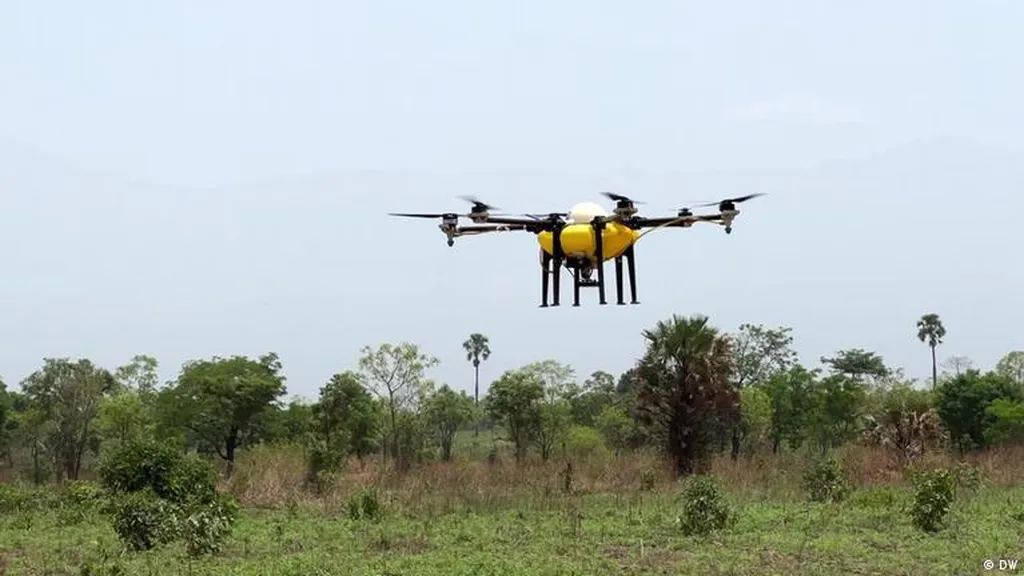
In the sun-scorched fields of northern Ghana, a quiet revolution is taking root, one that promises to reshape the future of agriculture and water management. A groundbreaking study, led by Sayibu Abdul-Gafaar of the IT-Training Section at the Directorate of ICT Services, University of Cape Coast, Ghana, is harnessing the power of machine learning and drone technology to bring precision agriculture to smallholder farmers. Published in *Environmental Challenges* (translated as “Environmental Challenges”), the research offers a glimpse into a future where technology and agriculture intersect to create sustainable, climate-resilient farming practices.
Ghana’s agricultural sector is the backbone of its economy, contributing a significant 20% to the GDP and employing nearly half of the workforce. Yet, the sector’s heavy reliance on rain-fed farming leaves it vulnerable to the whims of climate variability, erratic rainfall, and prolonged droughts. With only 2% of farmland irrigated, traditional methods often exacerbate water scarcity and low productivity, leading to chronic food insecurity and economic losses.
Abdul-Gafaar’s study proposes an innovative solution to these challenges: a machine learning (ML) and drone-based precision irrigation system. The system integrates IoT soil sensors, weather forecasts, and autonomous drones to optimize water use, enhance crop yields, and build climate resilience. “This technology is not just about increasing yields; it’s about creating a sustainable future for farmers,” Abdul-Gafaar explains. “By using data-driven insights, we can ensure that every drop of water is used efficiently, reducing waste and maximizing productivity.”
The study deployed this cutting-edge technology across 150 smallholder farms in Tamale, Bolgatanga, and Wa. A random forest ML model was used to predict irrigation needs, while drones delivered targeted water applications. The results were impressive: a 50.6% increase in crop yields and a 30–40% reduction in water usage compared to traditional methods. These findings highlight the potential of precision agriculture to transform the agricultural landscape, not just in Ghana but across sub-Saharan Africa.
However, the journey towards widespread adoption is not without its hurdles. Stakeholder interviews and factor analysis identified barriers such as high costs, limited digital literacy, and policy gaps. Abdul-Gafaar acknowledges these challenges but remains optimistic. “While the initial costs may be high, the long-term benefits for both farmers and the environment are undeniable,” he says. “With government subsidies, farmer training, and regulatory reforms, we can overcome these barriers and pave the way for a more sustainable future.”
The study’s recommendations align with the United Nations’ Sustainable Development Goals (SDGs 2, 6, and 13), emphasizing the need for zero hunger, clean water and sanitation, and climate action. By integrating machine learning and drone technology, this research offers a replicable framework for other arid regions, contributing to global efforts to combat climate change and food insecurity.
As we look to the future, the implications of this research extend beyond the fields of northern Ghana. The energy sector, in particular, stands to benefit from the efficient use of water resources. Precision agriculture not only reduces water waste but also optimizes energy use in irrigation, creating a more sustainable and cost-effective approach to farming. This synergy between agriculture and energy highlights the interconnectedness of our global challenges and the need for innovative, interdisciplinary solutions.
In the words of Abdul-Gafaar, “This is just the beginning. The potential for technology to transform agriculture is immense, and we are only scratching the surface.” As we stand on the brink of this agricultural revolution, one thing is clear: the future of farming is smart, sustainable, and driven by data.