
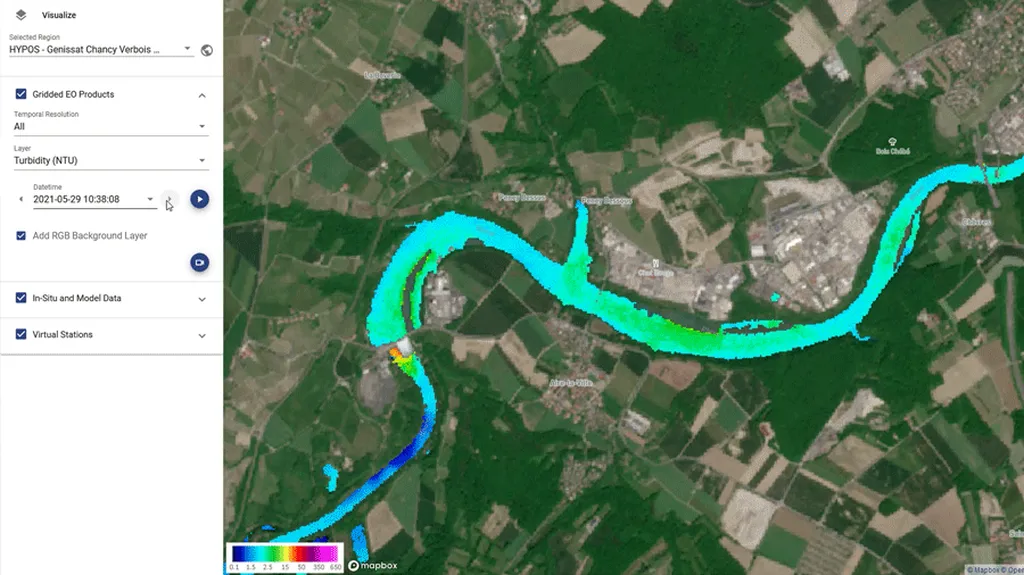
In the quest to accurately predict water resources and hydropower production, researchers have long been hampered by a critical gap: the lack of comprehensive data on reservoir operations, particularly in ungauged basins. A new study published in *Water Resources Research* (translated as “Water Resources Research”) offers a promising solution, combining satellite remote sensing, hydrologic modeling, and conceptual operation schemes to improve reservoir simulations and, consequently, downstream energy production assessments.
Led by Ningpeng Dong from the State Key Laboratory of Simulation and Regulation of Water Cycle in River Basin at the China Institute of Water Resources and Hydropower Research in Beijing, the study introduces a synergistic framework that leverages remotely sensed data to enhance the accuracy of reservoir operation simulations. This approach is particularly valuable for ungauged reservoirs—those without in-situ data on inflow, release, storage, and operating rules.
The research team focused on the Yalong River Basin in China, setting up controlled experiments to test their framework. They found that remote sensing significantly improved parameter estimation and simulations of ungauged reservoirs across various operation schemes. This advancement is crucial for the energy sector, as accurate hydrologic predictions are essential for planning and managing hydropower facilities.
“Remote sensing can improve the parameter estimation and simulations of ungauged reservoirs for all selected reservoir operation schemes,” Dong explained. “This leads to better downstream flood and streamflow simulations, which are vital for energy production planning.”
However, the study also revealed a critical limitation: most existing operation schemes struggle to maintain accuracy under changing inflow regimes. This could lead to unreliable assessments of future water resources and hydropower production. To address this, the researchers extended a previously developed reservoir operation scheme with a storage anomaly-based calibration approach. This new method proved more adaptable to flow regime variations, offering a more reliable tool for long-term planning.
The implications of this research are far-reaching. As Ningpeng Dong noted, “Our study provides a practical framework for reservoir impact assessments and predictions, especially with the ongoing satellite altimetry projects like the Surface Water and Ocean Topography (SWOT) mission.” The SWOT mission, a joint effort by NASA and CNES, aims to provide high-resolution elevation data of the Earth’s surface water, which could further enhance the accuracy of reservoir simulations.
For the energy sector, this research opens new avenues for improving the reliability of hydropower production forecasts. Accurate simulations of reservoir operations are essential for optimizing energy generation and managing water resources effectively. As the global demand for renewable energy continues to grow, tools that enhance the predictability of hydropower output will become increasingly valuable.
The study’s findings underscore the importance of integrating remote sensing data into hydrologic models. By doing so, researchers and industry professionals can better understand and predict the behavior of ungauged reservoirs, ultimately leading to more informed decision-making in water resource management and energy production.
As the field of hydrologic modeling continues to evolve, the synergistic framework proposed by Dong and his team offers a promising path forward. By combining the strengths of remote sensing, hydrologic modeling, and conceptual operation schemes, this research paves the way for more accurate and reliable assessments of water resources and hydropower production in the face of a changing climate.