
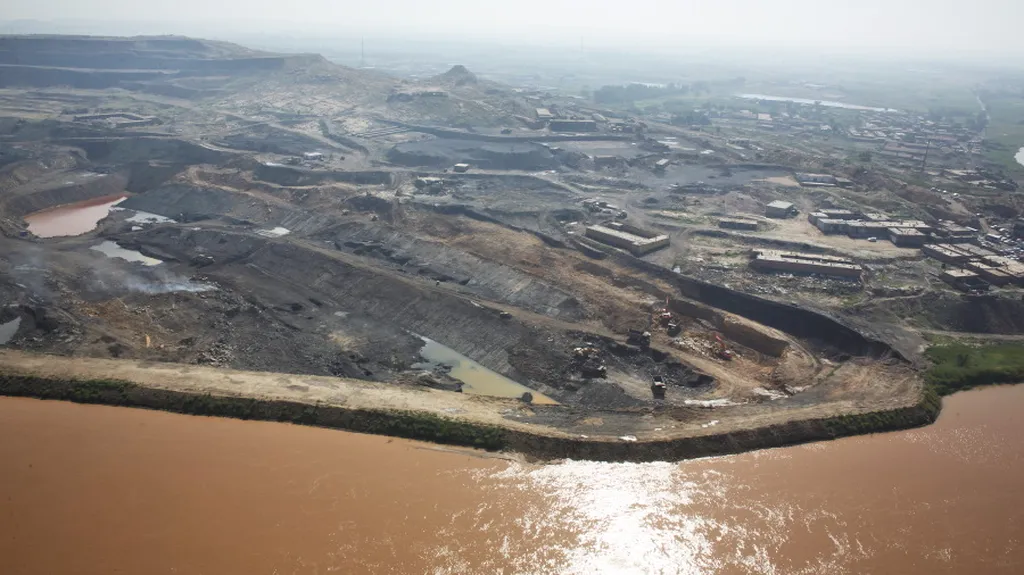
In the heart of China’s energy sector, a groundbreaking study is set to redefine how coal mines manage one of their most underutilized resources: mine water. Published in *Meitan xuebao* (translated to *Coal Science and Technology*), the research led by Qiang Wu from the National Engineering Research Center of Coal Mine Water Hazard Controlling at China University of Mining and Technology-Beijing, offers a strategic blueprint for transforming mine water from an environmental challenge into a valuable resource, particularly in the water-scarce Yellow River Basin.
The Yellow River Basin, a critical region for China’s coal production, faces severe water scarcity, which threatens both ecological sustainability and economic development. Mine water, often dismissed as a byproduct of coal mining, holds untapped potential to alleviate these pressures. “The strategic potential of mine water is immense,” Wu explains. “By fully exploiting its resource attributes, we can significantly mitigate regional water shortages and reduce pollution risks to surface water environments.”
The study reveals stark regional disparities in mine water resources across the basin. Mine water inflow intensity increases from west to east, with the central region receiving the highest volumes. Water quality varies significantly, with highly mineralized water upstream, complex types midstream, and relatively better quality downstream. These variations necessitate tailored approaches to management and utilization.
Wu and his team identified four typical patterns of coal production and mine water inflow: “high production-low discharge,” “low production-high discharge,” “balanced production and discharge,” and “low production-low discharge.” These patterns highlight the need for region-specific strategies to optimize mine water use. Currently, mine water utilization rates range widely, from less than 30% to over 90%, with industrial use dominating the landscape. However, ecological and agricultural uses remain underdeveloped, presenting opportunities for diversification.
Drawing on international best practices, the researchers propose a four-dimensional coordinated strategic framework: “spatial, functional, temporal, and institutional.” This framework aims to create a full-chain layered governance system, encompassing source reduction, harmless treatment during processes, resource recovery at the tail end, and terminal recharge. Key projects include precise emission reduction and pollution control engineering, intelligent mine water monitoring networks, quality-based hierarchical treatment systems, innovative utilization models, and regional recharge storage with groundwater remediation.
The commercial implications for the energy sector are profound. By transitioning mine water from an “environmental burden” to a “strategic resource,” coal mines can enhance their sustainability credentials, reduce operational costs, and contribute to regional water security. “This transition is not just about environmental stewardship; it’s about creating economic value,” Wu notes. “By integrating mine water management into the core of our operations, we can unlock new opportunities for growth and innovation.”
The study’s findings are poised to shape future developments in mine water management, offering a roadmap for the energy sector to balance ecological protection with high-quality development. As the world grapples with water scarcity and environmental degradation, the strategic utilization of mine water could serve as a model for other regions and industries.
Published in *Meitan xuebao*, this research underscores the importance of interdisciplinary collaboration and innovative thinking in addressing complex environmental challenges. As the energy sector continues to evolve, the insights from this study will be instrumental in driving sustainable practices and ensuring water resource security for future generations.