
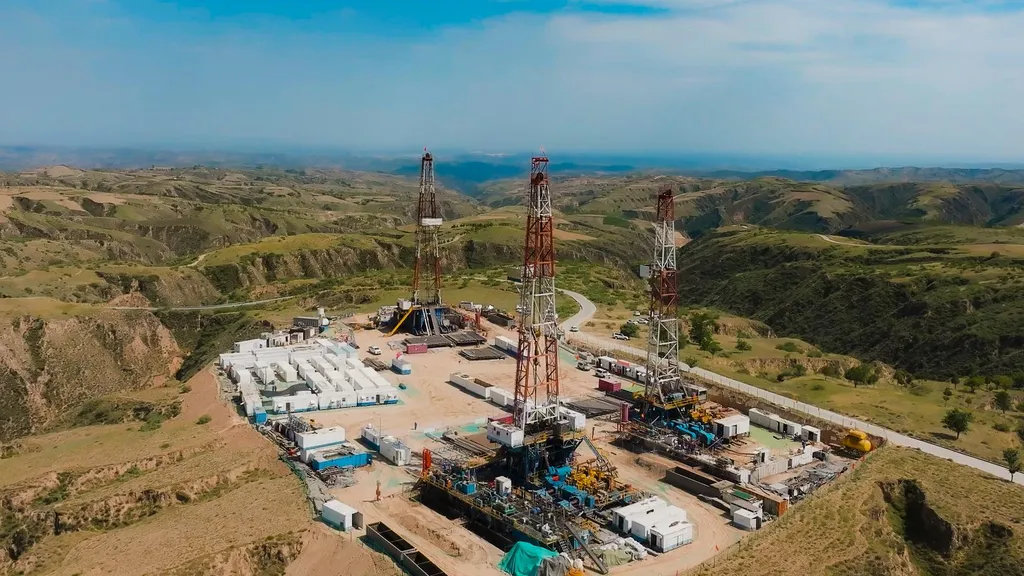
In the heart of China’s energy sector, a groundbreaking study is set to redefine the extraction of deep coalbed methane (CBM), offering a significant boost to natural gas production. Led by Lihong Zhou from the China United Coalbed Methane National Engineering Research Center Co., Ltd., the research published in *Meitan xuebao* (Coal Science and Technology) delves into the intricate mechanisms of post-fracturing soaking and pressure-controlled drainage in deep coalbed methane reservoirs. This work promises to optimize production strategies and enhance the economic viability of deep CBM extraction.
Deep coalbed methane has emerged as a pivotal resource for increasing natural gas production in China. However, its extraction dynamics differ markedly from those of shallow coalbed methane, posing unique challenges. Zhou and his team have uncovered critical insights that could transform the industry. “The scientific development concept of deep coalbed methane is to fully utilize the ‘permeation displacement displacement’ effect of fracturing fluid through ‘reasonable well soaking, pressure control production, maintaining gas-liquid two-phase flow, and extending the self-injection period,'” Zhou explains. This approach ensures efficient resource use within the stimulated reservoir volume (SRV) and maximizes the synergistic production of gas and liquid within the drainage volume (DRV).
The study highlights three key differences in the development geology of deep coalbed methane wells compared to shallow and intermediate ones: fracturing stimulation intensity and resource utilization scope, imbibition and displacement effects, and production methods. Through a combination of physical modeling experiments, numerical simulations, mechanistic analysis, and field trials, the research establishes critical quantitative indicators and optimization strategies for determining soaking duration, flowback, and post-commissioning control measures.
One of the most significant findings is the determination of the optimal soaking time for deep coalbed methane wells, which ranges from 3 to 11 days. This period is crucial for maximizing the displacement effect of fracturing fluid and enhancing gas production. The research also underscores the importance of controlled-pressure drainage to prevent damage to seepage pathway conductivity, which can be severely impacted by coal fines migration, proppant embedment, or flowback.
The practical implications of this research are substantial. By implementing the “five steps-six stages” regulatory system and development model, the study has demonstrated a significant improvement in key production indicators. For instance, in the Daning Block, the application of this system to 31 wells resulted in a notable increase in wellhead pressure, flowback efficiency, and the predicted stable self-flow production period. The estimated ultimate recovery (EUR) per well also saw a remarkable increase of over 30%.
This research not only provides a scientific theoretical basis for optimizing the extraction system of deep coalbed methane wells but also offers a roadmap for improving single-well production and enhancing recovery efficiency. As the energy sector continues to evolve, the insights gained from this study will be instrumental in shaping future developments in deep coalbed methane extraction, ultimately contributing to a more sustainable and efficient energy landscape.
For professionals in the energy sector, these findings represent a significant step forward in the quest for more effective and efficient extraction methods. The commercial impacts are profound, with the potential to unlock new reserves and boost production, thereby securing a more stable and diverse energy supply for the future. As the industry continues to grapple with the challenges of deep coalbed methane extraction, this research offers a beacon of hope and a clear path forward.