
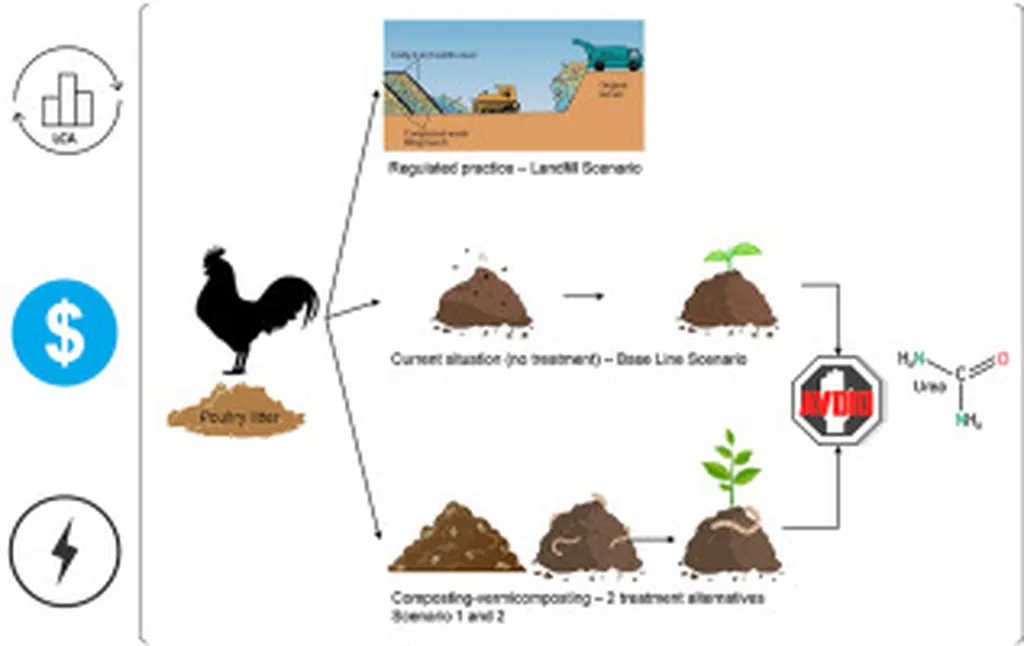
In the quest for sustainable solutions that align with global environmental goals, a recent study has shed light on the promising potential of vermitechnology and laying hen litter. Led by Nasution Nabila N.A. from the Physics Education department at UNESA University, this research explores how these innovative approaches can support the United Nations’ Sustainable Development Goals (SDGs), particularly those related to clean water, sanitation, and responsible consumption and production.
The study, published in the E3S Web of Conferences (translated to English as “Environmental, Energy, and Sustainable Science Web of Conferences”), delves into the physics concepts behind vermitechnology and laying hen litter, highlighting their role in reducing waste generation and promoting a circular economy. Vermitechnology, which involves the use of worms to process organic waste, has gained global recognition for its ability to transform waste into valuable resources.
“Vermitechnology is widely known globally, as evidenced by publications visualizing research networks on organic waste and animals,” Nabila explained. This technology not only addresses the pressing issue of waste management but also contributes to agriculture and ecosystem restoration.
One of the key challenges addressed in the study is the problem of ammonia emissions from laying hen farms. By integrating vermitechnology, the research suggests a viable solution to mitigate these emissions, thereby supporting SDG 12, which focuses on responsible consumption and production.
The study also identifies the physics concepts involved in these domains, including mechanics, thermodynamics, and energy conservation. These principles are crucial in designing effective vermitechnology systems that can be scaled up for commercial applications.
The development stages of utilizing vermitechnology and laying hen litter cover three significant goals: SDG 3 (Good Health and Well-being), SDG 12 (Responsible Consumption and Production), and SDG 15 (Life on Land). By addressing these goals, the research paves the way for innovative solutions that can benefit the energy sector and beyond.
As the world continues to grapple with environmental challenges, the findings of this study offer a glimmer of hope. By harnessing the power of vermitechnology and laying hen litter, we can move closer to achieving a sustainable future. The research not only highlights the importance of these technologies but also underscores the need for continued investment and innovation in the field.
In the words of Nabila, “The development stages of utilizing vermitechnology and laying hen litter cover three significant goals, including SDG 3, SDG 12, and SDG 15.” This statement encapsulates the broader implications of the study and its potential to shape future developments in the field.
As we look ahead, the integration of vermitechnology and laying hen litter into commercial applications holds immense promise. By embracing these innovative solutions, we can take significant strides towards a more sustainable and responsible future. The study published in the E3S Web of Conferences serves as a testament to the power of scientific research in driving positive change and inspiring new ideas.