
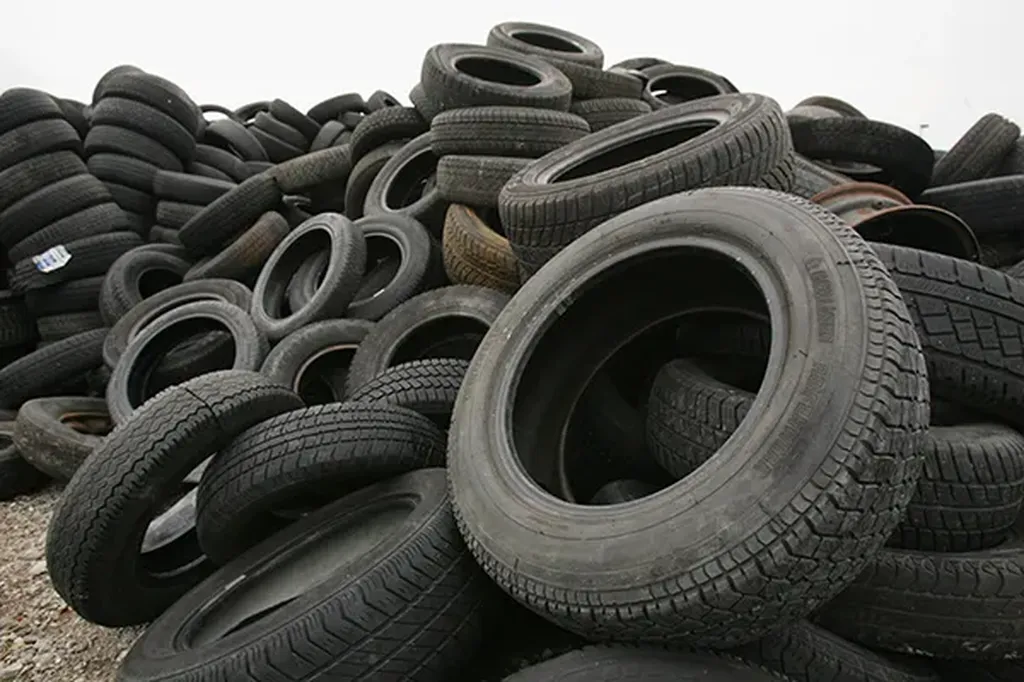
In a groundbreaking study that marries sustainability with industrial innovation, researchers have discovered a novel use for waste tire rubber that could significantly impact the energy sector. The research, led by Mortadha Alsaba of the Petroleum Engineering Department at the Australian University in Kuwait, explores the potential of recycled auto tire rubber (RATR) as an additive to improve the filtration performance of water-based drilling fluids. Published in the journal *Green Technologies and Sustainability* (translated to English as “التصاميم الخضراء والتكنولوجيا المستدامة”), this study offers a promising solution to two pressing issues: waste management and the quest for sustainable drilling practices.
Drilling fluids, essential for lubrication and cooling during drilling operations, often rely on synthetic additives that are energy-intensive to produce and environmentally harmful. Alsaba’s research introduces a circular economy approach by incorporating finely ground waste tire rubber into drilling fluids. “The idea is to turn a waste product into a valuable resource,” Alsaba explains. “This not only reduces the environmental footprint but also enhances the performance of drilling fluids.”
The study found that RATR significantly improved filtration control, reducing fluid loss by up to 19.7% under low-pressure, low-temperature conditions and an impressive 65% under high-pressure, high-temperature conditions compared to conventional synthetic graphite. These results were achieved with RATR concentrations ranging from 1.75 to 10.5 lb/bbl (5 to 30 kg/m³), ensuring that the drilling fluid’s rheological properties remained within acceptable operational ranges.
The commercial implications for the energy sector are substantial. By adopting RATR as an additive, companies can reduce their reliance on synthetic materials, lower production costs, and contribute to waste reduction efforts. “This is a win-win situation,” Alsaba notes. “It’s good for the environment, and it’s good for business.”
The research also highlights the potential for future developments in sustainable drilling practices. As the energy sector continues to seek ways to minimize its environmental impact, innovations like RATR additives could pave the way for more eco-friendly operations. “We’re at the beginning of a new era in drilling fluid technology,” Alsaba says. “This study is just the first step in exploring the possibilities of waste-derived materials in industrial applications.”
With the growing emphasis on circular economy principles and sustainable resource utilization, Alsaba’s research offers a compelling case for the energy sector to embrace innovative solutions that benefit both the environment and the bottom line. As the industry continues to evolve, the integration of waste-derived additives like RATR could become a standard practice, driving the energy sector towards a more sustainable future.