
In the heart of Indonesia, researchers have developed a groundbreaking solution that could revolutionize hydroponic farming, particularly in remote and energy-scarce regions. Monika Faswia Fahmi, a researcher from Universitas Trunojoyo Madura, has led a team to design a solar-powered, IoT-based smart hydroponic farming system that promises to enhance sustainability and precision in crop production.
The innovation addresses critical limitations of conventional hydroponic systems, such as unstable environmental control, suboptimal nutrient management, and reliance on grid-based electricity. “Many existing smart hydroponic technologies still depend on external power sources or lack integrated control of multiple growth parameters,” explains Fahmi. “Our system aims to fill this gap by providing a fully self-powered and intelligent solution.”
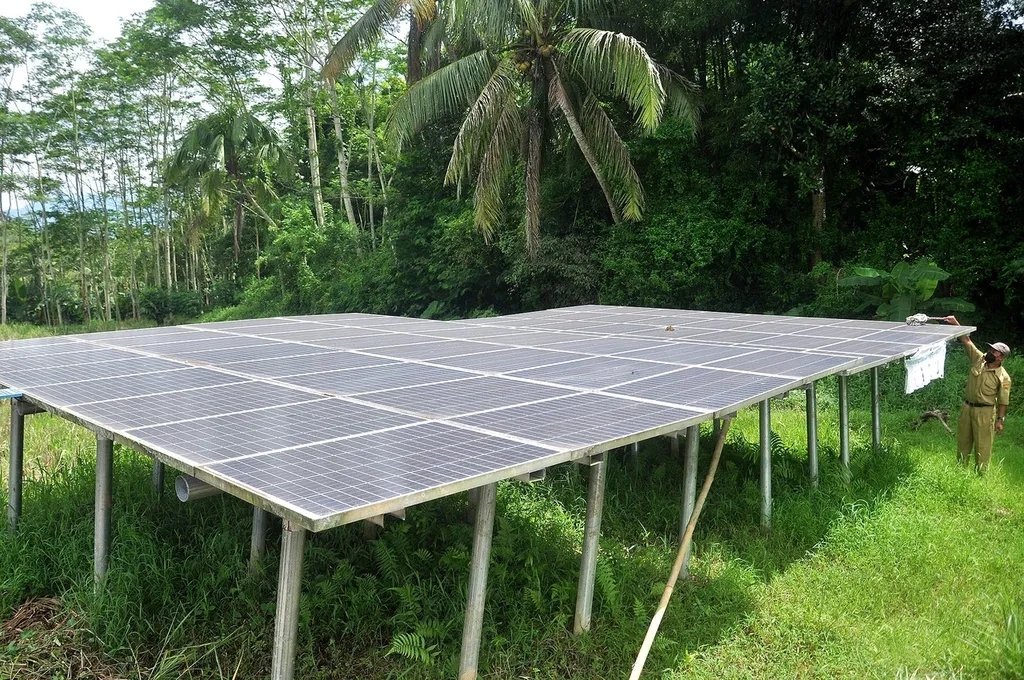
The system integrates a suite of sensors to monitor and control key environmental parameters. These include pH levels, temperature, total dissolved solids (TDS), and light intensity. The data collected is used to regulate these parameters within optimal ranges, ensuring precise and consistent crop growth. A standalone photovoltaic energy subsystem, comprising a 100 Wp solar panel and a 65 Ah battery, powers the system, making it entirely self-sufficient.
The experimental results are promising. The system demonstrated high sensor accuracy, with minimal measurement errors for pH, TDS, and temperature. Moreover, it effectively stabilized environmental parameters within predefined setpoints, outperforming uncontrolled conditions. “The system’s reliability and potential as a sustainable precision agriculture solution for off-grid hydroponic applications are evident,” Fahmi asserts.
The implications for the energy sector are significant. By integrating solar energy with IoT technology, the system reduces dependence on traditional power grids, offering a scalable and sustainable solution for hydroponic farming. This could open new avenues for commercial applications, particularly in regions where energy infrastructure is limited.
The research was recently published in the *Journal of Electrical Engineering and Computer Sciences*, known in English as *Jurnal Teknik Elektro dan Informatika*. As the world grapples with the challenges of climate change and food security, innovations like this could pave the way for more resilient and efficient agricultural practices.
Fahmi’s work highlights the potential for smart technologies to transform traditional farming methods. “This system not only enhances crop production but also contributes to energy sustainability,” she notes. As the world moves towards more sustainable practices, such innovations could play a pivotal role in shaping the future of agriculture and energy.
The research underscores the importance of interdisciplinary collaboration in addressing global challenges. By combining expertise in electrical engineering, computer science, and agriculture, the team has developed a solution that could have far-reaching impacts. As the world continues to seek sustainable and efficient solutions, this innovation stands as a testament to the power of smart technology in driving progress.