
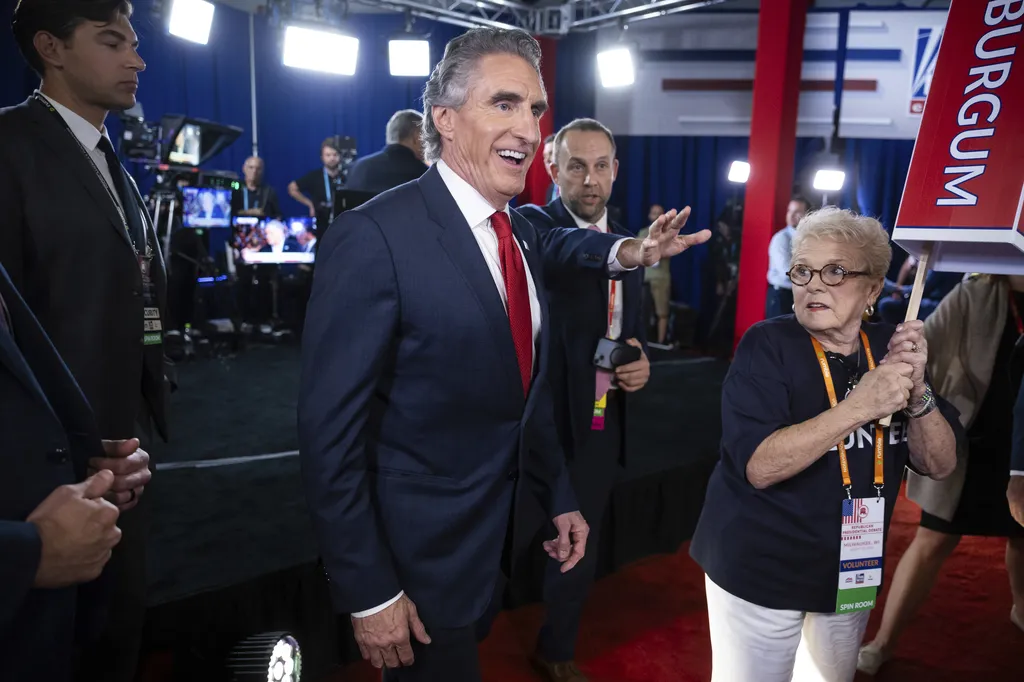
U.S. Secretary of the Interior Doug Burgum’s recent remarks at the 2026 Infrastructure Summit in Washington, D.C., have ignited a firestorm of debate within the environmental and infrastructure sectors. Speaking alongside Chevron CEO Mike Wirth, Burgum took aim at environmentalists, accusing them of financial opportunism and stoking unnecessary outrage to impede infrastructure development on federal lands.
Burgum’s comments came during a session focused on energy security, where he argued that opposition to public land development stems from a lack of financial literacy. “You know, all the people that are trying to stop activity on federal lands, you don’t understand the financial impact of it. I mean, all of you are financially literate,” he said, addressing an audience of politicians and CEOs. “Wouldn’t it be great if we could have the world be a little more financially literate?”
His critique extended to the Biden administration’s creation of a new marine sanctuary, which he dismissed as a financial misstep. “They took action, which took away an asset that belonged to all of you,” Burgum claimed, suggesting that the protected area represented a lost economic opportunity.
Burgum also targeted nonprofit and conservation groups, accusing them of exploiting environmental laws to halt infrastructure projects. “They train their members on how to disrupt new projects,” he asserted, misnaming the Endangered Species Act as the Environmental Species Act. He alleged that these groups use laws like NEPA (National Environmental Policy Act) to slow down projects and the Endangered Species Act to kill them altogether.
The discussion then turned to the permitting process for new energy development and oil leases, with Burgum advocating for reform. He estimated that $1.5 trillion worth of projects on federal lands are stalled due to a permitting process that he described as “choking” economic growth. Burgum urged the audience to push Congress for permitting reform, emphasizing the high stakes involved.
Burgum’s remarks come amid a broader push by the Trump administration to prioritize resource extraction over conservation on public lands, as outlined in Project 2025. A recent report by the Center for Western Priorities found that over 80% of the directives related to public lands in Project 2025 have either been executed or are in progress. These directives include increasing fossil fuel production, abandoning the goal to protect 30% of U.S. land and water by 2030, and reducing the federal workforce.
Burgum’s comments have sparked a heated debate about the balance between economic development and environmental conservation. Critics argue that his remarks undermine the importance of protecting natural resources and the role of environmental advocacy in ensuring sustainable development. Meanwhile, supporters of his stance contend that streamlining the permitting process and encouraging development on federal lands are crucial for economic growth and energy security.
The water, sanitation, and drainage sector, which often relies on federal lands for infrastructure projects, is watching these developments closely. The potential for permitting reform could significantly impact the timeline and feasibility of future projects, while the push for resource extraction may lead to conflicts with environmental regulations and community concerns.
As the debate continues, the sector must navigate these complex dynamics, advocating for policies that balance economic development with environmental stewardship. The outcome of these discussions will shape the future of infrastructure development on federal lands and the role of environmental advocacy in the process.